
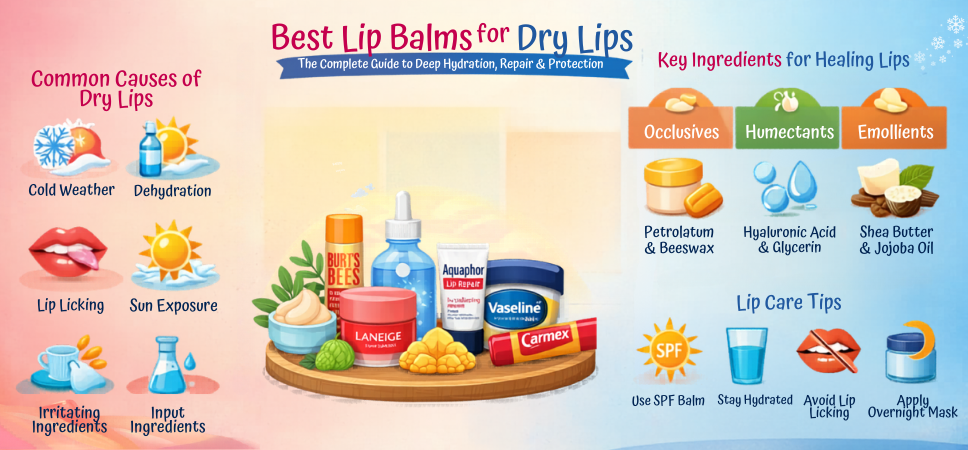
Dry, cracked lips are not merely a cosmetic concern—they are often a sign that the delicate skin barrier of the lips has been compromised. Unlike other areas of the skin, lips lack oil glands and a thick protective layer, making them especially vulnerable to dehydration, environmental stressors, and irritation. In this comprehensive guide, we explore the best lip balms for dry lips, examining powerful ingredients, hydration strategies, and top-performing formulations trusted worldwide.
Our goal is simple: identify lip balms that deeply hydrate, repair damaged skin, lock in moisture, and provide long-lasting protection. Whether dryness is caused by harsh weather, dehydration, excessive lip licking, or sensitivity to skincare products, the right balm can restore softness and comfort.
Understanding Why Lips Become Dry and Chapped
Before selecting the best lip balm, it is important to understand the causes of dryness.
1. Lack of Natural Oil Production
Lips contain no sebaceous glands, meaning they cannot produce natural oils to maintain hydration. Without external moisture and protection, lips dry quickly.
2. Environmental Exposure
Cold weather, wind, sun exposure, and dry indoor heating all strip moisture from the lips.
3. Dehydration
Insufficient water intake reduces moisture throughout the body, including lip tissue.
4. Irritating Ingredients
Some lip products contain menthol, camphor, or artificial fragrance, which can worsen dryness.
5. Habitual Lip Licking
Saliva evaporates quickly, leaving lips even drier than before.
Key Ingredients That Heal Dry Lips
Choosing the best lip balm depends heavily on ingredient quality. High-performing lip balms contain three types of ingredients:
1. Occlusives – Seal in Moisture
Occlusives form a protective barrier over the lips.
Examples include:
-
Petrolatum
-
Beeswax
-
Lanolin
-
Dimethicone
2. Humectants – Attract Moisture
Humectants draw water into the skin.
Common humectants:
-
Hyaluronic acid
-
Glycerin
-
Honey
-
Aloe vera
3. Emollients – Smooth and Repair
Emollients soften the skin and repair damaged lip tissue.
Examples include:
-
Shea butter
-
Cocoa butter
-
Natural oils (jojoba, coconut, almond)
The most effective lip balms combine all three ingredient categories to provide hydration, protection, and repair simultaneously.
Top Lip Balms for Dry Lips
Below are some of the most trusted and dermatologist-recommended lip balms available today.
1. Deeply Nourishing Natural Balm – Burt's Bees Beeswax Lip Balm
This iconic balm remains one of the most widely loved lip care products globally.
Why It Works
-
Beeswax creates a natural moisture barrier
-
Vitamin E nourishes damaged lips
-
Peppermint oil provides a refreshing sensation
Key Benefits
-
100% natural ingredients
-
Excellent moisture retention
-
Smooth texture that absorbs well
This balm works best for mild to moderate dryness and daily maintenance.
2. Intensive Overnight Treatment – Laneige Lip Sleeping Mask
When lips are severely dry or cracked, overnight treatments provide intensive repair.
What Makes It Special
The formula contains:
-
Berry antioxidants
-
Hyaluronic acid
-
Mineral moisture complex
Results
-
Deep overnight hydration
-
Noticeably softer lips by morning
-
Reduced flaking and irritation
This mask is ideal for extremely dry or peeling lips.
3. Dermatologist Favorite – Aquaphor Lip Repair
Often recommended by dermatologists, this balm focuses on skin barrier restoration.
Key Ingredients
-
Petrolatum
-
Shea butter
-
Chamomile essence
-
Vitamins
Why It Stands Out
-
Fragrance-free
-
Clinically proven hydration
-
Suitable for sensitive lips
It is especially effective for chapped lips caused by weather exposure.
4. Classic Healing Balm – Carmex Classic Lip Balm
For decades, this formula has been a go-to solution for severely chapped lips.
Core Ingredients
-
Camphor
-
Menthol
-
Lanolin
-
Cocoa butter
Benefits
-
Immediate soothing effect
-
Anti-inflammatory properties
-
Long-lasting protection
This balm works best during cold winter months when lips are prone to cracking.
5. Lightweight Hydration – Neutrogena Norwegian Formula Lip Moisturizer
Known for intense hydration, this balm provides excellent protection.
Advantages
-
SPF sun protection
-
Glycerin for deep hydration
-
Non-sticky formula
Sun exposure is a major cause of lip dryness, making SPF lip balms essential for everyday use.
6. Affordable Moisture Seal – Vaseline Lip Therapy
A minimalist but highly effective lip treatment.
Why It Works
Petrolatum forms a powerful occlusive barrier that locks in moisture.
Benefits
-
Instant relief from dryness
-
Extremely gentle formulation
-
Multi-purpose skin protectant
Many dermatologists consider petroleum jelly one of the most reliable moisture sealants.
7. Everyday Protection – Nivea Original Care Lip Balm
This balm balances hydration with comfort for everyday use.
Key Features
-
Shea butter nourishment
-
Long-lasting hydration
-
Smooth, creamy texture
Perfect for people seeking daily lip maintenance without heavy formulas.
How to Choose the Best Lip Balm for Your Needs
Different types of dryness require different lip balm formulas.
For Extremely Chapped Lips
Look for:
-
Petrolatum
-
Lanolin
-
Ceramides
These ingredients rebuild the lip skin barrier.
For Sensitive Lips
Choose fragrance-free and hypoallergenic formulas.
For Sun Protection
Always select lip balms with SPF 15 or higher.
For Overnight Repair
Use lip masks or thick occlusive treatments.
Lip Balm Ingredient Comparison
| Ingredient | Function | Best For |
|---|---|---|
| Petrolatum | Seals moisture | Severe dryness |
| Beeswax | Protective barrier | Daily hydration |
| Shea Butter | Softens lips | Repair and smoothing |
| Hyaluronic Acid | Attracts moisture | Dehydrated lips |
| Lanolin | Deep conditioning | Cracked lips |
| Vitamin E | Antioxidant protection | Lip healing |
Daily Lip Care Routine for Soft, Hydrated Lips
Maintaining healthy lips requires consistent care.
Morning Routine
-
Apply SPF lip balm
-
Drink water to maintain hydration
-
Avoid licking lips
Daytime Maintenance
-
Reapply balm every 2–3 hours
-
Use thicker formulas in cold weather
Night Routine
-
Gently exfoliate lips once or twice per week
-
Apply a thick overnight lip mask
This routine significantly reduces dryness and flaking.
Natural Remedies That Support Lip Hydration
In addition to commercial lip balms, several natural remedies help restore lip moisture.
Honey
A natural humectant that draws moisture into skin.
Coconut Oil
Provides soothing hydration and mild antibacterial protection.
Aloe Vera
Calms inflammation and promotes healing.
Cucumber Extract
Helps cool irritated lips and restore moisture.
Common Lip Balm Mistakes to Avoid
Even the best lip balm cannot work effectively if used incorrectly.
1. Over-exfoliating
Too much exfoliation damages the lip barrier.
2. Using Irritating Ingredients
Avoid:
-
Menthol
-
Artificial fragrances
-
Alcohol
3. Not Reapplying
Lip balm wears off quickly and must be reapplied regularly.
4. Ignoring Sun Protection
UV damage contributes to dryness and premature aging of lips.
Signs You Need a Stronger Lip Treatment
Sometimes basic lip balm is not enough.
Look for these warning signs:
-
Persistent cracking
-
Bleeding lips
-
Severe peeling
-
Pain or burning sensation
In such cases, medicated lip treatments or dermatological advice may be required.
How Weather Affects Lip Health
Different climates require different lip care strategies.
Winter
Cold air and indoor heating cause extreme dryness. Thick balms with occlusives are essential.
Summer
Sun exposure leads to lip dehydration and UV damage. SPF protection becomes critical.
Windy Conditions
Wind strips moisture quickly, making protective wax-based balms ideal.
Expert Tips for Preventing Dry Lips
Dermatologists often recommend these strategies:
-
Drink at least 2 liters of water daily
-
Use humidifiers indoors
-
Avoid irritating toothpaste ingredients
-
Maintain balanced nutrition rich in vitamins
Proper hydration and nutrition significantly improve overall lip health.
FAQs
1. What causes dry lips?
Cold weather, dehydration, sun exposure, and lack of oil glands.
2. How often should lip balm be applied?
Every 2–3 hours or whenever lips feel dry.
3. Is petroleum jelly safe for lips?
Yes. It is one of the most effective moisture sealants.
4. Can lip balm worsen dryness?
Some formulas with irritants may worsen dryness.
5. Are natural lip balms better?
Not always; effectiveness depends on ingredient quality.
6. Should lip balm contain SPF?
Yes, especially for daytime use.
7. Why do lips peel?
Peeling occurs when the lip barrier is damaged.
8. Are lip scrubs necessary?
Occasional exfoliation helps remove dead skin.
9. Can dehydration cause chapped lips?
Yes. Hydration directly affects lip moisture.
10. Do lip balms expire?
Yes. Most expire within 12–24 months.
11. Can allergies cause dry lips?
Yes. Fragrance and flavoring agents can trigger reactions.
12. Are tinted lip balms harmful?
Generally safe if formulated with gentle ingredients.
13. Why do lips crack in winter?
Low humidity and cold wind strip moisture.
14. Is lanolin good for lips?
Yes. It provides deep conditioning and repair.
15. Can lip balm treat lip wrinkles?
Hydration improves appearance but does not eliminate wrinkles.
16. Is beeswax good for lips?
Yes. It forms a protective barrier.
17. How long does it take to heal chapped lips?
Usually 2–3 days with proper treatment.
18. Are lip masks necessary?
Helpful for severe dryness or overnight repair.
19. Can stress cause lip dryness?
Indirectly, through dehydration and habits like lip licking.
20. Do matte lipsticks dry lips?
Yes. They often lack moisturizing ingredients.
21. Are lip oils better than balms?
Lip oils hydrate but may not provide strong protection.
22. Should children use lip balm?
Yes, preferably fragrance-free formulas.
23. Can vitamin deficiency cause cracked lips?
Yes, particularly vitamin B deficiencies.
24. Do lip balms work immediately?
Most provide instant relief, but healing takes time.
25. What is the best ingredient for lip hydration?
A combination of humectants, emollients, and occlusives.