
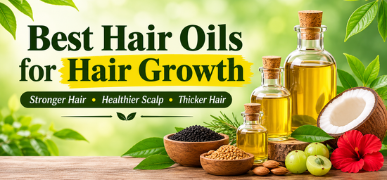
Healthy, thick, shiny hair is something many people desire, but maintaining strong hair can be challenging. Hair fall, thinning, split ends, dandruff, dryness and slow hair growth are common concerns among men and women in India. Factors such as pollution, humidity, hard water, nutritional deficiencies, stress, hormonal changes and improper hair care can affect overall hair health.
One of the most popular traditional hair care practices in India is regular hair oiling. From coconut oil and almond oil to amla oil and bhringraj oil, natural hair oils have been used for generations to nourish the hair, condition the scalp and protect hair strands from damage.
However, choosing the right hair oil is important. Not every oil provides the same benefits. Some oils help reduce hair breakage, while others improve moisture retention, softness and manageability. Certain ingredients, such as rosemary oil, have also attracted scientific interest for their potential role in supporting hair growth.
In this comprehensive guide, we explore the 10 best hair oils for hair growth, their benefits, how to use them, and which options may work best for different hair types and scalp conditions.
Whether you are looking for the best hair oil for hair fall, a natural solution for dry hair, or an effective oil to improve hair strength and thickness, this guide will help you make an informed choice.
Why Is Hair Oil Important for Hair Growth?
Hair oiling is an important part of traditional Indian hair care routines. It can help improve the condition of the hair shaft, reduce dryness and protect hair from mechanical damage.
Although applying oil cannot guarantee new hair growth or reverse every type of hair loss, choosing an appropriate oil can help create healthier conditions for maintaining strong hair.
Here are some important benefits of regular hair oiling:
-
Helps reduce hair breakage: Certain oils coat the hair shaft and reduce friction during washing, brushing and styling.
-
Improves hair softness: Natural oils help condition dry, rough and damaged hair.
-
Supports moisture retention: Oils help reduce moisture loss from the hair surface.
-
Improves manageability: Regular conditioning can make tangled hair easier to comb.
-
Protects hair from damage: Coconut oil, in particular, has research supporting its ability to reduce protein loss from hair.
-
Improves hair appearance: Well-conditioned hair often looks smoother, shinier and healthier.
-
Supports scalp comfort: Suitable oils may help relieve dryness, although excessive oiling can aggravate certain scalp conditions.
The most important point is to understand the difference between hair growth and hair breakage prevention. Hair growth occurs inside the follicles beneath the scalp, whereas most cosmetic benefits of hair oils occur on the hair shaft and scalp surface.
10 Best Hair Oils for Hair Growth in India
Choosing the best hair oil depends on your hair texture, scalp condition, lifestyle and individual concerns.
Below are ten popular hair oils worth considering for maintaining healthy hair.
1. Coconut Oil – Best Overall Hair Oil for Hair Health
Coconut oil is one of the most widely used hair oils in India. It is a traditional favourite in Tamil Nadu, Kerala, Karnataka and other parts of the country.
Extracted from mature coconut kernels, this natural oil contains a high proportion of saturated fatty acids, particularly lauric acid.
Coconut oil is especially useful for people dealing with dry, brittle and damaged hair.
Benefits of coconut oil for hair:
-
Helps reduce protein loss from hair strands.
-
Conditions dry and rough hair.
-
Improves softness and shine.
-
Helps reduce friction during combing.
-
Supports protection against everyday grooming damage.
-
Makes hair easier to manage.
A study published in the Journal of Cosmetic Science compared coconut, mineral and sunflower oils. The researchers found that coconut oil significantly reduced protein loss from both damaged and undamaged hair when used as a pre-wash and post-wash grooming product.
This makes coconut oil particularly useful for people who regularly wash, comb or style their hair.
How to use coconut oil:
-
Take one or two teaspoons of pure coconut oil.
-
Warm it slightly if it is solid.
-
Apply a small amount to the scalp if tolerated.
-
Distribute the remaining oil through the hair lengths.
-
Leave it for approximately 30–60 minutes.
-
Wash with a gentle shampoo.
Best for: Dry hair, brittle hair, damaged hair and people who want an affordable everyday conditioning oil.
2. Rosemary Oil – Best Essential Oil to Explore for Hair Growth
Rosemary oil has become increasingly popular in natural hair care because of research investigating its potential benefits for hair growth.
Extracted from the leaves of the rosemary plant, rosemary essential oil contains aromatic compounds that are being studied for their biological properties.
Unlike traditional carrier oils, rosemary essential oil is concentrated and should never be applied directly to the scalp without proper dilution.
Potential benefits of rosemary oil:
-
May support hair growth in certain individuals.
-
Has antioxidant properties.
-
May help maintain a healthy scalp environment.
-
Can be incorporated into a scalp massage routine.
-
May be useful as a complementary hair care ingredient.
A randomized comparative study published in 2015 investigated rosemary oil and 2% minoxidil in people with androgenetic alopecia. After six months, both groups showed improvements in hair count, although the study had limitations and does not establish rosemary oil as a replacement for established medical treatments.
Rosemary oil is therefore a promising ingredient, but stronger research is still needed.
How to use rosemary oil:
-
Select a properly labelled rosemary essential oil.
-
Mix approximately 2–3 drops into one tablespoon of a suitable carrier oil.
-
Apply a small amount to the scalp.
-
Leave it for around 20–30 minutes initially.
-
Wash thoroughly if required.
Always perform a patch test before using rosemary oil. Avoid applying it undiluted.
Best for: Adults interested in exploring an evidence-informed botanical ingredient as part of a broader hair care routine.
3. Castor Oil – Best for Conditioning Thick and Dry Hair
Castor oil is a thick vegetable oil obtained from castor seeds. It is traditionally used in Indian beauty routines for conditioning hair and improving its appearance.
Its rich texture makes it particularly popular among people with dry, coarse or frizzy hair.
Castor oil contains ricinoleic acid, a fatty acid associated with its distinctive consistency.
Benefits of castor oil for hair:
-
Helps coat dry hair strands.
-
Improves shine and smoothness.
-
Helps reduce friction.
-
Conditions coarse and frizzy hair.
-
Makes dry hair feel softer.
-
Can be blended with lighter oils.
There is currently insufficient strong clinical evidence that castor oil directly stimulates human hair growth. Its main practical advantage is conditioning rather than proven follicle stimulation.
How to use castor oil:
-
Mix one teaspoon of castor oil with two teaspoons of coconut oil.
-
Apply the mixture to dry hair lengths.
-
Use a small amount on the scalp only if it suits your skin.
-
Leave for 30 minutes.
-
Wash using a suitable shampoo.
Because castor oil is thick, avoid applying excessive quantities. It can be difficult to wash out and may cause hair matting in some circumstances.
Best for: Dry, coarse, frizzy and difficult-to-manage hair.
4. Almond Oil – Best for Soft and Shiny Hair
Sweet almond oil is a lightweight-to-medium-weight natural oil commonly used in hair and skincare products.
It contains fatty acids and vitamin E, which contribute to its conditioning properties.
Almond oil is a suitable choice for people who want softer, smoother and more manageable hair without using an extremely thick oil.
Benefits of almond oil:
-
Helps condition dry hair.
-
Improves smoothness and shine.
-
Reduces friction between hair strands.
-
Helps manage frizz.
-
Makes hair easier to comb.
-
Provides a lightweight conditioning option for many hair types.
Although almond oil is nutritious as a cosmetic ingredient, there is insufficient clinical evidence that applying it directly to the scalp increases hair follicle growth.
How to use almond oil:
Apply a small quantity to the middle and lower lengths of your hair. Leave it for approximately 30 minutes before washing.
You can also use a few drops on the ends of dry hair to improve smoothness.
Best for: Normal, dry and frizzy hair.
Important: Avoid almond oil if you have a known almond or tree-nut allergy unless a healthcare professional confirms that the particular product is safe for you.
5. Amla Oil – Best Traditional Indian Hair Oil
Amla, also known as Indian gooseberry, is a traditional ingredient in Ayurvedic hair care.
Amla is naturally rich in plant compounds, including polyphenols and vitamin C in the fresh fruit. Commercial amla hair oils, however, vary considerably depending on their formulation and extraction methods.
Amla oil is commonly used in India to condition the hair and improve its appearance.
Benefits of amla oil:
-
Helps condition dry hair.
-
Improves hair softness.
-
Supports a traditional scalp care routine.
-
Helps improve shine.
-
Can be combined with coconut or sesame oil.
-
Provides a convenient herbal hair care option.
There is limited high-quality human evidence demonstrating that amla oil independently increases hair growth. It is better considered a conditioning and traditional hair care ingredient.
How to use amla oil:
-
Take one or two teaspoons of amla oil.
-
Apply a small amount to your scalp if tolerated.
-
Massage gently without scratching.
-
Distribute the remaining oil through your hair.
-
Leave for 30–45 minutes.
-
Wash with a mild shampoo.
Best for: People interested in traditional Indian hair care and conditioning dry hair.
6. Bhringraj Oil – Best Traditional Ayurvedic Hair Oil
Bhringraj is an important herb in traditional Ayurvedic hair care.
It is often included in herbal hair oils marketed for hair fall, scalp nourishment and stronger-looking hair.
Bhringraj formulations commonly contain extracts of Eclipta prostrata, sometimes combined with coconut oil, sesame oil or other botanical ingredients.
Benefits of bhringraj oil:
-
Helps condition the hair.
-
Supports traditional scalp massage practices.
-
Helps improve hair softness.
-
Can reduce dryness when used in a suitable carrier formulation.
-
Provides an option for people who prefer herbal hair care products.
Despite its traditional popularity, robust clinical evidence proving that bhringraj oil regrows hair in humans remains limited.
How to use bhringraj oil:
Apply a small quantity to the scalp and hair lengths. Massage gently for approximately five minutes and leave it for 30–60 minutes before washing.
Choose products with clearly listed ingredients and avoid formulations that cause itching or irritation.
Best for: People who prefer Ayurvedic-inspired hair care products.
7. Argan Oil – Best for Frizzy and Damaged Hair
Argan oil is extracted from the kernels of the argan tree and is widely used in premium hair care products.
It contains fatty acids and antioxidant compounds that make it a useful cosmetic conditioning ingredient.
Argan oil is particularly popular among people with chemically treated, coloured, heat-damaged or frizzy hair.
Benefits of argan oil:
-
Helps smooth rough hair.
-
Improves shine.
-
Reduces the appearance of frizz.
-
Makes hair easier to style.
-
Helps condition dry ends.
-
Provides a lightweight finishing treatment when used sparingly.
Argan oil does not have convincing clinical evidence demonstrating direct hair regrowth. Its value lies mainly in improving the appearance and manageability of hair.
How to use argan oil:
Take two or three drops and rub them between your palms. Apply gently to the middle and lower lengths of damp or dry hair.
Avoid applying too much near the roots, especially if your scalp becomes oily easily.
Best for: Frizzy, coloured, chemically treated and damaged hair.
8. Sesame Oil – Best Traditional Oil for Scalp Massage
Sesame oil has a long history in traditional Indian hair care and Ayurvedic massage practices.
It contains unsaturated and saturated fatty acids, making it useful as a conditioning base oil.
Sesame oil is frequently used alone or combined with herbs such as amla and bhringraj.
Benefits of sesame oil:
-
Helps soften dry hair.
-
Conditions rough hair strands.
-
Provides lubrication during scalp massage.
-
Can be used as a base for herbal oil preparations.
-
Helps improve hair manageability.
Although sesame oil is popular in traditional routines, there is insufficient clinical evidence that it independently stimulates new hair growth.
How to use sesame oil:
Apply a moderate amount to your scalp and hair. Massage gently and leave for approximately 30 minutes before washing.
Best for: People who prefer traditional Indian oiling practices and need a conditioning base oil.
9. Jojoba Oil – Best for Lightweight Scalp Conditioning
Jojoba oil is technically a liquid wax ester extracted from jojoba seeds.
Its lightweight feel makes it popular in cosmetic products designed for hair and skin.
It is often selected by people who find heavier oils uncomfortable.
Benefits of jojoba oil:
-
Provides lightweight conditioning.
-
Helps improve hair softness.
-
Reduces the appearance of dryness.
-
Makes hair more manageable.
-
Can be used sparingly on dry hair ends.
Jojoba oil is not a clinically established treatment for hair loss or increased hair density.
How to use jojoba oil:
Apply a few drops to your hair ends or mix a small amount with coconut oil for a conditioning treatment.
Best for: People who prefer lightweight hair oils and have dry hair ends.
10. Olive Oil – Best for Deep Conditioning Dry Hair
Olive oil is another traditional natural oil used in personal care routines.
It contains oleic acid and other lipid compounds that provide emollient properties.
Its relatively rich consistency makes it useful for conditioning coarse and dry hair.
Benefits of olive oil:
-
Helps soften rough hair.
-
Improves hair smoothness.
-
Adds shine.
-
Helps manage dry ends.
-
Reduces friction during grooming.
There is no convincing clinical evidence that olive oil directly stimulates hair growth. Its benefits are primarily cosmetic.
How to use olive oil:
Apply a small amount to the hair lengths and leave for 20–30 minutes before shampooing.
People with fine or naturally oily hair should use smaller quantities to avoid a heavy appearance.
Best for: Coarse, dry and thick hair.
Best Hair Oils for Hair Growth
The following table makes it easier to select an appropriate oil according to your hair care requirements.
| Hair Oil | Main Benefit | Best Suited For | Evidence for Direct Hair Growth |
|---|---|---|---|
| Coconut oil | Reduces protein loss | Dry and damaged hair | Limited |
| Rosemary oil | Potential hair growth support | Selected adults with hair thinning | Preliminary |
| Castor oil | Deep conditioning | Coarse and dry hair | Insufficient |
| Almond oil | Smoothness and shine | Normal and dry hair | Insufficient |
| Amla oil | Traditional conditioning | Dry hair | Limited |
| Bhringraj oil | Traditional herbal care | General conditioning | Limited |
| Argan oil | Frizz control | Damaged hair | Insufficient |
| Sesame oil | Scalp massage and conditioning | Dry hair | Insufficient |
| Jojoba oil | Lightweight conditioning | Dry hair ends | Insufficient |
| Olive oil | Softness and shine | Coarse hair | Insufficient |
Which Hair Oil Is Best for Different Hair Types?
Selecting the right hair oil is more important than simply choosing the most popular product.
Different hair types have different conditioning requirements.
Best Hair Oil for Dry Hair
For dry hair, coconut oil, almond oil and argan oil are useful options.
Coconut oil is particularly interesting because research supports its ability to reduce protein loss during grooming.
Apply a moderate quantity before shampooing to help condition dry strands.
Best Hair Oil for Hair Fall
Hair fall can occur for several reasons, including nutritional deficiencies, hormonal changes, hereditary hair loss, stress and scalp conditions.
Coconut oil may help reduce breakage, while rosemary oil has preliminary clinical evidence for certain types of hereditary hair loss.
However, persistent hair fall requires identifying the underlying cause rather than relying exclusively on oiling.
Best Hair Oil for Thin Hair
People with fine or thin hair should choose lightweight oils such as jojoba or almond oil.
Using excessive amounts of thick oils may make thin hair appear flat and greasy.
Concentrate on the hair lengths rather than applying large quantities to the scalp.
Best Hair Oil for Curly Hair
Curly hair often experiences dryness because natural scalp oils may not distribute evenly along the hair shaft.
Coconut oil, argan oil and almond oil can help improve conditioning and manageability.
Apply oil carefully to avoid weighing down the curls.
Best Hair Oil for Frizzy Hair
Argan oil and almond oil are popular options for frizz control.
A few drops applied to damp hair can help smooth the hair surface and improve shine.
Best Hair Oil for Oily Scalp
An oily scalp does not necessarily require additional scalp oiling.
People with naturally oily scalps should concentrate on conditioning the hair lengths rather than regularly applying thick oils to the roots.
If oily hair is accompanied by dandruff, redness or itching, an appropriate scalp treatment may be more useful than additional oil.
How to Apply Hair Oil Correctly for Better Results
Using good-quality hair oil is only one part of an effective hair care routine. Application technique also matters.
Follow these steps for a simple hair oiling routine.
Choose the Right Hair Oil
Select an oil according to your hair texture and primary concern.
For example:
-
Coconut oil for dry and damaged hair.
-
Rosemary essential oil, properly diluted, if you are exploring its potential benefits.
-
Almond oil for softness.
-
Argan oil for frizz.
-
Castor oil for intensive conditioning.
Use the Correct Quantity
Using excessive oil does not provide additional hair growth benefits.
For medium-length hair, start with one or two teaspoons of carrier oil and adjust according to your hair thickness.
Apply Gently
Divide your hair into sections and apply the oil gradually.
If you apply it to the scalp, use your fingertips and avoid scratching or pulling.
Massage Carefully
Massage the scalp gently for approximately three to five minutes.
Avoid vigorous rubbing because excessive friction can damage fragile hair.
Allow the Oil to Work
For ordinary conditioning, approximately 30–60 minutes is a reasonable starting point.
There is no established requirement to leave every hair oil overnight.
Wash Thoroughly
Use a gentle shampoo to remove excess oil.
Avoid aggressive scrubbing and extremely hot water.
Maintain Consistency
A simple routine performed regularly is generally more practical than applying excessive quantities of oil occasionally.
How Often Should You Oil Your Hair?
The ideal frequency depends on your scalp condition, hair texture and personal preference.
| Hair Type | Suggested Frequency | Recommended Approach |
|---|---|---|
| Dry hair | 1–2 times weekly | Pre-wash conditioning |
| Normal hair | Once weekly | Moderate oil application |
| Oily scalp | As needed | Concentrate on hair lengths |
| Curly hair | 1–2 times weekly | Focus on dry lengths |
| Damaged hair | 1–2 times weekly | Gentle pre-wash conditioning |
| Fine hair | As needed | Use lightweight oils sparingly |
These are starting points rather than medical requirements. Reduce or discontinue oiling if you experience itching, irritation, increased dandruff or discomfort.
Best Natural Hair Oil Combinations for Healthy Hair
Combining suitable oils can provide different conditioning benefits.
However, mixing more oils does not automatically make a formula more effective.
Here are some simple combinations:
1. Coconut Oil and Almond Oil
Ingredients:
-
2 teaspoons coconut oil.
-
1 teaspoon almond oil.
Benefits:
This combination provides a conditioning treatment for dry hair. Coconut oil helps reduce protein loss, while almond oil contributes additional emollient properties.
2. Coconut Oil and Castor Oil
Ingredients:
-
2 teaspoons coconut oil.
-
1 teaspoon castor oil.
Benefits:
The combination provides a richer conditioning treatment for coarse and dry hair.
Because castor oil is thick, coconut oil helps make the mixture easier to spread.
3. Rosemary Essential Oil and Coconut Oil
Ingredients:
-
1 tablespoon coconut oil.
-
2–3 drops rosemary essential oil.
Benefits:
This combination provides a diluted rosemary preparation suitable for people interested in exploring rosemary as a complementary hair care ingredient.
Always patch-test first and avoid essential oils if they cause irritation.
4. Amla Oil and Coconut Oil
Ingredients:
-
1 tablespoon coconut oil.
-
1 tablespoon amla hair oil.
Benefits:
This traditional combination provides a convenient conditioning treatment using two familiar Indian hair care ingredients.
Check the amla oil formulation because commercially available products can contain different carrier oils, fragrances and additives.
Common Hair Oiling Mistakes to Avoid
Even a good hair oil can cause problems if it is used incorrectly.
Avoid the following mistakes:
-
Applying too much oil: Excessive oil can make hair difficult to wash and leave the scalp greasy.
-
Massaging aggressively: Vigorous massage may increase mechanical damage and breakage.
-
Using undiluted essential oils: Concentrated essential oils can cause irritation or allergic reactions.
-
Leaving oil on an irritated scalp: Oil may aggravate certain scalp conditions.
-
Expecting overnight hair growth: Hair growth is a gradual biological process.
-
Ignoring persistent hair fall: Continuous shedding may require medical evaluation.
-
Using unsuitable combinations: Some ingredients can cause irritation or allergic reactions.
-
Applying oil to an unclean scalp repeatedly: Excess oil and product buildup may worsen scalp discomfort.
-
Assuming natural means completely safe: Botanical ingredients can still cause contact dermatitis.
-
Using oil as a substitute for treatment: Hair oils cannot replace appropriate treatment for medical hair loss.
Tips to Support Healthy Hair Growth
Healthy hair depends on several factors beyond external hair care.
1. Maintain a Balanced Diet
Hair follicles require adequate nutrition to function normally.
Include foods containing protein, iron, zinc and other essential nutrients.
Examples include:
-
Eggs.
-
Lentils and chickpeas.
-
Milk and yoghurt.
-
Nuts and seeds.
-
Green leafy vegetables.
-
Fish.
-
Soybeans.
-
Fruits and whole grains.
People with suspected nutritional deficiencies should seek appropriate testing rather than taking supplements without guidance.
2. Eat Enough Protein
Hair is primarily made of a protein called keratin.
Insufficient protein intake can contribute to hair shedding.
Include adequate protein sources in your daily diet.
3. Avoid Excessive Heat Styling
Frequent use of straighteners, curling irons and high-temperature blow dryers can damage the hair shaft.
Use heat protection products and minimise unnecessary heat exposure.
4. Choose a Suitable Shampoo
Use a shampoo appropriate for your scalp condition.
If you have dandruff, a medicated anti-dandruff shampoo may be more effective than applying additional oil.
5. Avoid Tight Hairstyles
Repeatedly pulling hair into tight ponytails, braids or buns can contribute to traction alopecia.
Choose comfortable hairstyles that do not place excessive tension on the roots.
6. Manage Stress and Sleep Well
Significant physical or emotional stress can contribute to temporary hair shedding.
Maintain a regular sleep schedule, eat balanced meals and follow sustainable stress-management habits.
7. Consult a Dermatologist for Persistent Hair Loss
Sudden hair loss, visible bald patches, scalp inflammation and persistent thinning should be assessed by a dermatologist.
Treatments such as minoxidil may be appropriate for certain diagnosed conditions.
How to Choose the Best Hair Oil in India
The Indian market offers a wide variety of hair oils, including pure plant oils, herbal preparations and commercially formulated products.
Before purchasing, consider these factors:
1. Check the Ingredients
Look for a clear ingredient list and understand which oils and extracts are included.
2. Choose a Suitable Formulation
Lightweight oils may be more comfortable for fine hair, while richer formulations may suit coarse and dry hair.
3. Consider Your Scalp Type
People with oily, sensitive or dandruff-prone scalps should avoid assuming that frequent oil application is beneficial.
4. Look for Product Quality
Choose products from reputable manufacturers with proper labelling, batch details and manufacturing information.
5. Avoid Unrealistic Claims
Be cautious of products promising guaranteed hair regrowth, instant results or complete elimination of hair fall.
6. Consider Your Budget
An expensive hair oil is not necessarily more effective than a simple, good-quality carrier oil.
For many Indian households, pure coconut oil remains an affordable and practical option for hair conditioning.
FAQs
1. Which is the best hair oil for hair growth?
Rosemary oil has some preliminary clinical evidence for potential benefits in certain types of hereditary hair loss. Coconut oil is particularly useful for reducing protein loss and protecting hair from damage. The best option depends on the underlying hair concern.
2. Which oil is best for reducing hair fall?
Coconut oil may help reduce hair breakage by protecting hair strands. However, hair fall caused by hormonal changes, nutritional deficiencies or hereditary conditions requires appropriate treatment.
3. Can coconut oil increase hair growth?
Coconut oil is not proven to directly increase the rate of hair growth. However, it can reduce protein loss and help protect hair from damage, supporting better hair length retention.
4. Is rosemary oil good for hair growth?
Rosemary oil has shown promising results in a small randomized comparative clinical trial involving people with androgenetic alopecia. More research is required to establish its effectiveness and long-term safety.
5. Can we apply hair oil every day?
Daily hair oiling is not necessary for everyone. People with dry hair may benefit from regular conditioning, while those with oily or dandruff-prone scalps may need less frequent application.
6. Which oil is best for thick hair?
Coconut oil, castor oil and sesame oil are popular choices for conditioning coarse and thick hair. Their suitability depends on the individual's scalp and hair texture.
7. Does castor oil help regrow hair?
There is insufficient reliable clinical evidence proving that castor oil stimulates human hair regrowth. It is mainly used as a conditioning oil.
8. Is almond oil good for dry hair?
Yes. Almond oil can help condition dry hair, improve softness and reduce frizz. It is primarily a cosmetic conditioning ingredient rather than a proven hair growth treatment.
9. Which oil is best for frizzy hair?
Argan oil, almond oil and coconut oil can help improve smoothness and manageability. Use small quantities to prevent hair from becoming greasy.
10. Can we leave coconut oil overnight?
Some people tolerate overnight coconut oil application, but it is not necessary. Leaving it for 30–60 minutes before washing is a practical starting point. Avoid overnight application if it causes scalp irritation or discomfort.
11. Is amla oil good for hair growth?
Amla oil is traditionally used in Indian hair care. It can help condition hair, but strong clinical evidence supporting direct hair regrowth from topical amla oil is limited.
12. Which Ayurvedic oil is best for hair?
Bhringraj oil and amla oil are popular Ayurvedic-inspired options. Their main established practical use is conditioning rather than proven treatment of medical hair loss.
13. Can hair oil remove dandruff?
Hair oil does not reliably treat dandruff. In some people, heavy oil application can aggravate scalp symptoms. Medicated anti-dandruff shampoos may be more appropriate.
14. How long does it take to see results from hair oil?
Conditioning benefits such as softness and shine may be noticeable after the first application. Changes in hair density or growth cannot be guaranteed, and hair oils should not be expected to produce rapid regrowth.
15. Which hair oil is best for women?
Coconut, almond and argan oils are useful conditioning options for women. Rosemary oil is another ingredient with preliminary research for selected hair loss conditions.
16. Which hair oil is best for men?
Coconut oil, almond oil and argan oil can help condition men's hair. Men experiencing hereditary hair thinning should consider a dermatologist's advice about evidence-based treatments.
17. Can we mix coconut oil and castor oil?
Yes. Mixing coconut oil with a smaller quantity of castor oil creates a richer conditioning blend that may be useful for dry and coarse hair.
18. Is olive oil good for hair?
Olive oil can help soften dry hair and improve shine. However, there is insufficient evidence that it directly promotes new hair growth.
19. Which oil is best for thin hair?
Lightweight oils such as jojoba and almond oil are suitable options for conditioning thin hair. Apply sparingly to avoid weighing down the strands.
20. Does scalp massage increase hair growth?
Gentle scalp massage may be relaxing, but strong clinical evidence that ordinary scalp massage produces meaningful hair regrowth remains limited. Avoid aggressive rubbing.
21. Can hair oil prevent split ends?
Hair oil can temporarily smooth and condition dry ends, reducing friction and improving appearance. However, it cannot permanently repair an existing split end. Trimming damaged ends is the practical solution.
22. Is sesame oil good for hair?
Sesame oil is traditionally used in Indian hair care and can help condition dry hair. Its direct effect on human hair growth has not been established.
23. Can we apply rosemary oil directly to the scalp?
No. Rosemary essential oil should be diluted in a suitable carrier oil before application. Undiluted essential oils can irritate the skin.
24. Which is better: coconut oil or almond oil?
Coconut oil has stronger research supporting its ability to reduce hair protein loss. Almond oil is useful for conditioning and softness. The better choice depends on your hair's needs.
25. What is the best natural hair care routine for healthy hair?
A practical routine includes gentle shampooing, suitable conditioning, occasional pre-wash oiling, balanced nutrition, reduced heat styling and gentle handling. Persistent or sudden hair loss should be assessed by a dermatologist.