
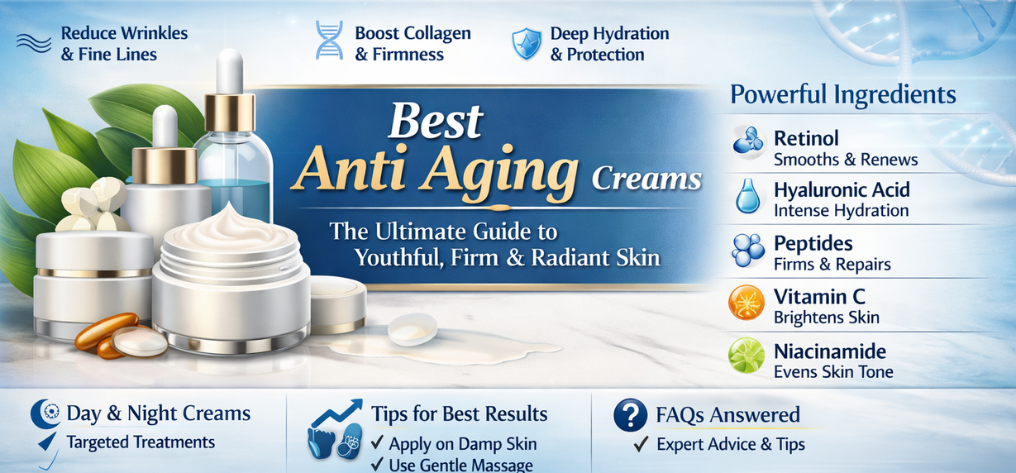
Aging is an inevitable biological process, but visible signs such as wrinkles, fine lines, sagging, and uneven texture can be effectively minimized with the right anti aging creams. We present a comprehensive, high-performance guide that explores the most powerful formulations, ingredients, and strategies to achieve younger-looking, smoother, and healthier skin.
This guide is crafted with precision to deliver deep insights, advanced skincare knowledge, and actionable recommendations that elevate your skincare routine to a professional level.
What Defines the Best Anti Aging Creams?
The best anti aging creams are formulated with clinically proven active ingredients, designed to penetrate deeply into the skin layers and stimulate cell regeneration, collagen synthesis, and hydration retention.
Core Benefits
- Reduction of fine lines and wrinkles
- Improved skin elasticity and firmness
- Deep hydration and moisture locking
- Even skin tone and texture refinement
- Protection against environmental damage
These creams work beyond surface-level hydration, targeting the root causes of aging at a cellular level.
Key Ingredients That Transform Aging Skin
Understanding ingredients is essential when selecting a high-performance anti aging cream.
Retinol (Vitamin A)
- Boosts cell turnover
- Stimulates collagen production
- Reduces deep wrinkles and fine lines
Hyaluronic Acid
- Provides intense hydration
- Plumps skin for a smooth, youthful appearance
- Reduces dryness and dullness
Peptides
- Strengthen the skin barrier
- Improve firmness and elasticity
- Promote repair and regeneration
Vitamin C
- Brightens skin tone
- Fights free radicals
- Reduces pigmentation and dullness
Niacinamide
- Minimizes pores
- Improves skin texture
- Enhances overall skin resilience
Ceramides
- Restore skin barrier function
- Prevent moisture loss
- Maintain long-term hydration
Types of Anti Aging Creams for Different Skin Needs
Day Creams
- Lightweight formulas
- Include SPF protection
- Shield against UV damage and pollution
Night Creams
- Rich and nourishing
- Support overnight repair and regeneration
- Deliver active ingredients more effectively
Targeted Treatments
- Eye creams for fine lines and dark circles
- Neck creams for firmness and tightening
How to Choose the Best Anti Aging Cream
Selecting the right product depends on skin type, age, and specific concerns.
For Dry Skin
- Choose creams with hyaluronic acid, ceramides, and oils
- Look for deep hydration formulas
For Oily Skin
- Opt for lightweight, non-comedogenic creams
- Ingredients like niacinamide work best
For Sensitive Skin
- Avoid harsh actives
- Choose fragrance-free and soothing formulations
For Mature Skin
- Focus on retinol, peptides, and antioxidants
- Look for firming and lifting benefits
Top Benefits of Using Anti Aging Creams Consistently
Visible Wrinkle Reduction
Regular use smoothens fine lines and deep wrinkles, restoring youthful skin.
Enhanced Skin Texture
Improves skin softness, smoothness, and clarity.
Improved Elasticity
Boosts collagen for firmer, tighter skin.
Hydration Balance
Prevents dryness and keeps skin plump and radiant.
Protection from Damage
Antioxidants defend against environmental stressors.
Advanced Skincare Routine for Maximum Results
Morning Routine
- Gentle cleanser
- Vitamin C serum
- Anti aging day cream with SPF
- Sunscreen (mandatory)
Night Routine
- Cleanser
- Retinol or treatment serum
- Anti aging night cream
- Eye cream
Consistency ensures long-term visible transformation.
Common Mistakes to Avoid
- Overusing retinol, causing irritation
- Skipping sunscreen, leading to faster aging
- Using the wrong cream for your skin type
- Expecting instant results without consistency
- Mixing incompatible ingredients
Avoiding these mistakes ensures optimal performance of your skincare routine.
Natural vs Clinical Anti Aging Creams
Natural Creams
- Use plant-based ingredients
- Gentle on skin
- Suitable for sensitive users
Clinical Formulations
- Contain active compounds like retinol and peptides
- Deliver faster and more visible results
The best approach combines science-backed ingredients with skin-friendly formulations.
Anti Aging Creams for Different Age Groups
In Your 20s
- Focus on hydration and prevention
- Use antioxidants and SPF
In Your 30s
- Introduce retinol and peptides
- Address early fine lines
In Your 40s and Beyond
- Use intensive repair creams
- Target wrinkles, sagging, and loss of elasticity
How Long Does It Take to See Results?
- Immediate: Hydration and glow
- 2–4 weeks: Improved texture
- 6–12 weeks: Visible wrinkle reduction
- 3–6 months: Significant anti aging effects
Patience and consistency deliver long-lasting transformation.
Professional Tips for Maximum Effectiveness
- Apply creams on slightly damp skin
- Use upward motion to prevent sagging
- Combine with facial massage techniques
- Maintain a healthy lifestyle and hydration
- Ensure proper sleep and nutrition
These amplify the effectiveness of any anti aging product.
Conclusion: Achieving Timeless, Youthful Skin
The journey to youthful skin requires a combination of advanced skincare formulations, consistency, and informed choices. The best anti aging creams are those that deliver deep hydration, collagen support, and long-term skin health.
By incorporating scientifically backed ingredients and a disciplined routine, we can achieve radiant, firm, and youthful skin that defies age gracefully.
FAQs
1. What is the best age to start using anti aging cream?
Start in your mid-20s for prevention.
2. Can anti aging creams remove wrinkles completely?
They reduce appearance but do not completely remove them.
3. How often should I use anti aging cream?
Twice daily for best results.
4. Is retinol safe for daily use?
Use gradually to avoid irritation.
5. Can men use anti aging creams?
Yes, they are suitable for all genders.
6. Do natural creams work as effectively?
They are gentler but slower than clinical formulas.
7. Is sunscreen necessary with anti aging cream?
Yes, it prevents further aging.
8. Can I combine multiple anti aging products?
Yes, but avoid ingredient conflicts.
9. How long should I use one product?
At least 8–12 weeks.
10. Are expensive creams always better?
Not always; ingredients matter more.
11. Can anti aging creams lighten skin?
They improve tone, not bleach skin.
12. Do they work on deep wrinkles?
Yes, but gradually.
13. Are there side effects?
Possible irritation with strong actives.
14. Can I use them daily?
Yes, depending on formulation.
15. Do they clog pores?
Non-comedogenic formulas do not.
16. Can teenagers use anti aging creams?
Not necessary unless preventive.
17. Do they help with pigmentation?
Yes, especially with Vitamin C.
18. Can I use makeup over them?
Yes, after absorption.
19. Are night creams necessary?
Yes, for repair.
20. Do anti aging creams expire?
Yes, always check expiry date.
21. Can I switch brands often?
Consistency is better.
22. Do they work on all skin types?
Yes, with the right selection.
23. Are organic creams better?
Depends on formulation quality.
24. Do they improve skin glow?
Yes, significantly.
25. Can lifestyle affect results?
Yes, greatly.