
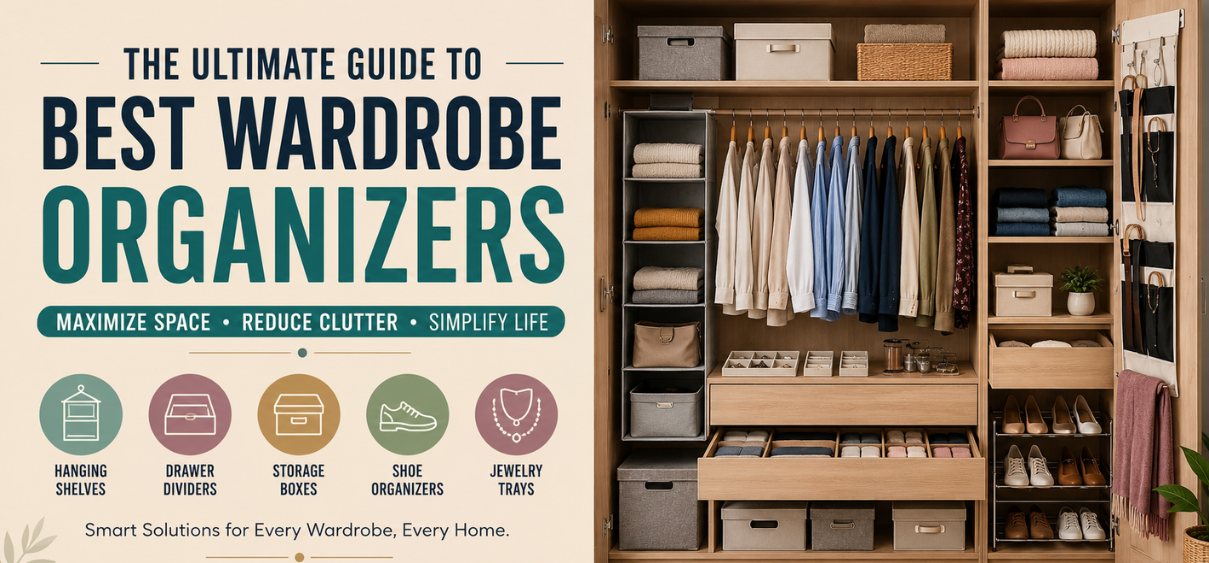
A well-organized wardrobe can transform the way we use our bedroom and start each day. The best wardrobe organizers help us make better use of available storage, keep clothing easy to find, reduce clutter, and create a more efficient dressing routine. Whether we have a compact wardrobe in a small apartment, a spacious walk-in closet, or a traditional freestanding cupboard, the right organization system allows us to maximize every shelf, drawer, rail, and corner.
Modern wardrobe organization is no longer limited to simply folding clothes and hanging garments. We can now choose from wardrobe organizers, drawer dividers, hanging shelves, storage boxes, trouser racks, shoe organizers, jewelry trays, closet baskets, and adjustable systems designed around our individual needs.
The ideal solution depends on the size of our wardrobe, the types of clothing we own, how frequently we use particular items, and the amount of storage space available. By combining different organizers strategically, we can create a wardrobe that is functional, attractive, and simple to maintain.
What Are Wardrobe Organizers?.
Wardrobe organizers are storage accessories and systems designed to help us arrange clothing, accessories, footwear, and personal belongings more efficiently inside a wardrobe or closet.
They can be as simple as a set of fabric storage boxes or as advanced as a modular closet system with adjustable shelves, drawers, hanging rails, and specialized compartments.
Common wardrobe organization products include:
- Hanging wardrobe organizers
- Wardrobe shelves and shelf dividers
- Clothing storage boxes
- Drawer organizers
- Fabric storage baskets
- Trouser and saree organizers
- Shoe racks
- Accessory organizers
- Jewelry trays
- Tie and belt racks
- Scarf holders
- Vacuum storage bags
- Adjustable closet systems
- Over-the-door organizers
- Stackable storage containers
The best combination depends on what we need to store. Someone with a large collection of folded T-shirts may benefit from shelf dividers and fabric bins, while someone with many formal clothes may need additional hanging space.
Why We Need the Best Wardrobe Organizers
A wardrobe without an organization system can quickly become difficult to manage. Clothes may pile up, accessories can disappear into corners, and frequently used items may become buried beneath things we rarely wear.
The right wardrobe storage organizers solve several practical problems.
1. We Maximize Available Space
Wardrobes often contain unused vertical space above shelves or below hanging clothes. Organizers help us use these areas more effectively.
Stackable boxes, hanging shelves, and adjustable compartments allow us to turn empty space into useful storage.
2. We Keep Clothes Easier to Find
When every category has a designated location, we spend less time searching for what we need. Shirts, trousers, dresses, accessories, and seasonal clothing can each have their own sections.
3. We Reduce Wardrobe Clutter
A wardrobe organizer gives individual items a defined place. Instead of allowing clothes to accumulate randomly, we can create a structured storage system.
4. We Protect Clothing
Proper storage can help prevent clothing from becoming excessively compressed, wrinkled, dusty, or damaged by poor handling.
5. We Make Cleaning Easier
Organized wardrobes are easier to clean because storage boxes and containers can be removed individually. We can also see which areas need attention without emptying the entire wardrobe.
6. We Create a More Efficient Daily Routine
A well-arranged wardrobe makes dressing quicker. We can immediately locate the clothes and accessories we need, particularly when frequently used items are stored at eye level.
Best Wardrobe Organizers for Different Storage Needs
There is no single organizer that works perfectly for every wardrobe. We should select products based on the type of items we want to store.
| Wardrobe Organizer | Best For | Main Advantage |
|---|---|---|
| Hanging shelves | Folded clothes | Uses vertical hanging space |
| Shelf dividers | Sweaters and T-shirts | Prevents piles from collapsing |
| Storage boxes | Seasonal clothing | Keeps items protected and contained |
| Drawer dividers | Small garments | Creates separate compartments |
| Shoe organizers | Footwear | Keeps shoes organized |
| Jewelry organizers | Jewelry and small accessories | Prevents tangling |
| Trouser hangers | Pants and trousers | Saves hanging space |
| Saree organizers | Sarees and traditional clothing | Keeps delicate garments together |
| Belt and tie racks | Accessories | Makes accessories easy to access |
| Vacuum storage bags | Bulky seasonal items | Reduces storage volume |
| Over-door organizers | Small wardrobes | Adds storage without taking floor space |
| Modular closet systems | Large wardrobes | Offers customizable storage |
Best Hanging Wardrobe Organizers
Hanging organizers are among the most versatile solutions for improving wardrobe storage. They attach to an existing hanging rail and create multiple vertical compartments.
A hanging wardrobe organizer is particularly useful when we have limited shelving but plenty of vertical space.
We can use hanging shelves for:
- Folded T-shirts
- Casual shirts
- Handbags
- Towels
- Lightweight sweaters
- Baby clothes
- Scarves
- Small accessories
When choosing a hanging organizer, we should check the weight capacity and the strength of the attachment mechanism. A lightweight fabric organizer may work well for T-shirts but may not be suitable for heavy sweaters or jeans.
We should also consider the width. A wide organizer provides more storage but may reduce the available space for hanging clothes.
Best Wardrobe Shelf Dividers
Shelf dividers are simple but highly effective. They separate large shelves into smaller sections, preventing stacks of clothing from leaning or collapsing.
Without dividers, we may create one tall pile of folded clothing. Every time we remove an item from the middle, the pile can become unstable.
With wardrobe shelf dividers, we can create separate sections for:
- T-shirts
- Jeans
- Sweaters
- Workwear
- Sportswear
- Nightwear
- Towels
- Handbags
The best dividers are sturdy, easy to install, and appropriately sized for our shelves. Adjustable or clip-on designs can be particularly useful when wardrobe dimensions vary.
Best Wardrobe Storage Boxes
Storage boxes are excellent for clothing that we do not need every day. They help us separate seasonal and occasional-use items from everyday clothing.
We can use storage boxes for:
- Winter clothing
- Blankets
- Special-occasion outfits
- Extra bedding
- Festival clothing
- Travel accessories
- Keepsakes
- Rarely used handbags
Fabric boxes are lightweight and often easy to fold when not in use. Plastic containers offer stronger protection against dust and moisture, while rigid boxes may provide better stacking stability.
For wardrobes, we should choose containers that fit the available shelf dimensions. Oversized boxes can waste space and make it difficult to retrieve items.
Best Wardrobe Drawer Organizers
Drawers can become cluttered quickly because small garments are often mixed together. Drawer organizers create individual compartments that help us separate different categories.
We can use drawer dividers for:
- Socks
- Underwear
- Belts
- Scarves
- Handkerchiefs
- Accessories
- Small clothing items
Adjustable dividers are particularly convenient because we can change the compartment sizes as our storage requirements evolve.
A useful approach is to keep frequently used items toward the front of drawers and less frequently used items toward the back.
Best Wardrobe Organizers for Small Spaces
Small wardrobes require careful planning. Instead of adding more bulky storage furniture, we can make better use of the space we already have.
Some of the most effective solutions include:
- Slim hangers
- Hanging shelves
- Stackable storage boxes
- Shelf dividers
- Over-the-door organizers
- Under-shelf baskets
- Multi-tier hangers
- Vacuum storage bags
- Compact shoe organizers
Slim hangers can create additional room on a hanging rail. However, we should avoid overcrowding the rail because tightly packed clothing becomes difficult to access and may wrinkle more easily.
Vertical storage is particularly valuable in compact wardrobes. If there is unused space above the existing shelf, we can add stackable containers or adjustable compartments.
Best Wardrobe Organizers for Clothes
Different clothing types require different storage methods.
T-Shirts
T-shirts are usually best folded and arranged vertically or in compact stacks. Drawer organizers, shelf dividers, and hanging shelves can help keep them separated.
Jeans and Trousers
Heavier garments can be folded on sturdy shelves or hung using appropriate trouser hangers.
Sweaters
Sweaters are generally better folded rather than hung on narrow hangers that may stretch the fabric.
Dresses
Dresses that wrinkle easily are usually best stored on hangers with adequate vertical clearance.
Formal Wear
Formal clothing should have sufficient hanging space. We can group suits, blazers, formal dresses, and shirts by category or frequency of use.
Traditional Clothing
Traditional garments such as sarees, salwar suits, and other occasion wear may require specialized storage. We should ensure that delicate fabrics are folded carefully and protected from excessive compression.
Best Wardrobe Organizers for Shoes
Shoes can consume considerable space when stored randomly at the bottom of a wardrobe.
A dedicated wardrobe shoe organizer helps us use vertical space and keep pairs together.
Options include:
- Hanging shoe organizers
- Stackable shoe boxes
- Pull-out shoe racks
- Tiered shoe shelves
- Under-shelf shoe racks
Before storing shoes for long periods, we should ensure they are clean and completely dry. Keeping footwear organized by frequency of use can also make daily routines more convenient.
Frequently worn shoes should remain easily accessible, while occasional footwear can be placed in higher or less accessible sections.
Best Wardrobe Organizers for Accessories
Small accessories are among the easiest items to lose inside a wardrobe. A dedicated organizer can prevent this problem.
We can create separate storage for:
- Belts
- Ties
- Scarves
- Watches
- Sunglasses
- Hair accessories
- Jewelry
- Wallets
Hooks, trays, small boxes, and compartmentalized organizers can all be useful.
The key is to avoid creating one large container for every accessory. When everything is mixed together, we may still struggle to find individual items.
Best Jewelry Organizers for Wardrobes
Jewelry requires careful organization because small pieces can become tangled or misplaced.
A jewelry organizer with separate compartments allows us to keep necklaces, earrings, bracelets, rings, and other items apart.
For delicate pieces, we should look for:
- Soft-lined compartments
- Individual slots
- Secure closures
- Transparent sections
- Compact trays
We should also avoid overcrowding jewelry compartments. A little extra space can make individual pieces easier to retrieve and return.
Best Wardrobe Organizers for Sarees and Traditional Clothing
Traditional clothing often requires more thoughtful storage because many garments are delicate, embellished, or used occasionally.
We can organize sarees and similar garments by:
- Fabric
- Occasion
- Frequency of use
- Color
- Season
Dedicated saree storage boxes or wardrobe compartments can help keep garments neatly folded.
For delicate fabrics, we should avoid excessive compression and ensure the storage environment remains clean and dry. Heavy embellishments should also be handled carefully to reduce the risk of snagging other garments.
Best Wardrobe Organizers for Seasonal Clothes
Seasonal clothing can occupy valuable wardrobe space even when we are not using it.
A practical system involves rotating clothing according to the season.
For example, we can store:
- Summer clothing in easily accessible sections during warm months
- Winter clothing in dedicated boxes during warmer seasons
- Festive clothing separately from everyday clothing
- Travel clothing in a designated section
Vacuum storage bags can be useful for bulky soft items, although we should always consider the fabric and manufacturer's care recommendations before compressing garments for extended periods.
How to Organize a Wardrobe Step by Step
Creating an organized wardrobe becomes much easier when we follow a systematic process.
Step 1: Empty One Section at a Time
We do not necessarily need to empty the entire wardrobe. Working section by section makes the process manageable.
Step 2: Group Similar Items
We can create categories such as:
- Daily wear
- Workwear
- Occasion wear
- Sportswear
- Nightwear
- Seasonal clothing
- Accessories
Step 3: Identify Frequently Used Items
The clothes we use most often should occupy the easiest-to-reach areas.
Step 4: Measure the Wardrobe
Before buying organizers, we should measure:
- Width
- Height
- Shelf depth
- Shelf spacing
- Hanging rail height
Measurements prevent us from purchasing products that do not fit.
Step 5: Select Organizers by Function
We should choose organizers based on actual storage problems rather than buying every type of accessory available.
Step 6: Arrange by Accessibility
Items used every day should be positioned at comfortable reach height. Less frequently used items can occupy higher shelves.
Step 7: Label Storage Boxes
Labels are particularly helpful when we use opaque containers. Clear labels allow us to identify contents without opening every box.
Step 8: Maintain the System
An organization system works best when we return items to their designated locations after use.
How to Choose the Best Wardrobe Organizers
Several factors should guide our decision.
Size and Dimensions
The organizer must fit comfortably inside the wardrobe. We should measure before purchasing.
Material
Common materials include:
- Fabric
- Plastic
- Metal
- Wood
- Bamboo
- Acrylic
Each material offers different advantages in terms of durability, appearance, weight, and maintenance.
Weight Capacity
Heavy clothing requires stronger storage solutions. We should never overload shelves or hanging systems beyond their recommended capacity.
Accessibility
The best organizer is not always the one with the highest storage capacity. We should prioritize designs that allow us to easily access the items we use most.
Flexibility
Adjustable organizers can be particularly useful because our storage needs may change over time.
Ease of Cleaning
Storage products should be easy to clean and maintain. Removable or washable fabric components can be convenient.
Visual Appearance
For open wardrobes or visible closet systems, we may prefer organizers that complement the room's décor.
Wardrobe Organization Ideas for Maximum Space
We can improve storage efficiency with a few practical strategies.
Use Vertical Space
Tall wardrobes often have unused space above shelves. Stackable containers can convert this area into useful storage.
Use the Back of Doors
Over-the-door organizers can provide additional compartments without occupying valuable floor space.
Use Matching Hangers
Using similar hangers can create a cleaner appearance and make clothing easier to arrange.
Arrange Clothes by Category
Grouping similar items makes it easier to locate clothing quickly.
Organize by Frequency
Everyday clothing should be easy to reach. Rarely used items can be stored higher or farther back.
Use Clear Containers Strategically
Transparent containers allow us to see contents immediately, which is especially useful for accessories and seasonal items.
Avoid Overfilling
An organizer is only useful when we can comfortably access what it contains. Overcrowding defeats the purpose of organization.
Wardrobe Organizers: Open Storage vs. Closed Storage
Both open and closed storage have advantages.
| Feature | Open Organizers | Closed Organizers |
|---|---|---|
| Accessibility | Very high | Moderate |
| Visibility | Excellent | Limited |
| Dust protection | Lower | Higher |
| Organization | Easy to monitor | More concealed |
| Best for | Daily-use items | Seasonal items |
| Appearance | More visible | Cleaner visual appearance |
Open organizers work well for items we use frequently. Closed boxes are generally more suitable for seasonal clothing and belongings that require additional protection.
Common Wardrobe Organization Mistakes
Even a good organizer can become ineffective if we use it incorrectly.
Overcrowding Storage
Filling every compartment to maximum capacity can make items difficult to remove.
Ignoring Measurements
Buying organizers without measuring the wardrobe is one of the most common mistakes.
Storing Everything Together
Mixing clothing, accessories, and footwear in the same area creates unnecessary clutter.
Using Too Many Organizers
More storage products do not always mean better organization. We should use only what genuinely improves functionality.
Keeping Unused Items in Prime Space
The most accessible sections should be reserved for items we use regularly.
Failing to Maintain the System
Even the best wardrobe organization can deteriorate if items are not returned to their designated places.
How to Maintain an Organized Wardrobe
A well-organized wardrobe requires occasional maintenance.
We can follow a simple routine:
- Return clothing to its designated section.
- Refold garments when necessary.
- Keep similar items together.
- Review seasonal clothing periodically.
- Clean shelves and storage boxes.
- Remove items we no longer use when appropriate.
- Check that organizers are not overloaded.
- Reorganize sections when our lifestyle or storage needs change.
A short maintenance routine performed regularly is usually easier than attempting a complete wardrobe reorganization after months of accumulated clutter.
Best Wardrobe Organizers: Buying Checklist
Before purchasing any wardrobe organizer, we should consider the following checklist:
- Measure the available space.
- Identify the items we need to store.
- Choose the right organizer type.
- Check the material and durability.
- Consider weight capacity.
- Look for easy accessibility.
- Check whether the organizer is adjustable.
- Consider cleaning and maintenance requirements.
- Avoid unnecessary duplication.
- Prioritize frequently used items.
The best wardrobe organization system is not necessarily the most expensive or elaborate. It is the one that fits our space, matches our habits, and makes everyday storage easier.
FAQS
1. What are the best wardrobe organizers?
The best wardrobe organizers depend on our storage needs. Hanging shelves, drawer dividers, shelf separators, storage boxes, shoe organizers, and accessory racks are among the most useful options.
2. How do we organize a small wardrobe?
We can maximize a small wardrobe by using slim hangers, vertical hanging organizers, stackable boxes, shelf dividers, and over-the-door storage.
3. Are hanging wardrobe organizers useful?
Yes. Hanging organizers create additional compartments without requiring new furniture. They are particularly useful for folded clothing and accessories.
4. What is the best way to organize folded clothes?
We can use shelf dividers, drawers, storage bins, or hanging shelves. Organizing clothing vertically can also make individual items easier to identify.
5. How do we organize a wardrobe without spending much money?
We can start by rearranging existing shelves, grouping similar clothing, using inexpensive boxes, and making better use of vertical space before purchasing additional organizers.
6. Are fabric wardrobe organizers durable?
Quality varies. Strong fabric, reinforced seams, and sturdy support structures generally provide better durability than lightweight designs.
7. What is the best wardrobe organizer for sweaters?
Folded sweaters can be stored on shelves with dividers or inside breathable storage boxes. We should avoid overcrowding them.
8. How do we organize shoes inside a wardrobe?
We can use tiered racks, shoe boxes, hanging shoe organizers, or dedicated pull-out racks, depending on available space.
9. Are shelf dividers worth buying?
Yes. Shelf dividers can prevent folded clothing piles from collapsing and help us create separate categories.
10. How do we organize accessories?
We can use dedicated compartments for belts, scarves, jewelry, watches, sunglasses, and other small items.
11. What is the best organizer for jewelry?
A compartmentalized jewelry tray or organizer with separate sections is generally practical for keeping small pieces organized.
12. How do we organize seasonal clothing?
We can rotate seasonal items and store out-of-season garments in labeled boxes or suitable storage bags.
13. Should we use storage boxes inside a wardrobe?
Yes. Storage boxes are useful for seasonal clothing, occasional garments, accessories, and other items that need to remain contained.
14. How do we maximize vertical wardrobe space?
We can use stackable containers, hanging shelves, multi-tier hangers, and adjustable shelving systems.
15. What is the best wardrobe organizer for trousers?
Trouser hangers, pull-out trouser racks, and dedicated hanging systems can keep trousers organized while making them easier to access.
16. How do we organize a wardrobe for daily use?
We should keep frequently worn clothing at eye level and arrange it by category, purpose, or frequency of use.
17. Are adjustable wardrobe organizers better?
Adjustable organizers offer greater flexibility because we can modify the storage configuration as our needs change.
18. How do we prevent wardrobe clutter?
We can assign every category a designated space, avoid overfilling compartments, and regularly review items that are no longer needed.
19. What are the best wardrobe organizers for apartments?
Compact hanging shelves, slim hangers, stackable boxes, drawer dividers, and over-the-door organizers are excellent choices for smaller homes.
20. How do we organize a wardrobe with deep shelves?
We can use storage bins or shelf dividers to prevent items from becoming lost at the back. Frequently used items should remain toward the front.
21. How can we make a wardrobe look more organized?
Using matching hangers, consistent storage boxes, clear categories, and neatly arranged clothing can create a cleaner appearance.
22. How often should we reorganize a wardrobe?
A full reorganization may only be necessary periodically, but small maintenance sessions can be performed whenever clutter begins to accumulate.
23. What should we store on the top wardrobe shelf?
The highest shelves are generally suitable for seasonal clothing, travel bags, special-occasion garments, and other items that we do not use frequently.
24. How do we choose the correct wardrobe organizer size?
We should measure the wardrobe's width, depth, height, shelf spacing, and hanging areas before selecting an organizer.
25. What is the most important feature of a wardrobe organizer?
Functionality is the most important feature. The organizer should fit the available space, support the intended items, and make them easier to access and maintain.