
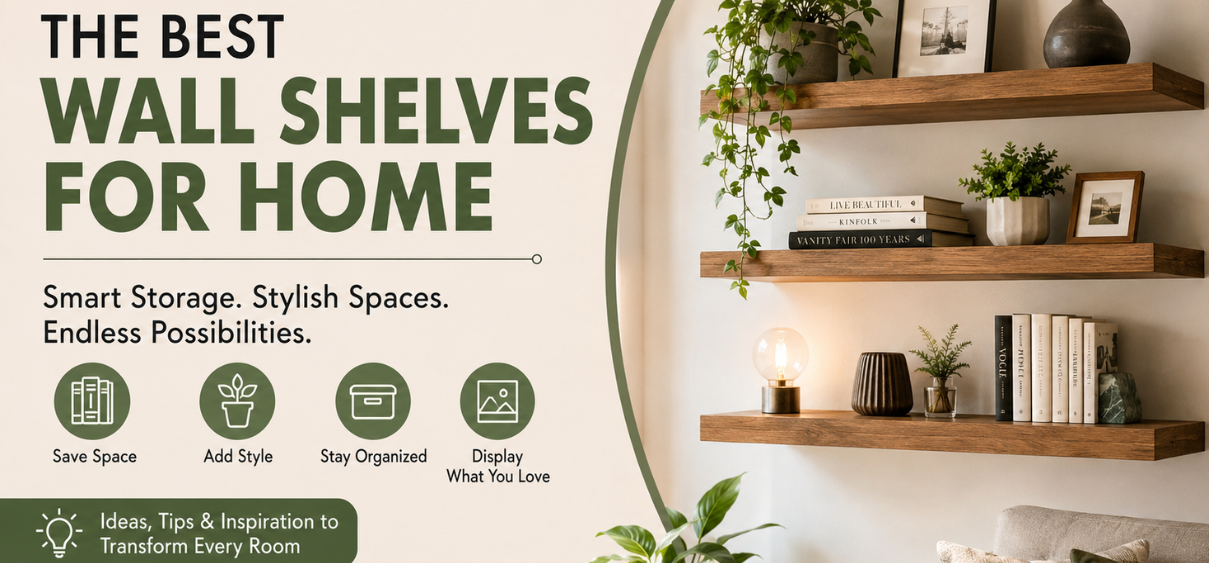
Wall shelves have become one of the most practical ways to improve storage and enhance interior décor. The best wall shelves for home can transform an empty wall into a useful storage area while adding personality, visual interest, and organization to almost any room. Whether we are furnishing a compact apartment, updating a family home, creating a productive home office, or simply looking for a better way to display treasured belongings, the right wall shelving can make a noticeable difference.
Unlike bulky floor-standing furniture, wall-mounted shelves make use of vertical space that might otherwise remain unused. This allows us to organize books, photographs, plants, decorative objects, kitchen essentials, collectibles, and everyday items without taking up valuable floor area. With countless materials, sizes, shapes, colors, and installation styles available, we can choose wall shelves that complement virtually any interior design.
From floating shelves and wooden shelves to corner units, metal shelves, glass shelves, and modular systems, every option offers different advantages. The ideal choice depends on several factors, including the room, available wall space, intended purpose, weight capacity, mounting method, and overall décor.
In this comprehensive guide, we explore the most important considerations for choosing the best wall shelves for home, along with ideas for different rooms, styling advice, installation tips, maintenance guidance, and answers to frequently asked questions.
Why Wall Shelves Are a Great Choice for Every Home
Wall shelves combine storage and decoration in one compact solution. Instead of treating walls as empty surfaces, we can use them to create additional functional space.
One of the biggest advantages is their ability to maximize vertical storage. In smaller homes, where every square foot matters, wall-mounted shelving can provide valuable storage without making the room feel crowded. We can install shelves above desks, sofas, beds, kitchen counters, toilets, or unused corners.
Wall shelves can also help us maintain a more organized home. Books can be arranged neatly, small accessories can be grouped together, and frequently used items can remain within easy reach. At the same time, decorative pieces can be displayed in a way that creates a more personalized interior.
The versatility of wall shelving makes it suitable for almost every room:
- Living room: Books, artwork, photographs, plants, and decorative accessories
- Bedroom: Books, small lamps, framed photographs, and personal items
- Kitchen: Spices, jars, cookbooks, mugs, and utensils
- Bathroom: Towels, toiletries, baskets, and decorative plants
- Home office: Books, stationery, files, and office accessories
- Entryway: Keys, wallets, small baskets, and decorative objects
- Children's room: Books, toys, trophies, and educational materials
- Dining room: Tableware, serving pieces, and decorative collections
The best wall shelves therefore offer more than simple storage. They can become an important part of the room's visual design.
Types of Wall Shelves for Home
Before choosing a shelf, we should understand the different styles available. Each type has its own appearance, installation requirements, and practical benefits.
1. Floating Wall Shelves
Floating shelves are among the most popular choices for modern interiors. They are designed with concealed brackets, creating the appearance that the shelf is attached directly to the wall without visible support hardware.
Their clean appearance works particularly well in minimalist, contemporary, Scandinavian, and modern homes.
We can use floating shelves for:
- Books
- Small plants
- Photo frames
- Candles
- Decorative objects
- Small collectibles
The main consideration is installation. Proper wall anchors and suitable hardware are essential, particularly when the shelf will carry heavy objects.
2. Wooden Wall Shelves
Wooden shelves bring warmth and natural character into a room. Depending on the finish, they can suit traditional, rustic, farmhouse, industrial, or contemporary interiors.
Common wood options include:
- Solid wood
- Engineered wood
- Plywood
- MDF
- Reclaimed wood
- Laminated wood
Solid wood generally offers durability and a premium appearance, while engineered materials can provide a more affordable and consistent finish.
A natural wood shelf can also become a focal point when paired with neutral walls and carefully selected décor.
3. Metal Wall Shelves
Metal shelving is an excellent option for interiors that require a more industrial or contemporary appearance. Steel and other metal constructions can provide excellent strength while maintaining a relatively slim profile.
Metal shelves are particularly useful for:
- Kitchens
- Garages
- Utility rooms
- Home offices
- Industrial-style living spaces
Some metal shelves feature protective coatings that improve resistance to moisture and corrosion. For humid areas, we should choose materials and finishes designed specifically for those conditions.
4. Glass Wall Shelves
Glass shelves create a lightweight and elegant appearance. Because transparent glass allows the wall behind the shelf to remain visible, these shelves can help maintain an open visual feel.
They are commonly used in:
- Bathrooms
- Modern living rooms
- Bedrooms
- Display areas
Tempered glass is generally preferable for household shelving because it is designed to provide greater safety and durability than ordinary untreated glass.
5. Corner Wall Shelves
Corners are frequently overlooked when planning home storage. Corner wall shelves allow us to convert these unused spaces into useful display or storage areas.
They work particularly well in:
- Small bedrooms
- Compact kitchens
- Bathrooms
- Home offices
- Living rooms
Corner shelves can also soften the appearance of a room by introducing curved or angled visual elements.
6. Cube Wall Shelves
Cube shelves combine multiple compartments into one structured unit. They are useful when we want to organize several categories of belongings while maintaining a coordinated appearance.
We can use cube shelving for:
- Books
- Toys
- Decorative objects
- Storage boxes
- Small plants
The individual compartments also make it easier to create visual balance.
7. Ladder-Style Wall Shelves
Ladder-style shelves typically feature a vertical or leaning structure with multiple levels. They offer a distinctive appearance and can create a strong decorative feature.
They are suitable for displaying plants, books, artwork, and accessories. However, we should carefully check whether the design is intended to be fully wall-mounted or requires floor support.
How to Choose the Best Wall Shelves for Home
Choosing the right shelf requires more than selecting a design that looks attractive. We should consider strength, dimensions, materials, installation, safety, and intended use.
Consider the Purpose
The first question we should ask is what we want the shelf to hold.
A shelf intended for lightweight decorative items has very different requirements from one designed to store heavy books or kitchen appliances.
For example:
- Decorative items: Floating or glass shelves may work well.
- Books: Strong wooden or metal shelves are preferable.
- Kitchen storage: Moisture-resistant and easy-to-clean materials are useful.
- Bathroom storage: Water-resistant finishes are important.
- Heavy objects: We need robust brackets and suitable wall anchors.
Understanding the purpose helps us avoid choosing a shelf that looks good but cannot perform its intended function.
Check the Weight Capacity
Weight capacity is one of the most important factors when selecting wall shelving.
We should estimate the combined weight of everything we plan to place on the shelf. Books, ceramic objects, glassware, and storage containers can become surprisingly heavy.
The shelf itself may be strong, but the mounting system and wall structure are equally important. A high-capacity shelf installed with unsuitable anchors may still fail.
Before installation, we should check:
- Maximum recommended load
- Type of wall
- Number of mounting points
- Type of brackets
- Suitable wall anchors
- Distribution of weight
Heavy objects should generally be positioned closer to the wall supports rather than concentrated at the front edge.
Choose the Right Shelf Size
The dimensions of a shelf should match both the wall and the objects we intend to store.
We should measure:
- Available wall width
- Desired shelf depth
- Vertical clearance
- Distance from nearby furniture
- Door and window openings
- Electrical outlets and switches
A shelf that is too deep may make a narrow room feel cramped. A shelf that is too shallow may not provide enough usable storage.
For decorative display, a shallower shelf may be sufficient. For books or storage boxes, we may need greater depth.
Select the Right Material
The material influences durability, appearance, maintenance, and suitability for specific rooms.
| Material | Best For | Main Advantage | Consideration |
|---|---|---|---|
| Solid Wood | Living rooms, bedrooms | Durable and warm | Can be heavier |
| MDF | Decorative shelving | Affordable and versatile | Needs suitable moisture protection |
| Plywood | Utility and home storage | Strong construction | Finish varies |
| Metal | Kitchens, offices, garages | Strong and durable | Can feel industrial |
| Glass | Modern interiors | Elegant appearance | Requires careful handling |
| Engineered Wood | General home use | Consistent and affordable | Quality varies |
The best material depends on the environment and intended use rather than appearance alone.
Best Wall Shelves for the Living Room
The living room is one of the most popular locations for wall shelves. Here, shelving often serves both functional and decorative purposes.
We can install shelves above a sofa, beside a television, around a media unit, or on an otherwise empty wall.
Popular living room display ideas include:
- Hardcover books
- Family photographs
- Small indoor plants
- Ceramic vases
- Sculptural décor
- Travel souvenirs
- Artwork
- Collectibles
To create a sophisticated appearance, we can combine objects of different heights while avoiding excessive clutter.
A useful approach is to leave some empty space between objects. This allows individual pieces to stand out and prevents the shelf from appearing overcrowded.
Best Wall Shelves for the Bedroom
Bedroom shelves should support a calm and organized atmosphere.
Floating shelves are particularly useful beside or above a bed, although we should ensure they are securely installed and positioned safely. We can use them for books, photographs, small decorative objects, or personal items.
For a compact bedroom, wall shelves can replace a larger bedside table in some situations, creating additional floor space.
However, we should avoid placing heavy or unstable objects above areas where people sleep.
Best Wall Shelves for the Kitchen
Kitchen wall shelves can make frequently used items easier to access while creating an attractive open-storage arrangement.
We can use shelves for:
- Spice jars
- Cooking ingredients
- Mugs
- Plates
- Cookbooks
- Glass containers
- Small kitchen plants
The kitchen environment can expose shelves to grease, steam, and moisture. Therefore, we should choose easy-to-clean surfaces and maintain regular cleaning routines.
Wooden shelves should have an appropriate protective finish if they are exposed to humidity or occasional splashes.
Best Wall Shelves for the Bathroom
Bathrooms often have limited storage space, making wall shelving particularly valuable.
Shelves can be installed above the toilet, beside a vanity, or on an empty wall.
Suitable items include:
- Folded towels
- Toiletries
- Soap containers
- Small baskets
- Decorative plants
- Extra tissue rolls
For bathrooms, we should prioritize moisture-resistant materials. Metal should have suitable corrosion protection, while wooden shelves should have an appropriate finish.
Best Wall Shelves for a Home Office
A well-designed home office needs organization without sacrificing valuable workspace.
Wall shelves can help us move storage upward, freeing the desk surface for actual work.
We can organize:
- Reference books
- Files
- Notebooks
- Stationery
- Documents
- Small storage boxes
- Office accessories
A combination of open shelves and closed storage boxes can create a cleaner appearance. Frequently used items can remain visible, while less attractive supplies can be stored inside matching containers.
Wall Shelf Ideas for Small Homes
In compact homes, wall shelving can be an extremely effective storage strategy.
Instead of filling the floor with cabinets and storage units, we can use vertical walls.
Some useful ideas include:
- Installing shelves above desks
- Using corner shelving
- Adding shelves above doorways
- Creating vertical storage near entryways
- Installing narrow shelves in hallways
- Using floating shelves beside furniture
- Adding kitchen shelves above counters
The key is to use vertical space without making the room feel visually crowded.
How to Style Wall Shelves Beautifully
Good shelf styling is about creating balance rather than filling every available space.
Use Different Heights
Objects with identical heights can make a shelf look repetitive. We can combine tall, medium, and short items to create visual rhythm.
For example, we might place:
- A tall vase
- A medium-sized framed photograph
- A small decorative object
This creates variation without requiring excessive decoration.
Group Similar Objects
Grouping related items creates a sense of organization. Books can be arranged together, photographs can form a collection, and plants can be positioned in a small cluster.
Mix Textures
Combining materials can make a shelf more visually interesting.
We can mix:
- Wood
- Ceramic
- Glass
- Metal
- Fabric
- Natural greenery
The goal is to create contrast while maintaining a cohesive overall style.
Leave Negative Space
Empty space is not wasted space. It gives the eye somewhere to rest and helps important objects stand out.
Overfilled shelves can make even a beautiful room feel cluttered.
How to Install Wall Shelves Safely
Proper installation is essential for both safety and durability.
Before installing, we should identify the wall construction. Common wall types include:
- Drywall
- Brick
- Concrete
- Plaster
- Wood
Different walls require different anchors and fixing methods.
For heavier shelves, we should identify studs or use appropriate masonry fixings where applicable. The mounting hardware should be compatible with the wall and the shelf's expected load.
We should also use a spirit level to ensure the shelf is straight.
A basic installation process includes:
- Measure the intended location.
- Mark the mounting points.
- Check for hidden pipes and electrical wiring.
- Identify suitable structural support.
- Select appropriate wall anchors.
- Drill carefully where required.
- Install brackets or mounting hardware.
- Check alignment with a spirit level.
- Secure the shelf.
- Test stability before adding objects.
For particularly heavy shelves or uncertain wall conditions, professional installation can provide additional safety.
Common Mistakes to Avoid When Buying Wall Shelves
Even attractive shelves may become inconvenient if we overlook practical considerations.
Ignoring Weight Limits
A shelf designed for lightweight décor should not be overloaded with heavy books.
Choosing the Wrong Depth
A shelf that is too shallow may be impractical, while one that is unnecessarily deep can consume valuable space.
Using Inappropriate Wall Fixings
The fixing system must match the wall material and load requirements.
Overcrowding the Shelf
Too many objects can create visual clutter and make cleaning more difficult.
Ignoring Moisture
Ordinary materials may not perform well in bathrooms or areas exposed to frequent humidity.
Failing to Measure
We should always measure the available wall area before purchasing. This simple step can prevent many installation problems.
Wall Shelves vs. Freestanding Shelves
Both options have advantages.
| Feature | Wall Shelves | Freestanding Shelves |
|---|---|---|
| Floor Space | Minimal | Requires floor area |
| Flexibility | Fixed after installation | Easier to reposition |
| Small Rooms | Excellent | Can feel bulky |
| Installation | Requires wall fixing | Usually simpler |
| Safety | Requires secure mounting | Requires stable footing |
| Appearance | Clean and modern | Traditional and substantial |
| Storage | Excellent for vertical use | Often offers more capacity |
Wall shelves are particularly valuable when floor space is limited. Freestanding shelving may be preferable when we want maximum storage capacity or frequently rearrange furniture.
How to Maintain Wall Shelves
Regular maintenance keeps shelving attractive and functional.
For wooden shelves, we should use cleaning products appropriate for the finish. Excessive moisture should be avoided unless the material is designed to withstand it.
Metal shelves can generally be wiped with a soft cloth and mild cleaning solution. We should inspect them occasionally for rust or corrosion.
Glass shelves benefit from regular cleaning with suitable glass cleaner and a soft cloth.
We should also periodically check:
- Bracket tightness
- Wall anchors
- Signs of sagging
- Cracks or damage
- Loose hardware
- Surface deterioration
If we notice instability, the shelf should be emptied and inspected before continued use.
How to Make Wall Shelves Look Expensive
We do not necessarily need expensive furniture to create an elegant shelf display.
A refined appearance can come from careful selection and arrangement.
We can:
- Choose a consistent color palette
- Use fewer, better-selected objects
- Combine different textures
- Introduce natural greenery
- Incorporate framed artwork
- Maintain balanced spacing
- Avoid excessive visual clutter
Matching storage boxes and coordinated decorative pieces can also create a polished appearance without requiring a large budget.
Best Wall Shelf Colors for Different Interiors
The color of the shelf should complement the room.
White shelves work well in bright, minimalist interiors and can visually blend into pale walls.
Natural wood tones bring warmth and work well with neutral décor.
Black shelves create strong contrast and suit modern and industrial spaces.
Walnut and darker wood finishes can provide a sophisticated appearance.
Metallic finishes may work well as accents in contemporary interiors.
The best choice depends on whether we want the shelf to blend into the background or become a prominent design feature.
FQAS
1. What are the best wall shelves for home use?
The best wall shelves depend on the room, purpose, weight requirements, and interior style. Floating wooden shelves are versatile, while metal shelves are suitable for heavier storage and glass shelves work well for elegant displays.
2. Are floating shelves strong enough for books?
They can be, provided they are correctly designed and securely installed with appropriate mounting hardware. We should always check the manufacturer's weight rating.
3. Which wall shelf material is the most durable?
Solid wood, quality plywood, and properly constructed metal shelving can all be highly durable. Durability also depends on construction quality and installation.
4. Are wall shelves suitable for small rooms?
Yes. Wall shelves are particularly useful in small rooms because they provide storage without consuming much floor space.
5. What should we put on living room wall shelves?
Books, photographs, plants, vases, artwork, collectibles, and decorative objects are popular choices.
6. How high should wall shelves be installed?
The ideal height depends on the room and purpose. We should ensure the shelf is easily accessible while maintaining comfortable clearance from nearby furniture.
7. Can we install wall shelves on drywall?
Yes, but we need suitable anchors or structural support appropriate for the expected load.
8. Are wooden shelves suitable for bathrooms?
They can be, provided the wood and finish are suitable for humid conditions and are protected from direct water exposure.
9. How deep should a wall shelf be?
The ideal depth depends on what we plan to store. Decorative shelves can be relatively shallow, while books and storage containers require greater depth.
10. Are metal wall shelves good for kitchens?
Yes. Metal shelves can be practical in kitchens because they are generally durable and easy to clean, provided the finish is suitable for the environment.
11. How do we prevent wall shelves from looking cluttered?
We should avoid filling every inch of available space. Combining objects of different heights and leaving some empty space can create a cleaner appearance.
12. Can wall shelves replace cabinets?
In some situations, yes. Open shelving can replace certain cabinets, although cabinets provide better protection from dust and visual clutter.
13. Are corner shelves useful?
Yes. Corner shelves make productive use of spaces that are often difficult to furnish with standard furniture.
14. Which shelves are best for heavy books?
Strong wooden or metal shelves with secure brackets and appropriate wall fixings are generally suitable. We should always verify the load rating.
15. Can we install shelves above a sofa?
Yes, but we should ensure they are securely mounted and positioned at a safe height to reduce the risk of accidental contact.
16. What are the best shelves for a bedroom?
Floating wooden shelves and compact wall-mounted shelves are popular choices because they provide storage while maintaining floor space.
17. Are glass wall shelves safe?
Tempered glass shelves are generally a safer choice than ordinary glass. We should still follow the manufacturer's load and installation instructions.
18. How do we clean wall shelves?
The cleaning method depends on the material. A soft, dry or slightly damp cloth is often suitable for many surfaces, while glass can be cleaned with an appropriate glass-cleaning product.
19. What is the best shelf for a home office?
Strong wooden, engineered wood, or metal shelves can work well. The choice depends on the weight of books, files, and equipment.
20. Can wall shelves improve home organization?
Yes. They can provide dedicated storage zones for books, décor, office supplies, kitchen items, and everyday belongings.
21. How many objects should we place on one shelf?
There is no fixed number. We should prioritize balance, accessibility, and visual spacing rather than filling the shelf completely.
22. Are floating shelves difficult to install?
Installation difficulty depends on the shelf design and wall construction. Lightweight shelves may be relatively straightforward, while heavy-duty systems require more careful installation.
23. What color wall shelves are easiest to style?
Neutral colors such as white, black, and natural wood tones are generally versatile and can complement many interior styles.
24. Should we use wall shelves in rental homes?
We can, provided the landlord or rental agreement allows wall modifications. Removable or low-impact mounting solutions may be suitable for certain lightweight applications.
25. How do we choose the best wall shelves for home?
We should consider the intended use, weight capacity, shelf dimensions, material, wall type, installation method, room conditions, maintenance needs, and overall interior style. The best shelf is one that combines functionality, durability, safety, and visual appeal.