
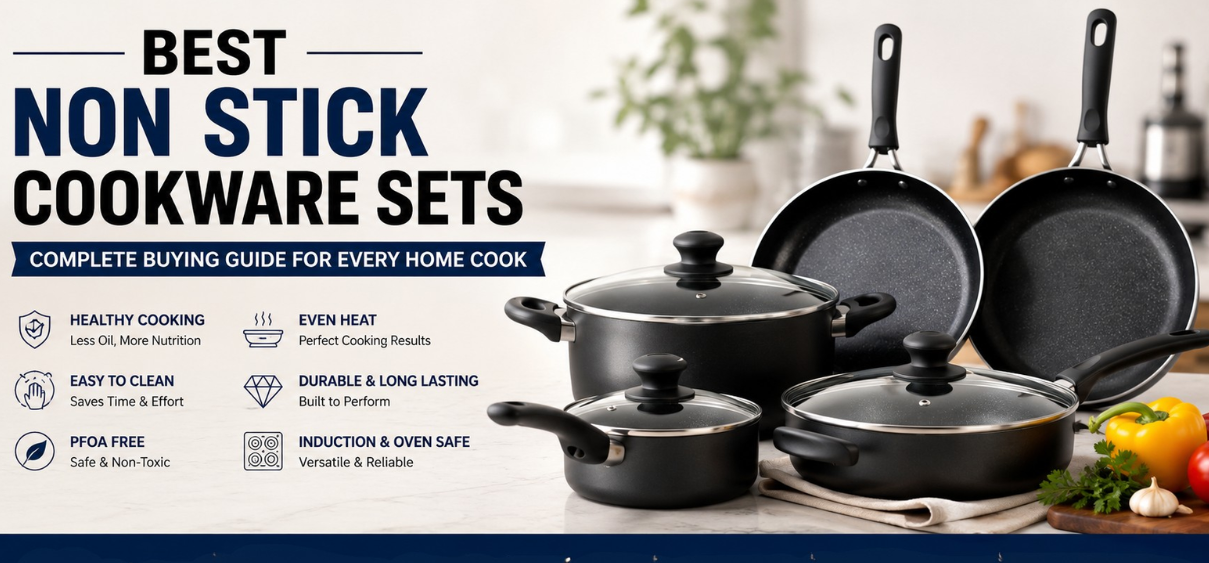
Best Non Stick Cookware Sets: Complete Buying Guide for Every Home Cook
A high-quality non stick cookware set has become one of the most essential investments for modern kitchens. Whether preparing quick breakfasts, healthy meals with minimal oil, delicate fish recipes, or everyday family dinners, the right cookware significantly improves cooking performance and convenience.
Today's cookware market offers hundreds of options, ranging from ceramic-coated pans and hard-anodized aluminum cookware to premium titanium-reinforced collections. Choosing the best non stick cookware set requires understanding materials, durability, heat distribution, safety standards, compatibility, and long-term value.
This comprehensive guide explores everything buyers need to know before investing in a cookware set, helping them select products that deliver exceptional cooking performance, durability, and convenience for years.
Why Non Stick Cookware Sets Remain Popular
Non stick cookware continues to dominate kitchens worldwide due to its versatility and ease of use.
Key advantages include:
- Requires less cooking oil
- Easy food release
- Faster cleanup
- Excellent for beginners
- Suitable for delicate foods
- Reduces food sticking and burning
- Lightweight handling
- Energy-efficient cooking
From omelets and pancakes to vegetables and seafood, non stick surfaces simplify everyday cooking tasks.
What Is Non Stick Cookware?
Non stick cookware refers to pots and pans coated with specialized surfaces designed to reduce food adhesion during cooking.
Modern non stick coatings typically include:
- PTFE-based coatings
- Ceramic coatings
- Titanium-enhanced coatings
- Diamond-infused coatings
- Granite-style coatings
These advanced technologies create smooth cooking surfaces that improve cooking performance while minimizing cleanup effort.
Types of Non Stick Cookware Materials
Understanding cookware materials is crucial before purchasing a cookware set.
1. Aluminum Non Stick Cookware
Aluminum remains the most common base material.
Benefits
- Lightweight
- Affordable
- Excellent heat conductivity
- Quick heating
Drawbacks
- Can warp if poorly constructed
- Requires quality coating for longevity
2. Hard-Anodized Aluminum Cookware
Hard-anodized cookware undergoes an electrochemical process that strengthens aluminum.
Benefits
- Highly durable
- Scratch resistant
- Better heat retention
- Professional appearance
Drawbacks
- Slightly heavier
- More expensive
Hard-anodized cookware is often considered the best balance between performance and affordability.
3. Stainless Steel with Non Stick Interior
Some premium cookware combines stainless steel exteriors with non stick interiors.
Benefits
- Durable construction
- Attractive design
- Excellent longevity
Drawbacks
- Higher price point
4. Ceramic Non Stick Cookware
Ceramic cookware uses a silica-based coating instead of traditional PTFE.
Benefits
- PTFE-free
- Attractive appearance
- Smooth cooking surface
Drawbacks
- Shorter lifespan
- May lose effectiveness faster
Features to Look for in the Best Non Stick Cookware Sets
Before purchasing cookware, buyers should evaluate several important features.
Coating Quality
The quality of the coating determines durability and cooking performance.
Look for:
- Multi-layer coating
- Reinforced surfaces
- Scratch resistance
- Manufacturer warranties
Heat Distribution
Even heating prevents hot spots and improves cooking results.
Quality cookware should provide:
- Uniform heat transfer
- Consistent cooking temperatures
- Reduced burning
Handle Design
Comfortable handles improve safety and usability.
Ideal handles should be:
- Heat resistant
- Ergonomic
- Securely riveted
- Comfortable to grip
Oven Compatibility
Many modern cookware sets support oven cooking.
Popular ranges include:
- Up to 350°F
- Up to 450°F
- Up to 500°F
Higher oven ratings increase versatility.
Induction Compatibility
Not all cookware works on induction cooktops.
Look for:
- Magnetic bases
- Induction-ready symbols
- Stainless steel induction plates
Best Non Stick Cookware Set Components
A complete cookware collection should include versatile pieces.
| Cookware Piece | Purpose |
|---|---|
| Fry Pan | Eggs, pancakes, meats |
| Saucepan | Sauces, soups, oatmeal |
| Sauté Pan | Vegetables and one-pan meals |
| Stockpot | Pasta and large batches |
| Lid | Heat retention and simmering |
| Steamer Insert | Healthy cooking |
How to Choose the Right Non Stick Cookware Set
For Beginners
Recommended features:
- Affordable pricing
- Lightweight construction
- Easy maintenance
- Essential cookware pieces
For Families
Look for:
- Larger capacities
- Multiple pans
- Durable coatings
- Dishwasher-safe construction
For Professional-Level Cooking
Prioritize:
- Hard-anodized construction
- Heavy-gauge materials
- Superior heat control
- Premium coatings
Benefits of Cooking with Non Stick Cookware
Healthier Cooking
Less oil is required for cooking.
Benefits include:
- Reduced calorie intake
- Lower fat consumption
- Cleaner meals
Faster Cleanup
Food residue releases easily.
Advantages:
- Less scrubbing
- Reduced water use
- Time savings
Improved Food Presentation
Delicate foods maintain their shape.
Examples include:
- Omelets
- Fish fillets
- Crepes
- Pancakes
Common Mistakes That Damage Non Stick Cookware
Avoiding common mistakes extends cookware lifespan.
Using Metal Utensils
Metal tools can scratch protective coatings.
Use:
- Silicone utensils
- Wooden spoons
- Nylon spatulas
Overheating Empty Pans
Excessive heat damages coatings.
Best practice:
- Add ingredients before prolonged heating
- Use medium heat whenever possible
Improper Cleaning
Avoid:
- Steel wool
- Abrasive pads
- Harsh detergents
Use soft sponges instead.
Ceramic vs Traditional Non Stick Cookware
| Feature | Ceramic | Traditional Non Stick |
| Food Release | Excellent | Excellent |
| Durability | Moderate | High |
| Heat Tolerance | High | Moderate |
| Longevity | Moderate | High |
| Maintenance | Easy | Easy |
| Cost | Moderate | Moderate |
Both options perform well depending on cooking preferences.
Best Foods to Cook in Non Stick Cookware
Non stick cookware excels with delicate foods.
Popular examples:
- Eggs
- Pancakes
- French toast
- Fish
- Grilled sandwiches
- Vegetables
- Chicken breast
- Stir-fries
How Long Does Non Stick Cookware Last?
Average lifespan varies based on quality and care.
| Quality Level | Expected Lifespan |
| Budget | 1–3 Years |
| Mid-Range | 3–5 Years |
| Premium | 5–10 Years |
Proper maintenance significantly increases longevity.
How to Maintain Non Stick Cookware
Follow these practices:
- Wash after cooling
- Hand wash when possible
- Use gentle detergents
- Store carefully
- Avoid stacking without protection
- Cook at moderate temperatures
- Use non-metal utensils
Consistent maintenance preserves cooking performance.
Signs It's Time to Replace Your Cookware
Replace cookware when:
- Coating peels
- Food sticks excessively
- Surface becomes scratched
- Warping occurs
- Heat distribution declines
Replacing damaged cookware improves safety and cooking results.
Non Stick Cookware Safety Considerations
Modern cookware manufacturing has improved significantly.
Consumers should choose products that are:
- PFOA-free
- Lead-free
- Cadmium-free
- Manufactured by reputable brands
- Tested for food safety standards
High-quality cookware offers excellent safety when used according to manufacturer instructions.
Budget vs Premium Non Stick Cookware
Budget Cookware
Advantages:
- Affordable
- Good for occasional use
- Widely available
Limitations:
- Shorter lifespan
- Less durable coatings
Premium Cookware
Advantages:
- Better durability
- Superior heat control
- Enhanced cooking performance
- Longer warranties
Limitations:
- Higher upfront cost
Long-term value often favors premium cookware.
Top Features Buyers Want in 2026
Current trends include:
- Eco-friendly coatings
- PFAS-free technology
- Induction compatibility
- Dishwasher-safe designs
- Oven-safe construction
- Stackable storage solutions
- Scratch-resistant coatings
- Lightweight engineering
Manufacturers continue introducing innovations that improve convenience and performance.
Final Verdict
The best non stick cookware set combines durability, cooking efficiency, safety, and value. Buyers should focus on coating quality, construction materials, heat distribution, induction compatibility, and ease of maintenance. A well-chosen cookware set transforms daily meal preparation into a faster, cleaner, and more enjoyable experience while delivering consistent cooking results for years.
https://roobai.com/search?s=non+stick+cookware+sets25 Frequently Asked Questions About Non Stick Cookware Sets
1. What is the best material for non stick cookware?
Hard-anodized aluminum is widely considered one of the best options.
2. Is non stick cookware safe?
Yes, modern high-quality cookware is generally safe when used correctly.
3. Can non stick pans go in the oven?
Many models are oven-safe, but temperature limits vary.
4. How long do non stick pans last?
Typically between 3 and 10 years depending on quality and maintenance.
5. Can metal utensils be used?
No. Silicone, wood, or nylon utensils are recommended.
6. Is ceramic cookware better than traditional non stick?
Each has advantages depending on cooking preferences.
7. Are non stick pans dishwasher safe?
Many are, though hand washing often extends lifespan.
8. Why does food start sticking over time?
Coatings naturally wear with use.
9. Can scratched cookware still be used?
Replacement is generally recommended when coating damage becomes significant.
10. Is hard-anodized cookware worth it?
Yes, due to its durability and cooking performance.
11. Can non stick cookware be used on induction cooktops?
Only induction-compatible models.
12. What temperature is safe for non stick cookware?
Follow manufacturer guidelines.
13. How should cookware be stored?
Avoid stacking without protective liners.
14. Are expensive cookware sets better?
Premium sets often provide greater durability.
15. What foods work best in non stick cookware?
Eggs, fish, pancakes, and delicate foods.
16. Does non stick cookware require oil?
Minimal oil is usually sufficient.
17. Can cookware warp?
Yes, especially lower-quality products.
18. How do I clean burnt residue?
Use warm water and non-abrasive cleaning tools.
19. Are granite-coated pans truly granite?
Typically they feature decorative coatings rather than solid granite.
20. Is ceramic coating environmentally friendly?
Many consumers choose ceramic for this reason.
21. What size cookware set is best?
10 to 15-piece sets suit most households.
22. Are glass lids useful?
Yes, they allow monitoring without lifting.
23. What causes coating deterioration?
High heat, scratches, and improper cleaning.
24. Can cookware be repaired?
Most non stick coatings cannot be effectively repaired.
25. What is the best cookware investment for long-term use?
Premium hard-anodized non stick cookware offers excellent long-term value.