
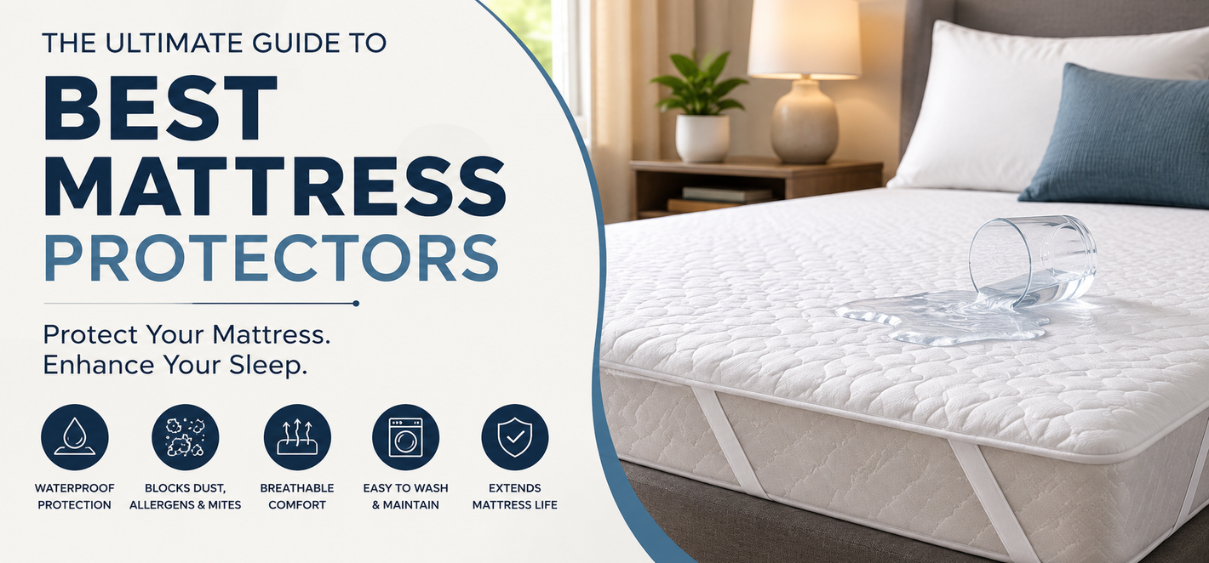
A mattress protector is one of the simplest and most practical additions we can make to a bedroom. It creates a protective layer between the sleeper and the mattress, helping defend the mattress from sweat, spills, stains, dust, allergens, and everyday wear. Since a quality mattress can represent a significant investment, protecting it properly can help us maintain a cleaner, more comfortable sleeping environment and potentially extend its useful life.
The best mattress protector is not necessarily the thickest, most expensive, or most heavily advertised option. The right choice depends on several factors, including material, waterproofing, breathability, fit, mattress depth, noise, temperature regulation, washing requirements, and personal comfort preferences.
We may need a different protector for a child's bed, a guest bedroom, a memory foam mattress, a luxury mattress, or a home where accidental spills are a concern. By understanding the differences between available designs, we can choose a protector that provides the right balance of protection, comfort, durability, and convenience.
This comprehensive guide explores the best mattress protectors, the features we should consider before buying, the different types available, and practical ways to choose and maintain the right option for our mattress.
What Is a Mattress Protector?
A mattress protector is a removable layer designed to cover and protect a mattress. It is usually placed directly over the mattress and beneath the fitted sheet.
Depending on its construction, a protector may help shield the mattress from:
- Sweat and body moisture
- Accidental spills
- Food and drink stains
- Dust and everyday debris
- Skin oils
- Pet accidents
- General household dirt
- Wear caused by regular use
Some mattress protectors are designed primarily for comfort and cleanliness, while others focus heavily on waterproof protection. Certain models combine both functions by using a soft, breathable upper fabric with a waterproof membrane underneath.
A mattress protector should not be confused with a mattress topper. A mattress topper is generally intended to change the feel or support of a mattress, while a mattress protector is primarily designed to protect the mattress.
Why Should We Use a Mattress Protector?
A mattress is difficult to clean thoroughly once it becomes stained or contaminated. Unlike bedsheets, most mattresses cannot simply be placed in a washing machine.
A mattress protector gives us a removable barrier that can be washed regularly. This makes routine bedroom maintenance much easier.
1. Protecting Against Spills and Stains
One of the main reasons we choose a waterproof mattress protector is to prevent liquids from reaching the mattress. This can be especially useful in homes with children, pets, or elderly family members.
A waterproof layer can help protect against:
- Water
- Juice
- Tea and coffee
- Sweat
- Other accidental liquid spills
However, we should always check the product's construction and waterproof rating rather than assuming every mattress protector is completely waterproof.
2. Helping Maintain Mattress Hygiene
We spend many hours in bed, and our mattress is exposed to moisture, skin oils, and dust over time. A washable mattress protector gives us an additional layer of defense between the mattress and everyday use.
Regularly washing the protector can help us maintain a cleaner sleeping environment without repeatedly cleaning the mattress itself.
3. Protecting a Valuable Mattress
A good mattress can be a substantial investment. Once a mattress develops permanent stains or suffers liquid damage, restoring it can be difficult.
Using a protector from the beginning allows us to take a proactive approach to mattress care.
4. Easier Cleaning
A removable mattress protector is significantly easier to wash than a mattress. We can remove it, follow the manufacturer's care instructions, wash it, dry it, and put it back on the bed.
This makes the protector particularly useful for households that prioritize convenient cleaning.
5. Supporting Long-Term Mattress Care
A mattress protector cannot prevent every form of mattress wear. It does not replace proper mattress rotation when recommended by the manufacturer, adequate bed support, or regular cleaning.
However, it can help reduce exposure to moisture, stains, and everyday contamination, which are among the issues that can make mattress maintenance more difficult.
Types of Mattress Protectors
We can find mattress protectors in several different designs. Understanding the differences helps us choose one that matches our specific needs.
Waterproof Mattress Protectors
Waterproof mattress protectors are designed to prevent liquid from passing through to the mattress.
Many use a waterproof membrane, often combined with a fabric surface that is designed to remain comfortable against the body.
The best waterproof mattress protector should ideally offer:
- Reliable liquid resistance
- A comfortable sleeping surface
- Good breathability
- Secure mattress coverage
- Minimal noise
- Easy washing
- Durable construction
A waterproof protector is especially useful for children's beds, guest rooms, homes with pets, and households where accidental spills are a concern.
Cotton Mattress Protectors
Cotton protectors are popular because cotton is naturally soft and comfortable. Depending on the construction, cotton can also offer good breathability.
Cotton protectors are suitable for sleepers who prioritize:
- Natural-feeling materials
- Softness
- Air circulation
- Everyday comfort
However, a cotton mattress protector is not automatically waterproof. If liquid protection is important to us, we should look for a model that specifically includes a waterproof backing or membrane.
Quilted Mattress Protectors
Quilted mattress protectors contain additional padding or stitched layers. They can provide a slightly softer surface while protecting the mattress.
They may be a good choice when we want:
- Mild cushioning
- Extra comfort
- A plush sleeping surface
- Protection from everyday dirt and moisture
However, a quilted protector is not necessarily a substitute for a mattress topper. If we need substantial changes to mattress firmness or support, a dedicated topper may be more appropriate.
Cooling Mattress Protectors
Some protectors are specifically designed to help manage heat during sleep.
These may use:
- Breathable cotton
- Moisture-wicking fabrics
- Lightweight construction
- Specialized cooling textiles
- Air-permeable materials
A cooling mattress protector can be useful for sleepers who tend to feel warm at night. However, we should remember that overall sleep temperature is influenced by the mattress, sheets, blankets, room temperature, pajamas, and personal preferences.
A protector alone cannot guarantee a cool sleeping experience.
Hypoallergenic Mattress Protectors
Hypoallergenic protectors are designed to create a barrier that may help reduce exposure to common allergens and irritants.
They can be particularly appealing to people who want an additional layer of protection against:
- Dust
- Household allergens
- Mattress contamination
- Pet-related debris
When shopping for a hypoallergenic mattress protector, we should examine the product's construction and care instructions carefully.
Bed Bug Mattress Encasements
A mattress encasement is different from a standard mattress protector. It typically surrounds the mattress more completely, often enclosing all sides.
These products may be designed specifically to help protect against bed bugs and other unwanted pests.
If we are purchasing an encasement for this purpose, we should look for:
- Full mattress coverage
- Secure zipper construction
- Durable fabric
- Appropriate sizing
- A design specifically intended for pest protection
A standard fitted mattress protector does not necessarily provide the same level of coverage as a full encasement.
Best Mattress Protector Materials
The material we choose affects comfort, breathability, durability, noise, and maintenance.
Cotton
Cotton is a popular choice for its soft feel and breathability.
Advantages:
- Soft against the skin
- Comfortable for everyday use
- Generally breathable
- Familiar natural fabric
Considerations:
- Not automatically waterproof
- May shrink if washed incorrectly
- May require careful drying
Polyester
Polyester is commonly used because it is durable and relatively easy to maintain.
Advantages:
- Durable
- Easy to wash
- Often affordable
- Resistant to wrinkles
Considerations:
- May feel warmer than highly breathable natural fabrics
- Quality varies significantly between products
Bamboo-Derived Fabrics
Some mattress protectors use bamboo-derived fibers, often marketed for their soft feel and moisture-management properties.
These products can appeal to sleepers looking for a smooth, soft surface. However, we should examine the actual fabric composition and care instructions rather than relying solely on marketing descriptions.
Tencel and Other Specialized Fibers
Some premium mattress protectors use specialized fibers designed to improve softness and moisture management.
These may be suitable when we prioritize:
- Smooth texture
- Moisture management
- Breathability
- Premium comfort
The specific performance depends on the fabric construction and the protector's overall design.
Waterproof Membranes
Waterproof protectors often use a thin membrane beneath the surface fabric.
The best designs aim to balance liquid resistance with breathability. A poorly designed waterproof layer may trap heat or create a crinkling sound, while a well-constructed protector can provide protection without significantly changing the mattress feel.
How to Choose the Best Mattress Protector
Choosing the right protector becomes easier when we evaluate the following factors.
1. Choose the Correct Mattress Size
The protector must match the mattress dimensions.
Common mattress sizes include:
- Twin
- Twin XL
- Full
- Queen
- King
- California King
We should measure our mattress before purchasing, particularly if it is an unusual size.
2. Check Mattress Depth
Mattress thickness is one of the most overlooked factors.
A protector designed for a standard-depth mattress may not fit properly over a particularly thick mattress or a mattress combined with a topper.
We should check the product's maximum mattress depth and compare it with the actual height of our mattress.
An inadequate fit can cause:
- Corners to pop off
- Wrinkling
- Movement during sleep
- Difficult installation
3. Decide Whether Waterproofing Is Necessary
If we want protection from spills, sweat, or accidents, waterproofing may be essential.
If our main priority is softness and breathability, a non-waterproof cotton protector may be sufficient.
The key question is simple:
What are we primarily trying to protect the mattress from?
4. Consider Breathability
Breathability matters because we spend several hours sleeping on the protector every night.
If a protector prevents airflow excessively, it may contribute to a warmer sleeping experience.
For warm sleepers, we should look for:
- Lightweight materials
- Breathable fabrics
- Moisture-wicking surfaces
- Thin waterproof membranes
- Air-permeable construction
5. Consider Noise
Some waterproof protectors make a noticeable crinkling sound when we move.
This can be distracting for light sleepers.
A quieter protector typically uses a softer, thinner waterproof layer combined with a fabric surface designed to reduce noise.
Whenever possible, product reviews can help us determine whether a protector is genuinely quiet during movement.
6. Examine the Fit
A mattress protector should remain securely in place.
Fitted-sheet-style protectors are generally easy to install and remove. Full encasements provide more complete coverage but can take longer to put on.
For everyday convenience, a secure fitted design is often practical.
7. Check Washing Instructions
A mattress protector should be easy to clean.
Before buying, we should check:
- Machine-wash compatibility
- Recommended water temperature
- Dryer instructions
- Bleaching restrictions
- Expected drying time
If the protector takes too long to dry, we may find it inconvenient to maintain regularly.
8. Look at Durability
A protector is repeatedly washed and dried, so durability matters.
We should examine:
- Stitching
- Elastic quality
- Seam construction
- Waterproof membrane durability
- Fabric thickness
A protector that fails after a few washes may offer poor long-term value even if the initial price is low.
Mattress Protector Comparison Table
| Feature | Best For | Main Benefit | Potential Consideration |
|---|---|---|---|
| Waterproof Protector | Spill protection | Blocks liquids | May retain some heat |
| Cotton Protector | Everyday comfort | Soft and breathable | May not be waterproof |
| Quilted Protector | Added softness | Light cushioning | Can feel warmer |
| Cooling Protector | Warm sleepers | Moisture and heat management | Performance varies |
| Hypoallergenic Protector | Allergy-conscious households | Creates an additional barrier | Requires regular washing |
| Mattress Encasement | Maximum coverage | Covers more of the mattress | More difficult to install |
| Premium Fiber Protector | Luxury comfort | Soft, refined feel | Higher price |
Waterproof vs. Non-Waterproof Mattress Protectors
The decision between waterproof and non-waterproof designs depends primarily on our needs.
Waterproof Mattress Protector
We should consider waterproofing when:
- We have young children
- Pets sleep on the bed
- Accidental spills are common
- We want maximum liquid protection
- We want to protect an expensive mattress
Non-Waterproof Mattress Protector
A non-waterproof option may be suitable when:
- Breathability is the main priority
- We rarely experience spills
- We prefer a more natural fabric feel
- We want a lightweight layer
For many households, a breathable waterproof protector offers the best compromise because it combines everyday comfort with practical liquid protection.
How Often Should We Wash a Mattress Protector?
The ideal washing frequency depends on personal circumstances.
As a general approach, we may wash a mattress protector:
- Every few weeks for routine maintenance
- More frequently in hot or humid weather
- After spills or accidents
- More often if pets use the bed
- According to the manufacturer's care instructions
We should also wash the protector whenever it becomes visibly dirty or develops an odor.
A regular cleaning schedule helps us maintain a fresher sleeping environment.
How to Wash a Mattress Protector
We should always follow the manufacturer's instructions because waterproof membranes and specialty fabrics can require specific care.
A general cleaning process includes:
- Remove the fitted sheet and mattress protector.
- Check the care label.
- Close zippers or fasteners if applicable.
- Wash using the recommended cycle.
- Avoid harsh chemicals unless specifically permitted.
- Dry according to the manufacturer's instructions.
- Make sure the protector is completely dry before reinstalling it.
A waterproof protector should never be treated exactly like ordinary bedding unless its care instructions allow it.
Excessive heat can damage certain waterproof membranes and elastic components.
How to Put a Mattress Protector on a Bed
Putting on a mattress protector correctly helps prevent movement and wrinkles.
Step 1: Remove the Bedding
Take off the sheets and any existing bedding.
Step 2: Check the Mattress
Make sure the mattress surface is clean and dry.
Step 3: Identify the Top and Bottom
If the protector has a waterproof layer, place it according to the manufacturer's instructions.
Step 4: Fit the Corners
Start with one corner and work around the mattress.
Step 5: Smooth the Surface
Remove unnecessary folds and wrinkles.
Step 6: Add the Fitted Sheet
Place the sheet over the protector.
A properly fitted protector should remain stable while we sleep.
Mattress Protector vs. Mattress Topper
These two products serve different purposes.
| Mattress Protector | Mattress Topper |
|---|---|
| Protects the mattress | Changes mattress feel |
| Usually thin | Usually thicker |
| Focuses on cleanliness | Focuses on comfort |
| May be waterproof | Usually not waterproof |
| Easy to wash | Often more difficult to clean |
| Does not significantly alter firmness | Can make a mattress softer or firmer |
We can use both products together. The mattress topper can sit on the mattress, while the protector can be placed over the topper if the design and manufacturer recommendations allow it.
Best Mattress Protector for Different Needs
Best Mattress Protector for Children
For children's beds, waterproofing is often the most important feature.
We should prioritize:
- Waterproof protection
- Secure fit
- Easy washing
- Durable construction
- Quiet materials
A washable waterproof protector can make dealing with unexpected accidents much easier.
Best Mattress Protector for Adults
For everyday adult use, we may prioritize a combination of:
- Breathability
- Comfort
- Waterproofing
- Quiet construction
- Easy maintenance
A thin, breathable waterproof protector is often a practical all-round choice.
Best Mattress Protector for Hot Sleepers
We should look for:
- Lightweight construction
- Breathable surface fabric
- Moisture management
- Thin waterproof membranes
- Minimal padding
Avoid unnecessarily thick protectors if temperature regulation is a major concern.
Best Mattress Protector for Memory Foam Mattresses
Memory foam can naturally retain more heat than some other mattress constructions.
For this reason, we may prefer a thin, breathable protector that does not significantly interfere with the mattress's pressure-relieving properties.
A very thick protector may change the way the mattress feels.
Best Mattress Protector for Pets
If pets regularly sleep on the bed, liquid protection and durability become particularly important.
We should consider:
- Waterproof construction
- Strong seams
- Secure fit
- Easy machine washing
- Durable fabric
A full encasement may be worth considering when we need more comprehensive mattress coverage.
Common Mattress Protector Buying Mistakes
Choosing the Wrong Size
Even a high-quality protector becomes frustrating if it does not fit correctly.
We should measure both the mattress length and width and check its depth.
Ignoring Breathability
A waterproof protector is useful, but excessive heat can affect comfort.
We should look for designs that balance waterproofing and airflow.
Buying Based Only on Price
The cheapest option may not offer the best long-term value.
We should consider:
- Material
- Construction
- Warranty
- Washability
- Durability
- Fit
Ignoring Care Instructions
A protector that requires special cleaning may be inconvenient for everyday use.
Assuming All Waterproof Protectors Are the Same
Waterproofing technology varies considerably. Some protectors are quiet and breathable, while others may feel warmer or noisier.
How to Maintain a Mattress Protector
Proper maintenance can help extend the protector's useful life.
We should:
- Wash it according to the care label
- Avoid excessive heat when prohibited
- Inspect seams regularly
- Check the waterproof layer for damage
- Replace it if the elastic becomes loose
- Replace it if waterproofing deteriorates
- Keep the mattress itself dry
- Avoid folding it while damp
A mattress protector is a consumable bedding accessory. Even a high-quality protector may eventually need replacement.
How Long Does a Mattress Protector Last?
The lifespan depends on:
- Material quality
- Washing frequency
- Washing temperature
- Drying method
- Frequency of use
- Construction quality
A protector that is washed frequently may wear out faster than one used occasionally.
We should consider replacing the protector when we notice:
- Tears
- Holes
- Damaged seams
- Loose elastic
- Persistent odors
- Reduced waterproof performance
- Significant fabric deterioration
Are Mattress Protectors Worth It?
For most households, a mattress protector can be a practical investment.
The main advantage is simple: we can wash the protector much more easily than we can clean the mattress.
A good protector can help us:
- Reduce exposure to spills
- Maintain mattress cleanliness
- Simplify bedroom maintenance
- Protect an expensive mattress
- Manage everyday moisture
- Improve long-term mattress care
The best choice depends on what we need from it. A person who prioritizes breathability may choose a lightweight cotton-based protector, while a family with children may prioritize waterproofing.
Final Mattress Protector Buying Checklist
Before purchasing, we should check:
- Correct mattress size
- Suitable mattress depth
- Waterproof or non-waterproof construction
- Breathability
- Fabric composition
- Noise level
- Secure fit
- Machine-wash compatibility
- Drying requirements
- Durability
- Warranty
- Return policy
- Reviews from verified buyers
A mattress protector should disappear into our bedding routine rather than becoming another source of frustration. When the size is correct, the material is comfortable, the fit is secure, and the protection matches our needs, it can quietly perform its job night after night.
Faqs
1. What is the main purpose of a mattress protector?
The main purpose of a mattress protector is to create a protective barrier between the sleeper and the mattress. Depending on its construction, it can help protect against spills, sweat, stains, dust, and everyday wear.
2. Is a waterproof mattress protector better?
A waterproof mattress protector can be better when liquid protection is important. It is particularly useful for children, pets, and households where accidental spills are common.
3. Does a mattress protector make the bed uncomfortable?
A high-quality, well-fitted mattress protector should have minimal impact on comfort. Very thick or poorly designed protectors may noticeably change the feel of the mattress.
4. Do mattress protectors make noise?
Some waterproof protectors can make a crinkling sound when we move. Modern designs with softer waterproof membranes are generally quieter.
5. Can we wash a mattress protector in a washing machine?
Many mattress protectors are machine washable, but we should always follow the manufacturer's care instructions.
6. How often should we wash a mattress protector?
We can wash it regularly based on use, climate, and personal needs. It should also be washed after spills, accidents, or visible soiling.
7. Does a mattress protector prevent dust mites?
A suitable protector can create a barrier that may reduce exposure to dust mites and allergens, especially when used as part of a regular cleaning routine.
8. Can we use a mattress protector with a mattress topper?
Yes, in many cases. The correct arrangement depends on the type of topper and protector. We should ensure that the protector fits securely over the resulting mattress height.
9. Is cotton good for mattress protectors?
Cotton can be an excellent material for comfort and breathability. However, cotton alone does not necessarily provide waterproof protection.
10. Are waterproof mattress protectors breathable?
Some are. The breathability depends on the fabric and waterproof membrane used in the construction.
11. Can a mattress protector prevent all stains?
No protector can guarantee complete protection in every situation. Its effectiveness depends on the quality of construction, fit, and how quickly spills are addressed.
12. What is the best mattress protector for hot sleepers?
A lightweight protector made with breathable, moisture-managing materials is generally a good choice for people who tend to sleep warm.
13. What is the best mattress protector for children?
A washable waterproof protector with a secure fit is usually a practical option for children's beds.
14. Do we need a mattress protector for a new mattress?
Using a protector from the beginning can help keep a new mattress cleaner and reduce exposure to accidental spills and stains.
15. Can we sleep directly on a mattress protector?
Technically, some protectors can be used directly beneath the sleeper, but most are designed to be covered with a fitted sheet for comfort and hygiene.
16. Can a mattress protector change mattress firmness?
A thin protector generally has little effect on firmness. A thick quilted protector may slightly alter the surface feel.
17. How do we know what size mattress protector to buy?
We should choose the protector that matches the mattress length and width and verify that its depth range accommodates our mattress thickness.
18. What happens if the mattress protector is too small?
A protector that is too small may pull away from the corners, wrinkle, or fail to cover the mattress properly.
19. What happens if the mattress protector is too large?
An oversized protector may shift, bunch, or create uncomfortable wrinkles.
20. Can mattress protectors prevent bed bugs?
A standard mattress protector should not automatically be considered bed bug protection. A specifically designed, fully enclosed mattress encasement is more appropriate when bed bug protection is required.
21. How long does a mattress protector last?
The lifespan varies according to material, construction, washing frequency, and usage. We should replace it when it becomes damaged or no longer performs its protective function.
22. Can we tumble-dry a mattress protector?
Some can be tumble-dried, while others cannot. We should follow the manufacturer's instructions because excessive heat may damage certain waterproof membranes or elastic components.
23. Is a mattress protector the same as a mattress topper?
No. A mattress protector primarily protects the mattress, while a mattress topper is generally used to change comfort, cushioning, or firmness.
24. Should we buy a waterproof mattress protector for a memory foam mattress?
A waterproof protector can be useful for protecting a memory foam mattress from spills. We should choose a thin, breathable design that does not unnecessarily alter the mattress feel.
25. What is the best mattress protector overall?
For many households, a comfortable, breathable, waterproof mattress protector with a secure fit and easy-care construction offers the best combination of protection and convenience. The ideal choice ultimately depends on mattress size, climate, sleeping preferences, and household needs.