
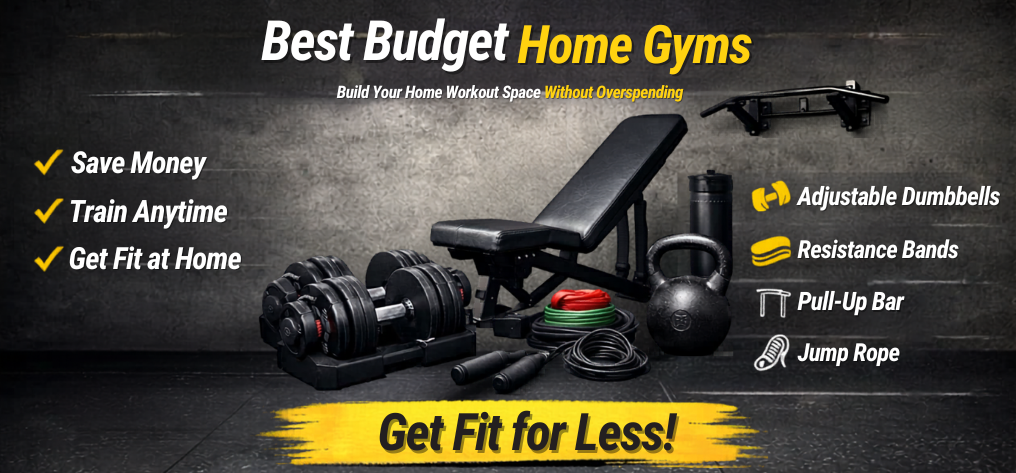
Creating a budget-friendly home gym is one of the most effective ways to stay consistent with fitness while avoiding expensive gym memberships. With thoughtful planning and smart equipment choices, we can build a high-performance training environment at home that supports strength training, cardio, mobility, and recovery—without draining our finances.
In this comprehensive guide, we explore the best budget home gym setups, essential equipment, space optimization strategies, and cost-saving tips that allow anyone to create a professional-level training area at home.
Why Budget Home Gyms Are the Future of Fitness
Fitness trends have shifted dramatically toward home-based training environments. A home gym removes travel time, eliminates membership fees, and gives complete control over workout routines.
Key advantages include:
-
Lower long-term costs
-
Convenience and time efficiency
-
Personalized workout space
-
Privacy during training
-
Flexibility to train anytime
A well-designed budget home gym setup can easily replicate the training quality of many commercial gyms.
Essential Equipment for the Best Budget Home Gym
The key to affordability is focusing on multi-functional equipment that allows a wide range of exercises.
Adjustable Dumbbells
Adjustable dumbbells are the cornerstone of a budget home gym. They provide the flexibility of an entire dumbbell rack without occupying space or costing thousands.
Benefits include:
-
Multiple weight levels in one compact set
-
Ideal for full-body strength workouts
-
Perfect for beginners and advanced lifters
Exercises possible:
-
Dumbbell presses
-
Goblet squats
-
Romanian deadlifts
-
Rows
-
Shoulder presses
-
Lunges
Resistance Bands
Resistance bands are among the most affordable training tools available, yet they deliver tremendous versatility.
Advantages:
-
Extremely portable
-
Suitable for rehabilitation and strength training
-
Allow progressive overload
-
Perfect for small spaces
Popular exercises:
-
Band rows
-
Band squats
-
Assisted pull-ups
-
Lateral raises
-
Glute kickbacks
Adjustable Weight Bench
A compact adjustable bench dramatically expands training possibilities.
With one bench we can perform:
-
Bench presses
-
Incline chest presses
-
Seated shoulder presses
-
Step-ups
-
Bulgarian split squats
-
Core exercises
A foldable model saves space and keeps the home gym organized.
Pull-Up Bar
A pull-up bar provides one of the highest strength returns for the lowest investment.
Benefits include:
-
Powerful upper body development
-
Minimal installation
-
Supports bodyweight training
Exercises include:
-
Pull-ups
-
Chin-ups
-
Hanging leg raises
-
Knee raises
-
Isometric holds
Kettlebells
Kettlebells bring dynamic strength and cardio training into a home gym.
They are perfect for:
-
Explosive movements
-
Core strength
-
Functional fitness
Popular kettlebell exercises:
-
Swings
-
Goblet squats
-
Turkish get-ups
-
Clean and press
-
Snatches
Budget Cardio Equipment for Home Gyms
Cardio equipment can be expensive, but several affordable alternatives provide excellent conditioning.
Jump Rope
A jump rope is one of the best value cardio tools ever created.
Benefits:
-
High calorie burn
-
Improves coordination
-
Extremely affordable
-
Requires almost no space
Ten minutes of jump rope can match the cardio intensity of much longer workouts.
Compact Exercise Bikes
Many budget exercise bikes provide:
-
Adjustable resistance
-
Heart rate tracking
-
Low-impact cardio
They are perfect for:
-
Beginners
-
Injury recovery
-
Daily cardiovascular training
Folding Treadmills
Modern folding treadmills offer:
-
Space-saving design
-
Quiet motors
-
Basic workout programs
They allow running or walking workouts even in apartments.
Best Budget Home Gym Layout Ideas
Space efficiency determines how functional a home gym becomes. Even small apartments can support effective gym setups.
Corner Gym Setup
A corner layout works well with minimal equipment.
Key elements:
-
Dumbbell rack
-
Bench
-
Resistance bands
-
Yoga mat
Advantages:
-
Minimal footprint
-
Easy organization
-
Fast setup
Garage Home Gym
Garages are one of the most popular locations for budget gyms.
Features include:
-
More space for equipment
-
Better ventilation
-
Ability to install racks or bars
Essential additions:
-
Rubber flooring
-
Wall storage
-
Foldable squat rack
Bedroom Micro Gym
For extremely small spaces, a bedroom gym can still work.
Recommended equipment:
-
Adjustable dumbbells
-
Resistance bands
-
Foldable bench
-
Jump rope
This setup allows full workouts within less than 25 square feet.
Budget Home Gym Flooring Options
Flooring protects both equipment and the home.
Popular options include:
Rubber Interlocking Tiles
Benefits:
-
Shock absorption
-
Noise reduction
-
Easy installation
Foam Exercise Mats
Ideal for:
-
Yoga
-
Bodyweight workouts
-
Mobility training
Horse Stall Mats
A favorite among serious lifters due to:
-
Exceptional durability
-
Low cost per square foot
-
Heavy-duty protection
Best Budget Strength Training Setup
Below is a powerful minimalist home gym system capable of training the entire body.
| Equipment | Purpose | Approximate Budget Category |
|---|---|---|
| Adjustable dumbbells | Strength training | Essential |
| Adjustable bench | Pressing exercises | Essential |
| Pull-up bar | Upper body strength | Essential |
| Resistance bands | Assistance & rehab | Essential |
| Jump rope | Cardio conditioning | Optional |
| Kettlebell | Functional strength | Optional |
This setup allows:
-
Push workouts
-
Pull workouts
-
Leg training
-
Core workouts
-
Conditioning sessions
Weekly Training Plan for a Budget Home Gym
A home gym becomes effective when used with structured training routines.
Day 1: Upper Body Push
Exercises:
-
Dumbbell bench press
-
Shoulder press
-
Dumbbell triceps extensions
-
Push-ups
Day 2: Lower Body
Exercises:
-
Goblet squats
-
Lunges
-
Romanian deadlifts
-
Glute bridges
Day 3: Cardio and Core
Exercises:
-
Jump rope intervals
-
Planks
-
Hanging leg raises
-
Russian twists
Day 4: Upper Body Pull
Exercises:
-
Pull-ups
-
Dumbbell rows
-
Bicep curls
-
Face pulls with bands
Day 5: Full Body Conditioning
Exercises:
-
Kettlebell swings
-
Thrusters
-
Burpees
-
Farmer carries
Cost Breakdown for a Budget Home Gym
| Item | Typical Budget Range |
|---|---|
| Adjustable dumbbells | $100–$250 |
| Adjustable bench | $80–$200 |
| Pull-up bar | $25–$80 |
| Resistance bands | $15–$40 |
| Jump rope | $10–$30 |
| Rubber flooring | $50–$150 |
Total estimated budget: $280–$750
Compared to years of gym memberships, this investment becomes extremely cost-efficient.
Smart Tips to Build a Budget Home Gym
Buy Multi-Purpose Equipment
Equipment that supports many exercises offers the best value.
Examples:
-
Adjustable dumbbells
-
Resistance bands
-
Kettlebells
Prioritize Free Weights
Free weights allow:
-
Greater range of motion
-
Functional strength development
-
Compact storage
Shop Secondhand Equipment
Many people sell barely used equipment.
Places to check:
-
Local marketplaces
-
Community resale apps
-
Fitness forums
This strategy can reduce costs by 50–70%.
Use Vertical Storage
Wall-mounted racks help store:
-
Dumbbells
-
Bands
-
Mats
-
Kettlebells
This maximizes available workout space.
Advanced Upgrades for Budget Home Gyms
After mastering the basic setup, we can expand the gym gradually.
Popular upgrades:
-
Power rack
-
Barbell set
-
Adjustable cable system
-
Suspension trainer
-
Weighted vest
These additions increase training variety while keeping the gym cost-efficient.
Common Mistakes When Building a Budget Home Gym
Avoiding these mistakes keeps the project affordable and effective.
Buying Too Much Equipment Early
Start with essentials first. Gradually expand based on training needs.
Ignoring Floor Protection
Dropping weights can damage floors. Always install protective mats.
Choosing Large Machines
Bulky machines consume space and often limit exercise variety.
Free weights and bands are far more versatile.
The Long-Term Value of a Budget Home Gym
A properly designed home gym offers:
-
Lifetime access to fitness
-
Lower training costs
-
Improved consistency
-
Complete workout flexibility
With a modest investment, we gain the ability to train any time, every day, for years.
This level of convenience and efficiency makes budget home gyms one of the smartest investments for long-term health and fitnes
FAQs
1. What is the cheapest way to start a home gym?
Using resistance bands, a jump rope, and a yoga mat provides an extremely affordable starting point.
2. How much space do I need for a home gym?
Even 20–30 square feet can support a compact workout area.
3. Are adjustable dumbbells worth it?
Yes. They replace multiple dumbbell pairs and save space.
4. Can I build muscle with a budget home gym?
Absolutely. Progressive overload using dumbbells, bands, and bodyweight builds muscle effectively.
5. What flooring is best for a home gym?
Rubber flooring or stall mats offer the best durability.
6. How much does a basic home gym cost?
Most budget setups range between $300 and $700.
7. Is a treadmill necessary?
No. Jump rope and bodyweight circuits provide excellent cardio.
8. Are resistance bands effective for strength training?
Yes. They create constant tension and improve muscle activation.
9. Should beginners build a home gym?
Yes. It removes intimidation and allows gradual progress.
10. What equipment builds the most muscle at home?
Dumbbells and pull-up bars are extremely effective.
11. Can I train legs effectively at home?
Yes. Squats, lunges, and deadlifts work perfectly with dumbbells.
12. How do I save money when buying equipment?
Purchase used equipment and focus on versatile tools.
13. What is the best cardio equipment for small spaces?
Jump ropes and compact bikes.
14. Do I need a squat rack?
Beginners usually do not need one immediately.
15. What exercises require minimal equipment?
Push-ups, squats, lunges, and planks.
16. Can I lose weight using a home gym?
Yes. Strength training combined with cardio burns calories efficiently.
17. How do I organize a small home gym?
Use vertical storage racks and foldable equipment.
18. Are kettlebells good for beginners?
Yes. They teach functional strength and coordination.
19. What is the best home gym for apartments?
Compact dumbbells, bands, and foldable benches.
20. How often should I train at home?
Three to five sessions per week is ideal.
21. Is bodyweight training enough?
Bodyweight training builds strong functional fitness.
22. What accessories improve workouts?
Foam rollers, lifting straps, and workout mats.
23. Can home gyms replace commercial gyms?
For most people, yes.
24. Do home gyms increase workout consistency?
Yes. Convenience dramatically improves adherence.
25. What is the most versatile home gym tool?
Adjustable dumbbells.