
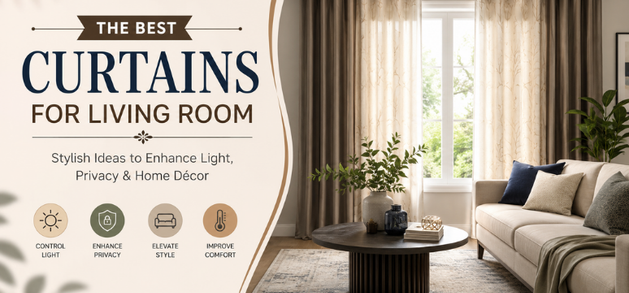
The best curtains for the living room can completely transform the appearance, comfort, and atmosphere of our home. Curtains are not simply decorative pieces that cover windows. They influence the amount of natural light entering the room, improve privacy, help manage indoor temperatures, soften outside noise, and contribute significantly to the overall interior design.
When we choose the right curtains, we bring together several important elements of living room design. Fabric, color, pattern, length, width, texture, lining, and hanging style all work together to determine how our windows and the entire room look and feel. A beautifully furnished living room can appear unfinished when the curtains are too short, too narrow, or poorly matched with the existing décor. On the other hand, thoughtfully selected curtains can make an ordinary space feel polished and welcoming.
Whether we are decorating a new home, refreshing an existing interior, or replacing old window treatments, finding the right curtains requires more than selecting an attractive color. We need to consider our room size, window dimensions, furniture, flooring, wall color, sunlight exposure, privacy requirements, and personal style.
This comprehensive guide explores the best curtains for living rooms, including popular curtain fabrics, colors, designs, lengths, styles, and practical tips for choosing window treatments that combine beauty and everyday functionality.
Why Choosing the Best Curtains for the Living Room Matters
The living room is often one of the most frequently used spaces in our home. It may be where we welcome guests, relax with family, watch television, read, work, or simply enjoy a quiet evening. Because curtains occupy a substantial visual area, they can influence the character of the entire room.
The right curtains can help us:
- Control natural sunlight
- Improve privacy
- Reduce glare on television and computer screens
- Create a warmer and more comfortable atmosphere
- Complement sofas, rugs, cushions, and wall décor
- Add texture and visual depth
- Make windows appear larger
- Create the illusion of higher ceilings
- Support a particular interior design style
- Provide additional insulation near windows
- Reduce the visual impact of unattractive outdoor views
Curtains can also act as a bridge between different design elements. For example, a neutral sofa, patterned rug, and wooden furniture can be visually connected through curtains that incorporate one subtle color found elsewhere in the room.
Best Curtain Fabrics for Living Rooms
The fabric we choose affects appearance, light control, maintenance, durability, and overall atmosphere. Different fabrics work particularly well for different living room requirements.
1. Cotton Curtains
Cotton remains one of the most versatile options for living rooms. It offers a clean, natural appearance and works well in both traditional and contemporary interiors.
Advantages of cotton curtains:
- Lightweight and breathable
- Available in many colors and patterns
- Easy to coordinate with home décor
- Suitable for casual interiors
- Relatively easy to maintain
- Available in sheer, medium-weight, and heavier varieties
Cotton curtains are particularly suitable when we want a relaxed and comfortable living room. They can be paired with blackout or thermal lining when additional light control is required.
2. Linen Curtains
Linen curtains are popular for their naturally textured appearance. They bring an understated elegance to the living room without making the windows look overly formal.
Linen works particularly well with:
- Scandinavian interiors
- Minimalist rooms
- Coastal-inspired décor
- Contemporary homes
- Natural and earthy color palettes
The slightly relaxed texture of linen can soften modern furniture and create an airy atmosphere. However, pure linen may wrinkle more easily than synthetic blends, so linen-blend curtains can be a practical alternative for households seeking a similar appearance with easier maintenance.
3. Velvet Curtains
For a luxurious and dramatic living room, velvet curtains can create an impressive visual statement. Their dense texture and rich appearance add depth to large windows and spacious interiors.
Velvet curtains are especially effective in:
- Glamorous interiors
- Classic living rooms
- Luxury-inspired spaces
- Dark or moody interiors
- Rooms with large windows
Because velvet is visually substantial, we should balance it with lighter walls, streamlined furniture, or simple accessories when we want to prevent the room from feeling overly heavy.
4. Polyester Curtains
Polyester is a practical choice for households looking for durable and easy-care curtains. It is widely available and can be manufactured in a variety of textures, colors, and patterns.
Polyester curtains can offer:
- Easy maintenance
- Good durability
- Resistance to shrinking
- Wide design variety
- Affordable options
- Consistent appearance
For busy households, polyester and polyester-blend curtains can be an excellent everyday choice.
5. Sheer Curtains
Sheer curtains allow natural light to filter through while providing a degree of daytime privacy. They are ideal when we want our living room to feel bright, open, and airy.
Popular sheer fabrics include:
- Voile
- Sheer polyester
- Lightweight cotton
- Organza-style fabrics
Sheer curtains are often layered with heavier curtains or blinds. This combination gives us flexibility because we can enjoy soft daylight during the day and increase privacy or light control when needed.
6. Silk Curtains
Silk curtains offer a sophisticated and elegant appearance. Their natural sheen can enhance formal living rooms and interiors with classic decorative elements.
However, silk typically requires more careful maintenance than many synthetic alternatives. Direct sunlight can also affect delicate fabrics over time, making suitable lining particularly important.
Best Curtain Colors for Living Room
Curtain color can dramatically influence the appearance of our living room. The best choice depends on wall color, furniture, flooring, natural light, and the mood we want to create.
White Curtains
White curtains create a fresh, bright, and spacious appearance. They work especially well in smaller living rooms where we want to maximize the sense of openness.
They complement:
- Minimalist interiors
- Modern furniture
- Light-colored walls
- Scandinavian design
- Coastal themes
Because pure white can show dust and marks more easily, washable fabrics may be preferable in busy households.
Beige Curtains
Beige is a versatile neutral that brings warmth without dominating the room. It pairs well with wooden furniture, cream-colored sofas, brown flooring, and earthy décor.
Beige curtains are particularly useful when we want a timeless appearance that will remain adaptable as our furniture and accessories change.
Grey Curtains
Grey curtains are a popular choice for modern living rooms. Depending on the shade, grey can feel soft and sophisticated or bold and dramatic.
Light grey works well in bright, minimalist rooms, while charcoal grey can create stronger contrast and a more dramatic atmosphere.
Blue Curtains
Blue curtains can introduce a calming and sophisticated element to the living room. Soft blue works well in relaxed interiors, while navy can provide a stronger visual anchor.
Blue curtains pair effectively with:
- White walls
- Grey sofas
- Light wood
- Cream upholstery
- Metallic accents
Green Curtains
Green curtains can connect the interior with natural surroundings. Olive, sage, forest, and muted green tones are particularly suitable for earthy and nature-inspired interiors.
Brown Curtains
Brown curtains can create a warm and grounded atmosphere. They work particularly well with wooden furniture and warm-toned flooring.
However, dark brown curtains may visually reduce the brightness of a small room, so we should consider lighter brown or taupe shades when working with limited natural light.
How to Choose Curtain Colors for a Living Room
Instead of choosing a curtain color in isolation, we should examine the room as a complete visual composition.
We can coordinate curtains with:
- Sofa upholstery
- Accent chairs
- Area rugs
- Throw pillows
- Wall paint
- Flooring
- Artwork
- Decorative accessories
A useful approach is to choose curtains that either blend harmoniously with the existing palette or provide a carefully considered contrast.
For a calm, cohesive room, we can select curtains within the same color family as the walls or upholstery. For a more expressive interior, we can introduce a complementary accent color through patterned or richly colored curtains.
Best Curtain Styles for Living Room Windows
Eyelet Curtains
Eyelet curtains feature metal rings integrated into the top of the fabric. They slide easily along a curtain rod and create neat, contemporary folds.
They are ideal for:
- Modern homes
- Minimalist interiors
- Casual living rooms
- Simple curtain installations
Rod Pocket Curtains
Rod pocket curtains have a fabric sleeve through which the curtain rod passes. They create a traditional appearance but may be less convenient when we frequently open and close the curtains.
Pleated Curtains
Pleated curtains create structured, elegant folds. Common styles include:
- Pinch pleats
- Double pleats
- Triple pleats
- Box pleats
These curtains often suit formal and traditional living rooms, although modern versions can also work beautifully in contemporary interiors.
Tab Top Curtains
Tab top curtains feature fabric loops attached to the top edge. They create a casual decorative appearance and can complement relaxed interiors.
Wave Curtains
Wave curtains create smooth, continuous folds that run evenly across the fabric. They offer a contemporary appearance and work particularly well in modern homes.
Best Curtains for Small Living Rooms
In a small living room, curtains should enhance the sense of space rather than make the room feel crowded.
We can consider:
- Light-colored curtains
- Sheer fabrics
- Floor-length designs
- Simple patterns
- Minimal visual clutter
- Curtains mounted above the window frame
Hanging curtains closer to the ceiling can create the impression of greater height. Extending the curtain rod beyond the window frame can also allow more of the window to remain visible when the curtains are fully open.
For small rooms, light neutral curtains such as white, cream, beige, and soft grey can help maintain a bright atmosphere.
Best Curtains for Large Windows
Large windows require careful attention to both proportion and practicality. Curtains should be wide enough to cover the entire window when closed while still looking full and attractive when open.
For large windows, we can consider:
- Heavy linen blends
- Velvet
- High-quality polyester
- Layered curtains
- Floor-to-ceiling designs
- Multiple curtain panels
For very wide windows, dividing the curtain arrangement into several panels can make opening and closing easier.
Motorized or track-based systems can also be useful for exceptionally large windows, particularly when the curtains are heavy.
Best Curtains for Living Room With Lots of Sunlight
Living rooms with strong sunlight require curtains that provide effective light management.
We can consider:
- Blackout-lined curtains
- Thermal curtains
- Tightly woven fabrics
- Layered curtains
- UV-resistant window treatments
Blackout curtains are especially useful when we need to reduce intense sunlight and glare. However, they may make a room feel darker when closed, so layering them with sheer curtains gives us greater flexibility.
Best Curtains for Privacy
If our living room faces a busy street, neighboring buildings, or nearby homes, privacy becomes an important consideration.
Sheer curtains provide some privacy during daylight hours but may not be sufficient at night when indoor lighting makes the interior more visible from outside.
For stronger privacy, we can choose:
- Medium-weight curtains
- Blackout curtains
- Lined curtains
- Layered sheer and opaque curtains
- Curtains combined with blinds or shades
A layered arrangement allows us to adjust privacy throughout the day without sacrificing natural light completely.
Curtain Length: How Long Should Living Room Curtains Be?
Curtain length has a major impact on the room's visual proportions.
Sill-Length Curtains
These curtains end near the windowsill. They are practical for specific window configurations but may look less dramatic in formal living rooms.
Apron-Length Curtains
These extend slightly below the window frame. They can work well when furniture or radiators prevent the use of floor-length curtains.
Floor-Length Curtains
Floor-length curtains are among the most versatile choices for living rooms. They create a polished and elegant appearance.
Ideally, curtains should reach close to the floor without creating an excessive amount of fabric on the ground.
Puddle-Length Curtains
These curtains extend beyond the floor and allow extra fabric to gather at the bottom. They create a dramatic, luxurious appearance but require more maintenance and are less practical in homes with pets or frequent foot traffic.
How Wide Should Living Room Curtains Be?
Curtain width affects fullness and the appearance of folds.
A curtain that is too narrow can look stretched and unfinished. A curtain with sufficient fullness will create attractive folds when closed.
As a general starting point, we can consider purchasing curtain fabric with approximately 1.5 to 2.5 times the width of the window or curtain rod, depending on the fabric and desired fullness.
Sheer curtains often benefit from greater fullness, while heavier fabrics may require less.
Curtain Rod Placement for a Larger-Looking Living Room
Curtain hardware placement can change the perceived proportions of the room.
To create the appearance of taller windows, we can mount the curtain rod higher than the top of the window frame, provided the wall structure and room design allow it.
To create a wider appearance, we can extend the curtain rod beyond both sides of the window. This also allows the curtains to stack outside the glass area when opened, maximizing natural light.
The key is to maintain visual balance. The curtain rod should be securely installed and appropriately sized for the curtain weight.
Sheer Curtains vs Blackout Curtains
| Feature | Sheer Curtains | Blackout Curtains |
|---|---|---|
| Natural Light | Allows soft light | Blocks most light |
| Privacy | Moderate during daytime | High |
| Appearance | Light and airy | Rich and substantial |
| Best For | Bright interiors | Strong sunlight |
| Layering | Excellent | Excellent |
| Glare Control | Limited | Strong |
| Insulation | Limited | Generally better |
| Living Room Style | Minimalist and relaxed | Cozy and dramatic |
For many living rooms, the best solution is not choosing one or the other. Layered curtains can provide the flexibility to enjoy daylight during the day and privacy or darkness when required.
Best Curtains for Modern Living Rooms
Modern interiors often benefit from clean lines, simple patterns, and understated textures.
We can consider:
- Solid neutral curtains
- Wave curtains
- Eyelet curtains
- Linen-look fabrics
- Light grey
- Beige
- White
- Charcoal
- Soft earth tones
Avoiding overly complicated patterns can help maintain the clean visual language associated with modern design.
Best Curtains for Traditional Living Rooms
Traditional living rooms can accommodate richer textures and more decorative patterns.
Suitable choices may include:
- Velvet curtains
- Damask patterns
- Floral prints
- Jacquard fabrics
- Pleated curtains
- Rich neutral colors
- Deep blue
- Burgundy
- Forest green
We can coordinate traditional curtains with upholstered furniture, wooden details, decorative lighting, and classic artwork.
Best Curtains for Minimalist Living Rooms
Minimalist spaces generally benefit from simplicity.
The best options often include:
- Plain linen curtains
- Soft cotton curtains
- Neutral shades
- Subtle textures
- Simple wave folds
- Floor-length designs
The goal is to make the curtains feel integrated into the architecture rather than visually overwhelming the room.
Best Curtains for Luxury Living Room
Luxury does not necessarily require excessive decoration. The most sophisticated living rooms often rely on high-quality materials, excellent proportions, and carefully selected textures.
Velvet, heavy linen, silk blends, and premium woven fabrics can all contribute to a luxurious atmosphere.
We can enhance the effect by selecting:
- Full-length curtains
- Custom-fitted panels
- Elegant pleats
- Quality curtain hardware
- Coordinated tiebacks
- Layered window treatments
How to Match Curtains With Sofa Color
The sofa is often the largest piece of furniture in a living room, so curtain selection should consider its color and texture.
| Sofa Color | Suitable Curtain Colors |
|---|---|
| White | Beige, grey, blue, green, patterned |
| Cream | Beige, taupe, brown, olive |
| Grey | White, charcoal, navy, sage |
| Beige | Cream, white, brown, terracotta |
| Blue | White, cream, grey, beige |
| Brown | Cream, beige, olive, muted blue |
| Green | Beige, cream, white, earthy neutrals |
We do not always need to match curtains directly to the sofa. In many cases, choosing a complementary shade creates a more sophisticated result.
Curtain Patterns: Plain or Printed?
Plain curtains are generally easier to coordinate with existing décor. They work particularly well when the room already contains patterned rugs, cushions, or artwork.
Printed curtains can become a focal point. They are suitable when the rest of the room is relatively simple.
Popular patterns include:
- Floral
- Geometric
- Botanical
- Stripes
- Abstract
- Damask
- Small repeating motifs
When using patterned curtains, we should consider the scale of the pattern relative to the size of the room. Large patterns can become visually dominant in compact spaces, while small patterns may disappear in very large rooms.
How to Layer Curtains in the Living Room
Layering combines two or more window treatments to provide greater flexibility.
A popular arrangement is:
Sheer curtain + opaque curtain
During the day, we can keep the opaque curtains open while allowing the sheers to filter sunlight. In the evening, we can close both layers for greater privacy.
Layering can also improve the visual depth of the room and make windows feel more substantial.
Curtains and Interior Lighting
Curtains influence how artificial lighting appears in the evening. Light-colored curtains can reflect some light back into the room, while darker fabrics absorb more visual light.
When choosing curtains, we should consider the room's lighting from both perspectives:
- Daylight
- Ceiling lights
- Floor lamps
- Table lamps
- Accent lighting
A curtain that looks perfect under bright daylight may appear completely different at night. Viewing fabric samples at different times of day can therefore be helpful.
How to Care for Living Room Curtains
Proper care helps maintain the appearance and longevity of our curtains.
Basic curtain care tips:
- Check the manufacturer's cleaning instructions.
- Vacuum curtains gently to remove dust.
- Wash washable fabrics according to their care labels.
- Avoid harsh cleaning products.
- Do not expose delicate fabrics to excessive direct sunlight.
- Iron or steam fabrics according to their material requirements.
- Inspect curtain hardware periodically.
- Repair loose hems or stitching promptly.
The cleaning method should always be appropriate for the specific fabric.
Common Mistakes to Avoid When Choosing Living Room Curtains
1. Choosing Curtains That Are Too Short
Short curtains can make a room feel visually disconnected. When suitable for the space, floor-length curtains often create a more polished appearance.
2. Using Curtains That Are Too Narrow
Insufficient width can result in curtains that look flat when closed. We should calculate the required fullness before purchasing.
3. Ignoring Natural Light
A fabric may look beautiful but fail to meet our light-control requirements. We should consider the direction and intensity of sunlight.
4. Choosing Color Without Considering the Entire Room
Curtain color should relate to the broader palette of the living room.
5. Forgetting Privacy at Night
Sheer curtains alone may not provide sufficient nighttime privacy.
6. Selecting High-Maintenance Fabric for a Busy Household
Delicate fabrics may require professional cleaning. Practicality should be considered alongside appearance.
7. Installing the Curtain Rod Too Low
When appropriate, raising the curtain rod can improve the visual height of the room.
Quick Guide to Choosing the Best Curtains for Our Living Room
We can use the following checklist before making a purchase:
- Measure the window and curtain rod area carefully.
- Decide how much natural light we want.
- Determine our privacy requirements.
- Choose a fabric suitable for our lifestyle.
- Consider the room's existing color palette.
- Select an appropriate curtain length.
- Calculate the required curtain width and fullness.
- Decide whether we need blackout or thermal lining.
- Consider whether layering would be beneficial.
- Check the curtain's cleaning requirements.
- Select hardware that can safely support the curtain weight.
- Look at fabric samples under natural and artificial lighting.
Curtain Selection Comparison Table
| Curtain Type | Best For | Light Control | Privacy | Style |
|---|---|---|---|---|
| Cotton | Everyday living rooms | Medium | Medium | Versatile |
| Linen | Airy interiors | Medium | Medium | Natural |
| Velvet | Luxury spaces | High | High | Rich |
| Polyester | Busy households | Medium to High | Medium to High | Versatile |
| Sheer | Bright rooms | Low | Low to Medium | Light |
| Blackout | Strong sunlight | Very High | Very High | Modern |
| Silk | Formal interiors | Medium | Medium | Elegant |
| Linen Blend | Practical natural look | Medium | Medium | Contemporary |
Final Thoughts on the Best Curtains for Living Room
The best curtains for a living room are those that successfully balance appearance, functionality, comfort, and practicality. There is no single curtain style that works perfectly for every home. A bright apartment with large south-facing windows may need very different curtains from a darker living room with small windows.
For an airy and relaxed atmosphere, linen and sheer curtains can be excellent choices. For stronger sunlight control and privacy, blackout-lined or heavier curtains may be more suitable. For luxury interiors, velvet and richly textured fabrics can create a dramatic finish, while cotton and polyester blends offer practical solutions for everyday homes.
The most successful curtain choices usually begin with careful measurement and a clear understanding of the room's needs. Once we know how much light, privacy, insulation, and visual impact we require, selecting the right fabric, color, length, and style becomes much easier.
Ultimately, well-chosen curtains should feel like a natural extension of the living room. They should frame the windows beautifully, complement our furniture, and make the space more comfortable and inviting. By paying attention to proportion, fabric, color, texture, and functionality, we can create window treatments that remain stylish and useful for years.
FAQS
1. What are the best curtains for a living room?
The best curtains depend on our specific needs. Linen, cotton, polyester blends, velvet, sheer, and blackout-lined curtains can all work well when selected according to the room's lighting, privacy, and interior design requirements.
2. What curtain color is best for a living room?
Neutral colors such as beige, cream, white, taupe, and soft grey are versatile choices. Blue, green, and other accent colors can add personality when coordinated with the room's existing décor.
3. Are floor-length curtains better for living rooms?
Floor-length curtains often create a polished and elegant appearance. They can also make windows appear taller and help create a more cohesive visual connection between the ceiling, windows, and floor.
4. Are sheer curtains good for living rooms?
Yes. Sheer curtains are excellent for filtering daylight and creating a bright, airy atmosphere. They are particularly useful when combined with heavier curtains for improved privacy and light control.
5. Should living room curtains match the sofa?
Curtains do not have to match the sofa exactly. Choosing a complementary or related color often creates a more sophisticated and layered interior.
6. What curtains are best for a small living room?
Light-colored, simple, and floor-length curtains can work well in small living rooms. Mounting the curtain rod higher can also help create the impression of greater ceiling height.
7. What curtains are best for large windows?
Large windows often benefit from full-width curtains made from durable fabrics such as linen blends, polyester, or velvet. Multiple panels can make large windows easier to operate.
8. Are blackout curtains suitable for living rooms?
Blackout curtains can be useful when we need strong sunlight control, privacy, or glare reduction. Layering blackout curtains with sheers provides greater flexibility.
9. What is the best curtain fabric for everyday use?
Cotton, polyester, and blended fabrics are practical choices for everyday use. The best fabric depends on the desired appearance, maintenance requirements, and sunlight exposure.
10. Are linen curtains good for living rooms?
Linen curtains offer a naturally textured and sophisticated appearance. They work particularly well in relaxed, minimalist, Scandinavian, and contemporary interiors.
11. Are velvet curtains suitable for modern living rooms?
Yes. Velvet curtains can work beautifully in modern interiors when paired with simple furniture and a restrained color palette.
12. How high should living room curtains be hung?
Curtain rods are often installed above the window frame to create a taller visual effect. The exact position depends on ceiling height, window placement, and the overall architecture.
13. How wide should living room curtains be?
Curtain width should provide enough fullness for attractive folds. Depending on the fabric and desired appearance, approximately 1.5 to 2.5 times the curtain rod or window width can be used as a starting point.
14. Should curtains touch the floor?
Floor-length curtains generally look polished when they reach close to the floor. The exact finish depends on whether we prefer a clean, tailored appearance or a more relaxed puddled effect.
15. Can curtains make a room look bigger?
Yes. Light-colored curtains, floor-length designs, and strategically placed curtain rods can help create the visual impression of a taller and more spacious room.
16. What curtains provide the most privacy?
Opaque, blackout, and lined curtains generally provide stronger privacy than sheer fabrics. Layering is another effective solution.
17. Do curtains help reduce sunlight?
Yes. Dense fabrics, blackout curtains, and lined curtains can significantly reduce incoming sunlight and glare.
18. Are patterned curtains suitable for small living rooms?
They can be, but we should choose patterns carefully. Smaller or subtle patterns are often easier to integrate into compact spaces.
19. What curtains are best for a minimalist living room?
Plain linen, cotton, linen-blend, or simple polyester curtains in neutral colors are excellent options for minimalist interiors.
20. Should living room curtains be the same color as the walls?
They can be, but they do not have to be. Similar shades create a calm, seamless appearance, while contrasting colors can create a stronger focal point.
21. Are polyester curtains good for living rooms?
Polyester curtains can be practical because they are widely available, durable, and offered in many styles and colors. They are particularly suitable for households seeking relatively easy-care options.
22. How can we make living room curtains look luxurious?
We can create a luxurious appearance by selecting quality fabrics, ensuring adequate fullness, using floor-length panels, installing suitable hardware, and paying careful attention to proportions.
23. Should we use one curtain layer or two?
A single layer may be sufficient when our light and privacy requirements are simple. Two layers, such as sheer and opaque curtains, provide greater flexibility.
24. How often should living room curtains be cleaned?
Cleaning frequency depends on the fabric, household conditions, dust levels, and manufacturer recommendations. Regular gentle dust removal can help reduce the need for frequent deep cleaning.
25. What is the most important factor when buying living room curtains?
The most important factor is choosing curtains that meet our functional needs while complementing the room's design. We should consider light control, privacy, measurements, fabric, maintenance, and overall style together rather than focusing on appearance alone.