
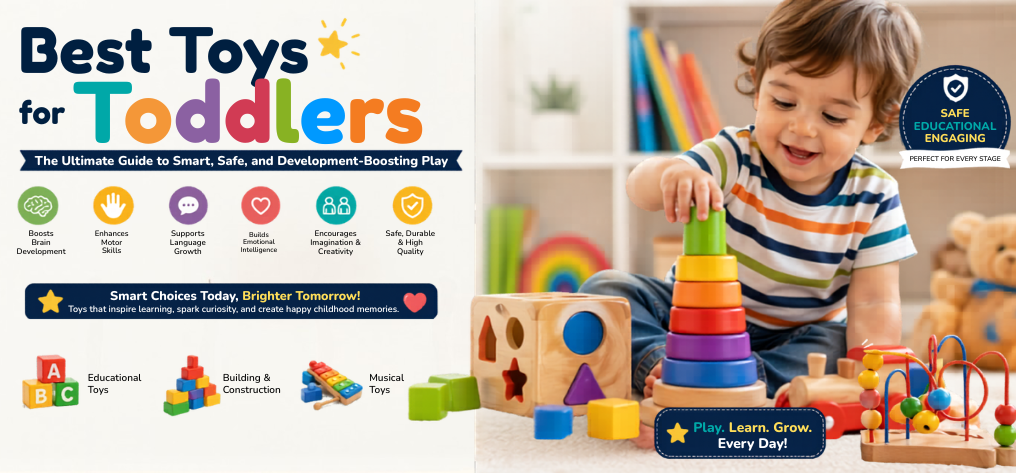
Choosing the best toys for toddlers is not a trivial decision—it directly influences early childhood development, creativity, emotional growth, and cognitive skills. We understand the importance of selecting toys that go beyond entertainment and actively contribute to a child’s learning journey. This comprehensive guide delivers an authoritative, deeply detailed exploration of toddler toys that combine safety, durability, educational value, and engagement.
Why Choosing the Right Toddler Toys Matters
Toddlers are in a critical stage of development, where every interaction shapes their brain pathways. The right toys foster:
- Cognitive development through problem-solving
- Motor skills via hands-on play
- Language growth through interactive features
- Emotional intelligence by imaginative play
Poorly chosen toys, on the other hand, can limit growth or even pose safety risks. That is why we focus on toys that are purpose-driven, age-appropriate, and skill-enhancing.
Key Factors to Consider When Buying Toddler Toys
1. Safety Comes First
Always prioritize:
- Non-toxic materials
- Rounded edges
- Choking hazard-free designs
- BPA-free plastics or natural wood
2. Age Appropriateness
Toys must match developmental stages:
- 1-year-olds need sensory toys
- 2-year-olds benefit from cause-and-effect toys
- 3-year-olds enjoy imaginative and role-play toys
3. Educational Value
The best toys offer:
- STEM learning basics
- Shape and color recognition
- Problem-solving challenges
4. Durability and Quality
High-quality toys last longer and ensure:
- Better value for money
- Safer play experience
- Sustainability
Top Categories of the Best Toys for Toddlers
1. Educational Toys for Brain Development
Educational toys are designed to stimulate curiosity and learning.
Popular options include:
- Alphabet blocks
- Number puzzles
- Interactive learning boards
Benefits:
- Improves memory retention
- Enhances early literacy skills
- Develops logical thinking
2. Building and Construction Toys
Construction toys are essential for developing fine motor skills and spatial awareness.
Examples:
- Stackable blocks
- Magnetic tiles
- Interlocking bricks
Advantages:
- Encourages creativity
- Strengthens hand-eye coordination
- Promotes problem-solving abilities
3. Musical Toys for Sensory Growth
Music plays a vital role in sensory and auditory development.
Top picks:
- Mini keyboards
- Drum sets
- Musical activity tables
Why they matter:
- Boost rhythm and timing
- Enhance listening skills
- Support emotional expression
4. Role-Play and Pretend Toys
Imaginative play helps toddlers understand the world around them.
Popular toys:
- Kitchen sets
- Doctor kits
- Dollhouses
Key benefits:
- Builds social skills
- Encourages empathy
- Develops communication abilities
5. Outdoor and Physical Activity Toys
Physical play is crucial for gross motor development.
Examples:
- Ride-on toys
- Slides
- Balls and push toys
Benefits:
- Improves balance and coordination
- Enhances physical strength
- Promotes healthy habits
6. Sensory Toys for Exploration
Sensory toys engage multiple senses simultaneously.
Types include:
- Textured balls
- Water play toys
- Light-up sensory boards
Impact:
- Supports brain development
- Enhances focus and attention
- Helps with sensory processing
Best Toys for Toddlers by Age
Best Toys for 1-Year-Olds
- Soft stacking rings
- Activity cubes
- Push walkers
Focus: Sensory exploration and basic motor skills
Best Toys for 2-Year-Olds
- Shape sorters
- Building blocks
- Musical toys
Focus: Coordination and early problem-solving
Best Toys for 3-Year-Olds
- Pretend play sets
- Simple puzzles
- Art and craft kits
Focus: Creativity and imagination
Wooden vs Plastic Toys: Which is Better?
| Feature | Wooden Toys | Plastic Toys |
|---|---|---|
| Durability | High | Moderate |
| Safety | Non-toxic (if certified) | Depends on quality |
| Eco-Friendliness | Sustainable | Less eco-friendly |
| Sensory Experience | Natural textures | Bright colors and lights |
| Cost | Higher upfront | More affordable |
Conclusion: Wooden toys offer long-term value and safety, while plastic toys provide interactive features.
How to Choose the Best Toys for Your Toddler
We recommend a strategic approach:
- Combine educational and fun elements
- Rotate toys to maintain interest and engagement
- Avoid overstimulation with too many electronic toys
- Focus on open-ended play options
Top Benefits of Investing in High-Quality Toddler Toys
- Accelerated learning and development
- Reduced screen time
- Enhanced creativity and independence
- Stronger parent-child bonding
Common Mistakes to Avoid
- Buying toys that are too advanced
- Choosing based only on price or appearance
- Ignoring safety certifications
- Overloading the child with too many options
Expert Tips for Maximizing Playtime Value
- Engage in interactive play sessions
- Encourage problem-solving rather than direct answers
- Create a structured play environment
- Observe your child’s preferences and adapt accordingly
FAQs
1. What are the safest toys for toddlers?
Toys made from non-toxic materials with no small parts.
2. How many toys should a toddler have?
A balanced set of 10–15 high-quality toys is sufficient.
3. Are electronic toys good for toddlers?
In moderation, but hands-on toys are better for development.
4. What type of toys improve brain development?
Puzzles, blocks, and educational games.
5. Are wooden toys better than plastic?
Yes, for durability and eco-friendliness.
6. What toys help with speech development?
Interactive books and role-play toys.
7. Can too many toys be harmful?
Yes, it can lead to overstimulation and reduced focus.
8. What are STEM toys for toddlers?
Toys that teach science, technology, engineering, and math basics.
9. How often should toys be rotated?
Every 2–3 weeks.
10. What are open-ended toys?
Toys that allow multiple ways to play.
11. Are ride-on toys safe indoors?
Yes, with proper supervision.
12. What toys improve motor skills?
Stacking toys and push toys.
13. Should toddlers play alone?
Yes, it builds independence.
14. What toys are best for shy toddlers?
Role-play sets.
15. Are DIY toys effective?
Yes, they encourage creativity.
16. What is the ideal toy budget?
Focus on quality over quantity.
17. Can toys improve social skills?
Yes, especially group play toys.
18. Are puzzles good for toddlers?
Excellent for problem-solving skills.
19. What toys reduce screen time?
Interactive and engaging physical toys.
20. How to clean toddler toys?
Use mild soap and warm water.
21. What toys are best for travel?
Compact and lightweight toys.
22. Are musical toys necessary?
They support sensory development.
23. What toys help with anxiety?
Sensory toys.
24. Should toys be gender-specific?
No, all toys can be gender-neutral.
25. What is the best all-in-one toy?
Activity centers.