
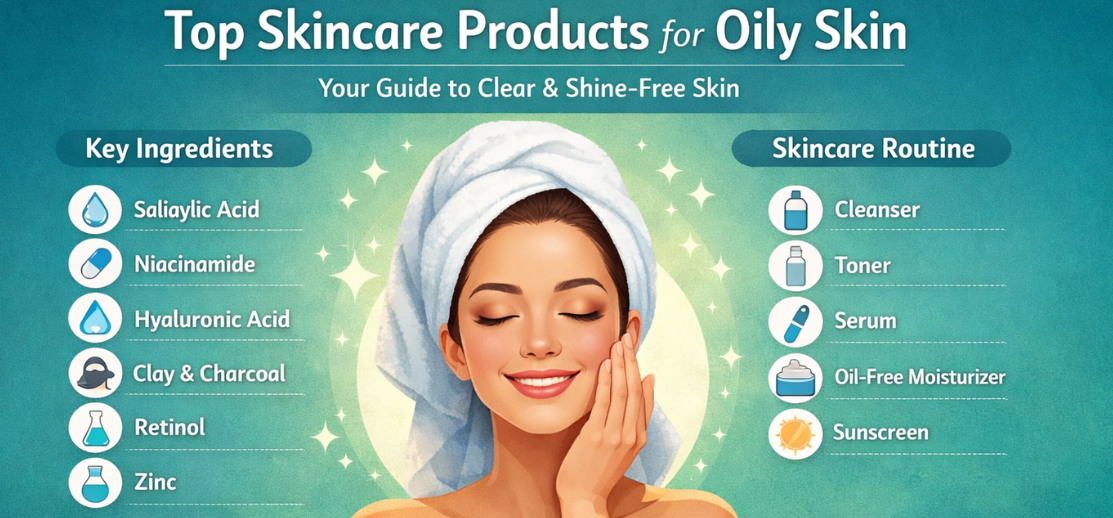
Oily skin requires a strategic skincare routine built around oil regulation, pore refinement, hydration balance, and acne prevention. When excess sebum accumulates on the skin’s surface, it often leads to clogged pores, persistent shine, blackheads, and breakouts. Choosing the right skincare products can transform oily skin from greasy and problematic into balanced, smooth, and healthy-looking.
In this comprehensive guide, we explore the best skincare products for oily skin, the most effective ingredients, and a complete routine designed to control oil without stripping the skin’s natural barrier.
Understanding Oily Skin: Causes and Characteristics
Oily skin occurs when the sebaceous glands produce excessive sebum. Sebum is a natural oil that protects and moisturizes the skin, but overproduction can create problems.
Common Signs of Oily Skin
-
Persistent shine on the forehead, nose, and chin
-
Enlarged pores
-
Frequent blackheads and whiteheads
-
Makeup that slides off quickly
-
Acne breakouts and clogged pores
Primary Causes of Excess Oil
| Cause | Explanation |
|---|---|
| Genetics | Oil production levels are often inherited |
| Hormonal fluctuations | Puberty, stress, and hormonal changes increase sebum |
| Climate | Hot and humid weather triggers oil production |
| Incorrect skincare | Over-drying products cause rebound oil |
| Diet and lifestyle | High-glycemic foods and stress may worsen oiliness |
Understanding these factors helps create a skincare routine tailored to oily skin’s specific needs.
Essential Skincare Ingredients for Oily Skin
Certain ingredients are particularly effective for managing oil while maintaining skin health.
1. Salicylic Acid
A beta hydroxy acid (BHA) that penetrates pores, dissolves oil buildup, and prevents breakouts.
2. Niacinamide
Reduces sebum production, redness, and enlarged pores while improving skin texture.
3. Hyaluronic Acid
Provides lightweight hydration without clogging pores.
4. Clay and Charcoal
Absorb excess oil and deep clean pores.
5. Retinol
Promotes cell turnover and pore refinement, reducing acne formation.
6. Zinc
Regulates oil production and reduces inflammation.
Complete Skincare Routine for Oily Skin
A consistent routine is essential for maintaining balanced skin.
Morning Routine
-
Gentle cleanser
-
Oil-balancing toner
-
Lightweight serum
-
Oil-free moisturizer
-
Broad-spectrum sunscreen
Night Routine
-
Makeup remover or micellar water
-
Deep cleanser
-
Exfoliating treatment
-
Targeted serum
-
Lightweight night moisturizer
Best Cleansers for Oily Skin
A cleanser designed for oily skin should remove excess oil without stripping moisture.
Key Features to Look For
-
Gel-based formulas
-
Non-comedogenic ingredients
-
Oil-control actives
-
Mild exfoliating agents
Benefits of a Proper Cleanser
-
Removes dirt and impurities
-
Prevents clogged pores
-
Reduces shine throughout the day
-
Prepares skin for treatment products
Best Toners for Oily Skin
Toners help balance the skin’s pH and refine pores after cleansing.
Ideal Toner Ingredients
-
Witch hazel
-
Niacinamide
-
Green tea extract
-
Salicylic acid
-
Aloe vera
Advantages of Using a Toner
-
Minimizes visible pores
-
Removes leftover impurities
-
Refreshes and hydrates skin
-
Controls oil production
Top Serums for Oily Skin
Serums deliver high concentrations of active ingredients that target oil and acne.
Best Types of Serums
| Serum Type | Benefit |
|---|---|
| Niacinamide Serum | Regulates sebum and improves texture |
| Salicylic Acid Serum | Unclogs pores and prevents acne |
| Hyaluronic Acid Serum | Hydrates without heaviness |
| Retinol Serum | Promotes cell turnover |
| Vitamin C Serum | Brightens and protects skin |
Serums are crucial for treating the root causes of oily skin problems.
Best Moisturizers for Oily Skin
Contrary to popular belief, oily skin still requires hydration. Skipping moisturizer can trigger even more oil production.
What to Look for in a Moisturizer
-
Gel or water-based texture
-
Oil-free formula
-
Non-comedogenic ingredients
-
Lightweight hydration
Benefits
-
Maintains skin barrier
-
Prevents dehydration
-
Controls excess sebum
-
Improves skin elasticity
Best Sunscreens for Oily Skin
Sun protection is essential for every skin type, including oily skin.
Recommended Sunscreen Features
-
SPF 30 or higher
-
Matte finish
-
Oil-free formula
-
Lightweight gel or fluid texture
Benefits
-
Prevents sun damage
-
Reduces hyperpigmentation
-
Protects against premature aging
-
Maintains even skin tone
Weekly Treatments for Oily Skin
In addition to daily skincare, weekly treatments can help deep clean pores and control oil buildup.
Clay Masks
Clay masks absorb excess oil and detoxify the skin.
Benefits
-
Shrinks pores
-
Removes impurities
-
Controls shine
Chemical Exfoliants
Exfoliation removes dead skin cells that trap oil.
Recommended Acids
-
Salicylic acid (BHA)
-
Glycolic acid (AHA)
-
Lactic acid
Use exfoliants 2–3 times per week to prevent irritation.
Natural Remedies That Support Oily Skin Care
Natural ingredients can complement a professional skincare routine.
Green Tea
Contains antioxidants that reduce inflammation and regulate oil.
Aloe Vera
Hydrates skin without clogging pores and soothes irritation.
Honey
Acts as a natural antibacterial ingredient that helps prevent acne.
Oatmeal
Absorbs oil and gently exfoliates.
Lifestyle Habits That Improve Oily Skin
Skincare products work best when supported by healthy habits.
Daily Habits
-
Drink sufficient water
-
Maintain a balanced diet
-
Reduce processed sugar intake
-
Manage stress levels
-
Avoid touching the face frequently
Diet Tips for Oil Control
Foods that may help balance skin include:
-
Leafy greens
-
Nuts and seeds
-
Omega-3 rich foods
-
Whole grains
-
Fresh fruits
Common Skincare Mistakes for Oily Skin
Avoiding certain mistakes can dramatically improve results.
Over-washing the face
Washing too frequently stimulates more oil production.
Skipping moisturizer
Dehydrated skin compensates by producing extra oil.
Using harsh alcohol products
These damage the skin barrier.
Over-exfoliating
Excess exfoliation leads to irritation and breakouts.
Ignoring sunscreen
Sun damage worsens oil imbalance.
Step-by-Step Ideal Routine for Oily Skin
| Step | Product Type | Purpose |
|---|---|---|
| 1 | Gentle Cleanser | Remove oil and impurities |
| 2 | Toner | Balance skin pH |
| 3 | Serum | Target oil control |
| 4 | Moisturizer | Hydrate and protect barrier |
| 5 | Sunscreen | Prevent UV damage |
Night routine replaces sunscreen with repairing treatments like retinol or exfoliating acids.
How to Choose the Right Skincare Products
Selecting products requires careful consideration.
Important Factors
-
Skin sensitivity level
-
Presence of acne
-
Climate conditions
-
Age and hormonal changes
-
Ingredient compatibility
Product Selection Tips
-
Choose non-comedogenic formulas
-
Avoid heavy oils and thick creams
-
Look for oil-balancing ingredients
-
Introduce new products gradually
Signs Your Oily Skin Routine Is Working
A successful routine produces visible improvements.
Positive indicators include:
-
Reduced shine throughout the day
-
Smaller-looking pores
-
Fewer breakouts
-
Smoother texture
-
Balanced hydration
Consistency is key for achieving long-term results.
Long-Term Skin Maintenance for Oily Skin
Maintaining healthy skin requires consistent care and routine adjustments.
Monthly Skin Maintenance Tips
-
Evaluate skincare products
-
Replace expired products
-
Adjust routine based on seasonal changes
-
Deep clean makeup brushes
-
Maintain hydration and diet balance
With the right approach, oily skin can become clear, balanced, and radiant.
FAQs
1. What causes oily skin?
Excessive activity of sebaceous glands leads to higher oil production.
2. Can oily skin skip moisturizer?
No. Moisturizer prevents dehydration and balances oil levels.
3. How many times should oily skin be washed daily?
Twice daily is ideal.
4. Does oily skin age slower?
Yes. Natural oils help maintain elasticity.
5. Are gel moisturizers better for oily skin?
Yes, they are lightweight and non-greasy.
6. Is salicylic acid good for oily skin?
Yes. It penetrates pores and dissolves oil.
7. Can oily skin use face oils?
Some lightweight oils may help balance sebum.
8. How often should oily skin exfoliate?
2–3 times per week.
9. Does diet affect oily skin?
Yes, high-sugar diets can worsen oil production.
10. Can oily skin be dehydrated?
Yes. Oil and hydration are different.
11. Are clay masks beneficial?
Yes, they absorb excess oil.
12. Do large pores mean oily skin?
Often, but not always.
13. Is sunscreen necessary for oily skin?
Yes, daily sun protection is essential.
14. Can stress increase oil production?
Yes, hormonal responses increase sebum.
15. Does makeup worsen oily skin?
Heavy formulas can clog pores.
16. What type of foundation suits oily skin?
Oil-free matte foundations.
17. Are blotting papers helpful?
Yes, they absorb excess shine.
18. Can oily skin still get dry patches?
Yes, especially when over-exfoliating.
19. Does cold weather reduce oiliness?
Sometimes, but dehydration may occur.
20. Should oily skin use toner?
Yes, especially oil-balancing toners.
21. Are natural remedies effective?
They can support regular skincare.
22. Can over-cleansing worsen oiliness?
Yes, it triggers rebound oil production.
23. Is niacinamide good for oily skin?
Yes, it regulates sebum.
24. Can oily skin get acne scars?
Yes, untreated acne may cause scarring.
25. How long does it take to see skincare results?
Typically 4–8 weeks with consistent use.