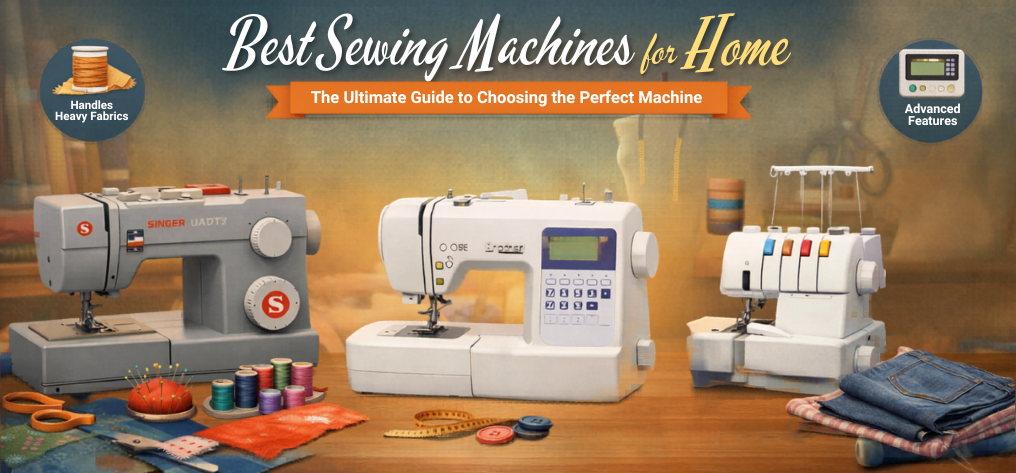
Sewing at home has evolved from a basic household task into a powerful creative skill that combines craftsmanship, practicality, and innovation. Whether we are repairing clothes, designing custom garments, creating home décor, or starting a small business, the best sewing machines for home use make the process easier, faster, and more enjoyable. Modern machines offer precision stitching, multiple stitch patterns, automated features, and durable construction designed to support beginners and experienced users alike.
In this comprehensive guide, we explore the top sewing machines for home, key features to consider, different types of machines, and expert tips for selecting the perfect model. Our detailed analysis ensures that we choose machines that deliver reliability, efficiency, and professional-quality results for every household sewing project.
Why Choosing the Right Sewing Machine Matters
A high-quality sewing machine is the foundation of successful home sewing. The right machine allows us to handle multiple fabrics, execute precise stitching, and complete projects efficiently.
Benefits of Owning a High-Quality Sewing Machine
-
Consistent and precise stitching
-
Faster project completion
-
Ability to work with multiple fabric types
-
Creative freedom with decorative stitches
-
Cost savings from repairing and creating garments at home
Investing in the best sewing machine for home ensures long-term reliability and improved sewing results.
Types of Sewing Machines for Home Use
Before choosing a sewing machine, it is essential to understand the different types available. Each type serves specific needs and skill levels.
Mechanical Sewing Machines
Mechanical machines are operated manually using knobs and dials. They are simple, durable, and ideal for beginners.
Key Advantages
-
Affordable and easy to use
-
Durable construction
-
Minimal maintenance
-
Perfect for basic sewing tasks
Electronic Sewing Machines
Electronic machines offer enhanced functionality with push-button controls and multiple stitch options.
Key Advantages
-
Automatic stitch selection
-
Built-in needle threading
-
Adjustable speed control
-
Ideal for intermediate users
Computerized Sewing Machines
Computerized machines represent the most advanced technology for home sewing.
Key Advantages
-
Large selection of decorative stitches
-
LCD display for stitch control
-
Automatic tension adjustment
-
Precision stitching for complex projects
Overlock (Serger) Machines
Serger machines are specialized machines used to finish seams professionally.
Key Advantages
-
Clean and durable seams
-
Faster sewing speed
-
Professional garment finishing
Top Features to Look for in the Best Sewing Machines for Home
Selecting the right sewing machine requires careful consideration of essential features that influence performance and usability.
1. Stitch Variety
The number of built-in stitches determines the machine’s versatility. Basic machines provide 10–20 stitches, while advanced models offer over 100 decorative options.
Common stitch types include
-
Straight stitch
-
Zigzag stitch
-
Blind hem stitch
-
Decorative embroidery stitches
2. Automatic Needle Threader
Threading a needle can be challenging, especially for beginners. Automatic needle threaders simplify the process and save time.
3. Adjustable Stitch Length and Width
This feature allows precise control over stitching patterns and ensures compatibility with different fabrics.
4. Free Arm Design
Free arm sewing machines make it easier to sew cuffs, sleeves, collars, and other cylindrical items.
5. Durable Build Quality
Machines with metal frames are more stable and durable compared to lightweight plastic models.
6. Multiple Presser Feet
Different presser feet expand the machine’s capabilities.
Examples include:
-
Zipper foot
-
Buttonhole foot
-
Walking foot
-
Blind hem foot
Best Sewing Machines for Home Use
Below are some of the most reliable and popular sewing machines designed for home use.
1. Singer Heavy Duty 4423 Sewing Machine
The Singer Heavy Duty 4423 is one of the most powerful sewing machines available for home use. Designed for durability and performance, it can handle thick fabrics like denim and canvas with ease.
Key Features
-
23 built-in stitches
-
Powerful motor for high-speed sewing
-
Heavy-duty metal frame
-
Automatic needle threader
-
1-step buttonhole function
Why It Stands Out
The Singer 4423 offers exceptional strength and speed, making it ideal for both beginners and experienced sewists.
2. Brother CS6000i Computerized Sewing Machine
The Brother CS6000i combines advanced technology with user-friendly design.
Key Features
-
60 built-in stitches
-
LCD display panel
-
Automatic needle threader
-
Adjustable sewing speed
-
Lightweight and portable design
Why It Stands Out
Its computerized controls and versatile stitch options make it perfect for creative sewing projects.
3. Janome 2212 Mechanical Sewing Machine
The Janome 2212 is a simple yet highly reliable machine for beginners.
Key Features
-
12 built-in stitches
-
Four-step buttonhole function
-
Easy stitch selection dial
-
Strong internal metal frame
Why It Stands Out
Its simplicity and durability make it one of the best beginner sewing machines available.
4. Singer Quantum Stylist 9960
The Singer Quantum Stylist 9960 is a premium computerized machine designed for serious sewing enthusiasts.
Key Features
-
600 built-in stitches
-
Automatic thread cutter
-
Large LCD screen
-
Adjustable stitch length and width
-
Multiple presser feet included
Why It Stands Out
It provides unmatched creative flexibility for quilting, embroidery, and decorative sewing.
5. Brother ST371HD Strong & Tough Sewing Machine
The Brother ST371HD is built for durability and heavy fabrics.
Key Features
-
37 built-in stitches
-
Metal needle plate
-
Strong motor for thick fabrics
-
Automatic needle threader
Why It Stands Out
It is perfect for projects involving denim, upholstery fabrics, and layered materials.
Comparison Table of the Best Sewing Machines for Home
| Sewing Machine | Type | Built-in Stitches | Best For | Speed |
|---|---|---|---|---|
| Singer 4423 | Mechanical | 23 | Heavy fabrics | High |
| Brother CS6000i | Computerized | 60 | Creative projects | Medium |
| Janome 2212 | Mechanical | 12 | Beginners | Medium |
| Singer Quantum Stylist 9960 | Computerized | 600 | Advanced sewing | High |
| Brother ST371HD | Mechanical | 37 | Thick materials | High |
How to Choose the Best Sewing Machine for Home
Selecting the ideal machine depends on several important factors.
Skill Level
Beginners should start with simple mechanical machines, while advanced users benefit from computerized models.
Project Type
Different sewing machines excel in specific tasks.
Examples include:
-
Garment sewing – versatile machines with multiple stitches
-
Quilting – machines with large workspace
-
Heavy fabrics – heavy-duty machines
Budget
Sewing machines vary widely in price. Entry-level machines are affordable, while advanced computerized machines require a higher investment.
Ease of Maintenance
Machines with simple mechanisms are easier to maintain and repair.
Best Sewing Machines for Beginners
Beginners benefit from machines that are easy to operate and provide essential features without overwhelming complexity.
Recommended beginner machines include:
-
Janome 2212
-
Brother XM2701
-
Singer Start 1304
These machines provide basic stitches and user-friendly controls.
Best Sewing Machines for Advanced Home Sewing
Experienced sewists often require machines with advanced functionality.
Top options include:
-
Singer Quantum Stylist 9960
-
Brother SE600
-
Janome HD3000
These machines support decorative stitching, embroidery, and quilting.
Maintenance Tips for Sewing Machines
Proper maintenance ensures consistent performance and extends the machine’s lifespan.
Essential Maintenance Practices
-
Clean lint and dust regularly
-
Oil moving parts as recommended
-
Replace needles frequently
-
Use high-quality thread
-
Store the machine in a dust-free environment
Regular care prevents mechanical issues and ensures smooth stitching.
Benefits of Sewing at Home
Home sewing offers numerous practical and creative advantages.
Key Benefits
-
Custom clothing and designs
-
Cost savings on repairs
-
Creative hobby and stress relief
-
Opportunity to start a home business
-
Eco-friendly clothing repair and reuse
Sewing empowers us to create unique garments and household items tailored to our preferences.
Conclusion
Choosing the best sewing machine for home allows us to transform creative ideas into beautifully crafted projects. Modern machines offer remarkable precision, speed, and versatility for sewing garments, quilting, crafting, and home décor.
From beginner-friendly mechanical models to advanced computerized machines with hundreds of stitch patterns, the right sewing machine can dramatically improve efficiency and creativity. By evaluating essential features, durability, and ease of use, we can confidently invest in a machine that supports our sewing goals for years to come.
FAQs
1. What is the best sewing machine for beginners?
Machines like Janome 2212 and Singer Start 1304 are excellent for beginners.
2. Are computerized sewing machines better?
Computerized machines offer more features and precision but may cost more.
3. Can sewing machines handle thick fabrics?
Yes, heavy-duty models like the Singer 4423 are designed for thick materials.
4. How long do sewing machines last?
High-quality machines can last 10–25 years with proper maintenance.
5. What stitches are essential for beginners?
Straight stitch, zigzag stitch, and buttonhole stitch.
6. Are expensive sewing machines worth it?
Advanced machines provide more features and improved stitching accuracy.
7. Can sewing machines embroider?
Some computerized machines support embroidery functions.
8. What is the best brand for sewing machines?
Popular brands include Singer, Brother, Janome, and Bernina.
9. How often should a sewing machine be serviced?
Professional servicing once a year is recommended.
10. What needle should I use for denim?
Use size 90/14 or 100/16 denim needles.
11. Can beginners use computerized machines?
Yes, many models are beginner-friendly.
12. What fabric can sewing machines handle?
Most machines work with cotton, polyester, linen, and denim.
13. How do I prevent thread breakage?
Use high-quality thread and proper tension settings.
14. Are portable sewing machines reliable?
Many portable machines are durable and efficient.
15. What is a free arm sewing machine?
A machine designed to sew cylindrical pieces like sleeves.
16. Do sewing machines need oiling?
Yes, depending on the machine model.
17. Can sewing machines sew leather?
Heavy-duty machines can sew lightweight leather.
18. What is a buttonhole stitch?
A stitch designed for creating durable buttonholes.
19. What speed should beginners use?
Low to medium speeds provide better control.
20. What accessories come with sewing machines?
Presser feet, bobbins, needles, and seam rippers.
21. Can sewing machines quilt?
Yes, many machines support quilting features.
22. Are mechanical machines reliable?
Yes, they are simple and durable.
23. What thread works best?
Polyester thread is versatile and strong.
24. Can sewing machines repair clothes?
Yes, they are ideal for clothing repairs.
25. Is sewing difficult to learn?
With practice and the right machine, sewing becomes easy and enjoyable.