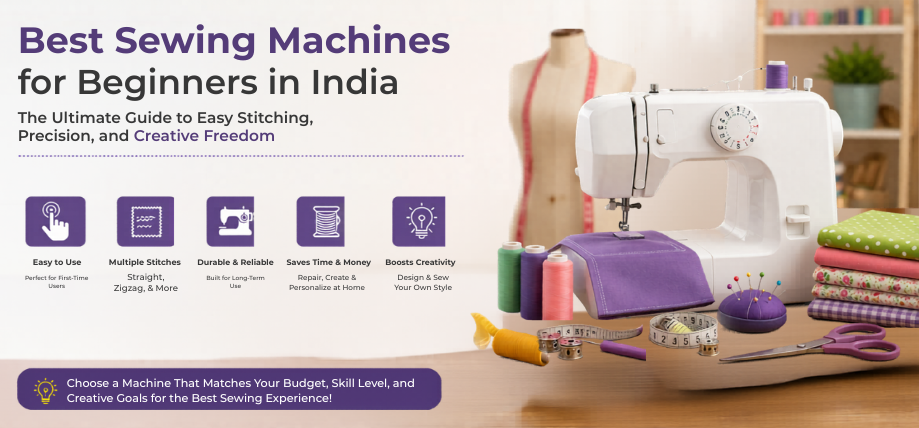
Sewing is no longer just a traditional skill—it has evolved into a creative, practical, and highly rewarding craft that empowers individuals to design, repair, and personalize garments with precision. For beginners, choosing the best sewing machine is the most critical step toward mastering this skill. A well-selected machine ensures ease of use, durability, versatility, and consistent performance, making the learning journey smooth and enjoyable.
This comprehensive guide presents the top sewing machines for beginners, detailed feature analysis, comparison tables, expert insights, and practical recommendations designed to deliver exceptional sewing results from day one.
Why Beginners Need the Right Sewing Machine
A beginner-friendly sewing machine is engineered for simplicity, efficiency, and reliability. It eliminates unnecessary complexity and focuses on core stitching functions, intuitive controls, and smooth operation.
Key advantages include:
- User-friendly controls for effortless learning
- Consistent stitch quality across fabrics
- Reduced errors and thread breakage
- Time-saving features for faster results
- Enhanced creativity with multiple stitch options
Types of Sewing Machines for Beginners
1. Mechanical Sewing Machines – Simplicity at Its Best
Mechanical machines are perfect for beginners who prefer manual control and straightforward functionality.
Features:
- Basic stitch patterns
- Manual knobs for adjustments
- Durable and low maintenance
2. Electronic Sewing Machines – Smart and Efficient
Electronic machines introduce automated features that simplify stitching.
Benefits:
- Push-button controls
- Automatic needle positioning
- Built-in stitch patterns
3. Computerized Sewing Machines – Advanced Creativity
These machines offer precision control and advanced customization.
Highlights:
- Digital display
- Multiple stitch programs
- Memory functions
4. Mini Sewing Machines – Compact and Portable
Ideal for small projects and quick repairs.
Advantages:
- Lightweight design
- Easy storage
- Affordable option
Essential Features to Look for in Beginner Sewing Machines
Ease of Use
A beginner machine should have:
- Clear instructions
- Simple threading system
- Easy stitch selection
Stitch Variety
Basic machines should include:
- Straight stitch
- Zigzag stitch
- Buttonhole stitch
Build Quality
Durability ensures long-term usage:
- Metal frame construction
- Stable base
- High-quality components
Speed Control
Adjustable speed helps beginners maintain accuracy.
Automatic Features
- Auto needle threader
- Auto bobbin winding
- Reverse stitching
Fabric Compatibility
The machine should handle:
- Cotton
- Denim
- Silk
- Synthetic fabrics
Top Sewing Machines for Beginners in India (Detailed Review)
1. Entry-Level Mechanical Sewing Machine
This category is ideal for absolute beginners seeking reliability and simplicity.
Key strengths:
- Smooth stitching performance
- Minimal maintenance
- Affordable pricing
2. Electronic Sewing Machine with Built-In Stitches
Perfect for users who want automation and versatility.
Highlights:
- Multiple stitch options
- Automatic settings
- Consistent stitch quality
3. Portable Sewing Machine for Small Spaces
Designed for compact living environments.
Advantages:
- Lightweight
- Easy to carry
- Suitable for quick tasks
4. Heavy-Duty Beginner Sewing Machine
Best for handling thicker fabrics.
Features:
- Powerful motor
- Strong needle penetration
- Durable construction
5. Computerized Sewing Machine for Creative Beginners
Ideal for those exploring advanced stitching.
Benefits:
- Digital controls
- Decorative stitches
- Precision sewing
Comparison Table: Best Sewing Machines for Beginners
| Feature | Mechanical Machine | Electronic Machine | Computerized Machine | Mini Machine |
|---|---|---|---|---|
| Ease of Use | High | Very High | Moderate | High |
| Stitch Variety | Basic | Moderate | Extensive | Limited |
| Portability | Medium | Medium | Low | Very High |
| Durability | High | High | High | Moderate |
| Price Range | Low | Medium | High | Low |
Benefits of Using Beginner Sewing Machines
1. Skill Development
Beginner machines provide a solid foundation for mastering sewing techniques.
2. Cost Savings
Repairing clothes at home reduces dependency on tailoring services.
3. Creative Freedom
Design unique garments and accessories.
4. Convenience
Handle quick alterations anytime.
Step-by-Step Guide to Start Sewing
- Set up the machine on a stable surface
- Thread the machine properly
- Insert and wind the bobbin
- Select the stitch type
- Practice on scrap fabric
- Start with straight stitching
Common Mistakes Beginners Should Avoid
- Using incorrect needle types
- Improper threading
- Sewing too fast
- Ignoring fabric compatibility
- Skipping machine maintenance
Maintenance Tips for Long-Lasting Performance
- Clean lint regularly
- Oil moving parts if required
- Replace needles frequently
- Store in a dust-free environment
Best Fabrics for Beginners to Practice
- Cotton
- Linen
- Polyester blends
Avoid slippery fabrics initially.
Accessories That Enhance Sewing Experience
- Extra needles
- Thread sets
- Fabric scissors
- Measuring tape
- Seam ripper
How to Choose the Perfect Sewing Machine
Consider:
- Budget
- Skill level
- Project type
- Space availability
- Future learning goals
Future Trends in Sewing Machines
- Smart sewing technology
- AI-assisted stitching
- Compact multifunctional machines
- Eco-friendly designs
Conclusion: Start Your Sewing Journey with Confidence
A beginner-friendly sewing machine is the gateway to creativity, independence, and skill mastery. By selecting a machine with the right balance of features, durability, and ease of use, we can transform simple stitching into a rewarding and productive experience.
FAQs`
1. Which sewing machine is best for beginners?
A mechanical or electronic sewing machine is ideal.
2. Are computerized machines good for beginners?
Yes, but they may require a learning curve.
3. What is the average price of a beginner sewing machine?
Typically between ₹5,000 to ₹15,000.
4. Can beginners sew heavy fabrics?
Yes, with heavy-duty machines.
5. Is sewing difficult to learn?
No, with practice it becomes easy.
6. How long does it take to learn sewing?
Basic skills can be learned in a few weeks.
7. What stitches should beginners learn first?
Straight and zigzag stitches.
8. Do sewing machines consume a lot of electricity?
No, they are energy-efficient.
9. Can I repair clothes with a sewing machine?
Yes, easily.
10. What is a bobbin?
It holds the lower thread.
11. How often should I service my machine?
Once a year or as needed.
12. Are portable machines reliable?
Yes, for light tasks.
13. Can sewing machines embroider?
Some advanced models can.
14. What needle size should beginners use?
Size 11 or 14 for general fabrics.
15. Is manual sewing better than machine sewing?
Machine sewing is faster and more precise.
16. Can I sew jeans at home?
Yes, with the right machine.
17. What is stitch length?
Distance between stitches.
18. Are sewing machines noisy?
Modern machines are relatively quiet.
19. What is reverse stitching?
It secures stitches.
20. Can beginners use electric machines?
Yes, they are easy to operate.
21. How to prevent thread breakage?
Ensure proper threading.
22. What is tension control?
It balances thread tightness.
23. Are sewing machines safe?
Yes, with proper use.
24. Do I need training to use a sewing machine?
Basic guidance is enough.
25. Can sewing be a career?
Yes, it offers many opportunities.