
Introduction to Smartphone Photography Excellence
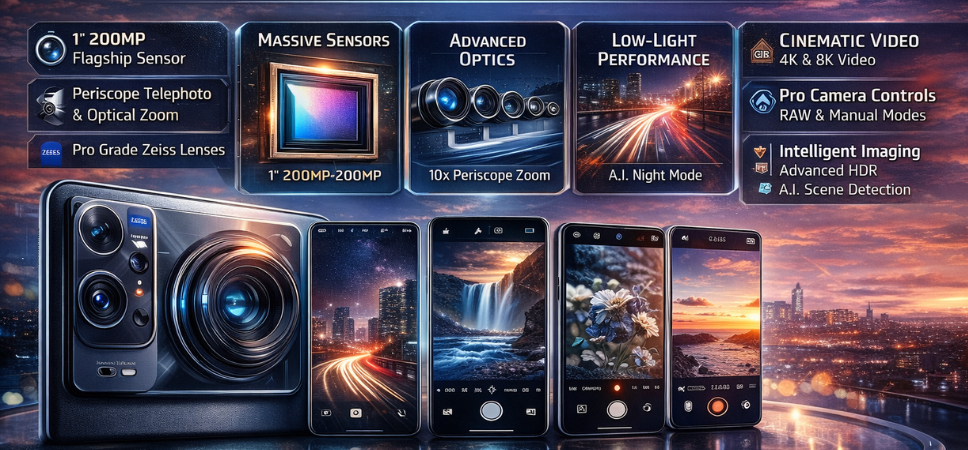
Smartphone photography has evolved into a professional-grade imaging experience, redefining how we capture, edit, and share moments. The modern smartphone camera is no longer a compromise; it is a primary photography tool powered by advanced sensors, computational photography, AI-driven image processing, and cinema-level video capabilities.
We present this comprehensive, in-depth guide to the best phones for photography, curated for users who demand exceptional image quality, creative flexibility, and consistent performance across all shooting conditions. This article delivers a complete exploration of camera hardware, software intelligence, real-world usability, and future-facing innovation.
What Makes a Phone the Best for Photography
A photography-focused smartphone is defined by the perfect integration of hardware and software. The following pillars determine true photographic excellence:
-
Large image sensors
-
High-quality lenses
-
Advanced image signal processing
-
AI-powered computational photography
-
Superior low-light performance
-
Professional-grade video recording
Camera Hardware That Defines Image Quality
Primary Camera Sensor Size and Resolution
Larger sensors capture more light, resulting in higher dynamic range, lower noise, and natural depth of field. Modern flagship phones feature sensors ranging from 1/1.56” to 1-inch type, paired with resolutions from 48MP to 200MP.
Key advantages of large sensors:
-
Improved low-light performance
-
Enhanced color accuracy
-
Better subject separation
-
Higher detail retention
Lens Quality and Aperture
Premium phones use optically stabilized lenses with wide apertures such as f/1.6 or f/1.8, allowing more light to reach the sensor and delivering stunning background blur.
Multi-Camera Systems and Their Real Impact
Ultra-Wide Cameras
Ultra-wide lenses expand creative possibilities with 120-degree fields of view, ideal for landscapes, architecture, and group shots.
Telephoto and Periscope Zoom Cameras
Telephoto systems enable optical zoom without quality loss, while periscope lenses achieve 5x, 10x, or higher optical zoom, redefining mobile photography reach.
Macro Photography Capabilities
Dedicated macro lenses and sensor-level focusing allow extreme close-ups with exceptional texture and sharpness.
Computational Photography and AI Processing
HDR and Dynamic Range Optimization
Advanced HDR algorithms combine multiple exposures to preserve highlight detail and shadow depth, producing balanced images in challenging lighting.
AI Scene Detection
Artificial intelligence recognizes scenes such as portraits, nightscapes, food, and pets, automatically optimizing exposure, color, and contrast.
Night Photography Modes
Night modes leverage multi-frame stacking and AI noise reduction to produce bright, detailed images in near-darkness without flash.
Best Phones for Low-Light Photography
Low-light photography separates average cameras from exceptional ones. The best photography phones deliver:
-
Minimal noise
-
Natural color reproduction
-
Sharp detail
-
Accurate white balance
Advanced phones combine large sensors, optical image stabilization, and AI night algorithms to achieve DSLR-like results after sunset.
Portrait Photography and Depth Control
Natural Bokeh and Edge Detection
High-end phones create realistic background blur with precise edge detection, accurately separating subjects from backgrounds—even around hair and complex shapes.
Studio Lighting Effects
AI-powered lighting modes simulate professional studio setups, adding creative flair without artificial artifacts.
Professional Video Recording Capabilities
4K and 8K Video Recording
Top photography phones support 4K at 60fps and even 8K recording, delivering cinematic clarity and future-proof resolution.
Log Profiles and Manual Controls
Professional users benefit from LOG video profiles, manual ISO, shutter speed control, and focus peaking for advanced color grading.
Video Stabilization
Hybrid stabilization systems combine optical and electronic stabilization for smooth, gimbal-like footage.
Front Camera and Selfie Photography
The best phones for photography also excel in front-facing cameras, offering:
-
High-resolution sensors
-
Autofocus for sharp selfies
-
Natural skin tones
-
4K video recording
Camera Software and User Experience
Pro Camera Modes
Manual camera modes allow full control over:
-
ISO
-
Shutter speed
-
White balance
-
Focus
-
Exposure compensation
RAW Image Support
RAW capture preserves maximum data for professional post-processing, essential for photographers who edit extensively.
Comparison Table: Key Camera Specifications
| Feature | Standard Phones | Best Photography Phones |
|---|---|---|
| Sensor Size | Small | Large / 1-inch |
| OIS | Limited | Advanced Multi-Axis |
| Zoom | Digital | Optical / Periscope |
| Night Mode | Basic | AI Multi-Frame |
| Video | 4K30 | 4K60 / 8K |
Battery Life and Thermal Management for Photography
Extended photography sessions demand:
-
Efficient processors
-
Advanced cooling systems
-
Large battery capacities
The best camera phones maintain performance without overheating or rapid battery drain.
Display Quality for Photo Review
High-resolution OLED displays with accurate color calibration ensure precise photo review and editing.
Essential display features include:
-
High brightness
-
Wide color gamut
-
True-to-life color accuracy
Storage and File Management
Photography generates large files. Premium phones offer:
-
256GB to 1TB storage options
-
Fast read/write speeds
-
Cloud backup integration
Best Use Cases for Photography-Focused Phones
-
Travel photography
-
Street photography
-
Portrait sessions
-
Content creation
-
Professional videography
-
Social media publishing
How to Maximize Smartphone Photography Results
-
Clean lenses regularly
-
Use grid lines for composition
-
Shoot in RAW when possible
-
Adjust exposure manually
-
Leverage natural lighting
Future Trends in Smartphone Photography
The future of mobile photography is driven by:
-
Larger sensors
-
AI-enhanced realism
-
Computational depth mapping
-
Advanced optical zoom
-
Professional-grade color science
Conclusion: Choosing the Best Phone for Photography
The best phones for photography deliver an uncompromising blend of optical excellence, computational intelligence, and creative control. By prioritizing camera hardware, software sophistication, and real-world performance, users can capture stunning images and videos that rival dedicated cameras. Smartphone photography has reached its pinnacle, and the right device unlocks limitless creative potential.
FAQs
-
What makes a phone good for photography?
-
Sensor size, lens quality, and image processing.
-
-
Is megapixel count important?
-
Less than sensor quality and processing.
-
-
Are phones better than DSLRs?
-
For convenience and AI-assisted shots, yes.
-
-
What is computational photography?
-
Software-enhanced image processing.
-
-
Do camera phones shoot RAW images?
-
Yes, flagship models do.
-
-
Is optical zoom better than digital?
-
Yes, significantly.
-
-
Which phone is best for night photography?
-
Phones with large sensors and AI night mode.
-
-
Can phones shoot professional videos?
-
Yes, including 4K and 8K.
-
-
What is OIS?
-
Optical Image Stabilization.
-
-
Are ultra-wide cameras useful?
-
Yes, for landscapes and architecture.
-
-
Do phones support manual controls?
-
Yes, in pro modes.
-
-
Is AI photography reliable?
-
Yes, when well-implemented.
-
-
Can phones replace cameras for travel?
-
Absolutely.
-
-
Do camera phones overprocess images?
-
Premium phones offer natural tuning.
-
-
What storage is ideal for photographers?
-
256GB or more.
-
-
Are selfie cameras improving?
-
Yes, with autofocus and 4K video.
-
-
Do phones support external microphones?
-
Yes, for video recording.
-
-
Is HDR important?
-
Yes, for dynamic range.
-
-
What is a periscope lens?
-
A folded zoom lens system.
-
-
Can phones shoot macro photos?
-
Yes, with dedicated lenses.
-
-
Is image stabilization necessary?
-
Essential for low light and video.
-
-
Do phones edit photos well?
-
Yes, with advanced apps.
-
-
Are large sensors better?
-
Yes, for light capture.
-
-
Can phones shoot cinematic video?
-
Yes, with log profiles.
-
-
Is a photography phone worth it?
-
Yes, for image-focused users.
-
For more information and to start using Roobai.com, visit our official website and download the app to stay updated on the best deals and offers. With Roobai.com, you can ensure that every shopping experience is not just an opportunity to shop but an opportunity to save big