
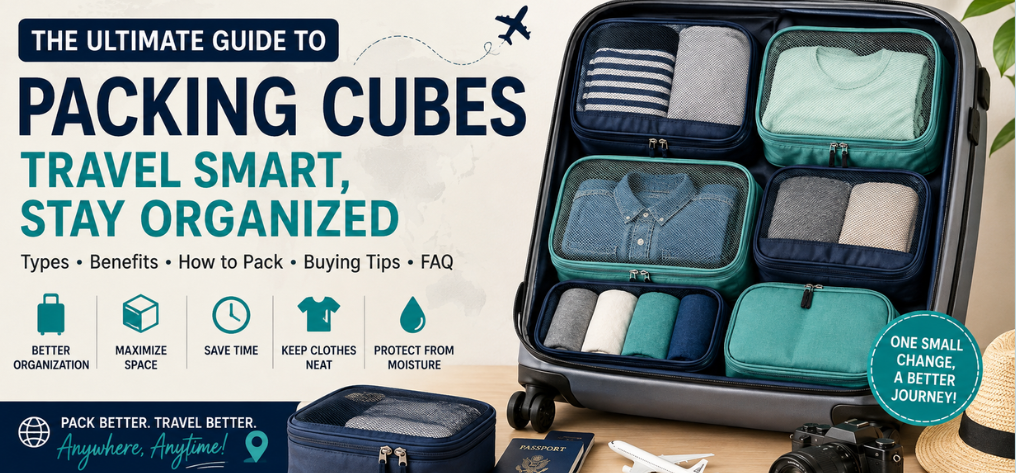
Travel becomes much easier when our luggage is organized from the moment we start packing. Instead of placing clothes, accessories, toiletries, and travel essentials randomly inside a suitcase, we can divide everything into separate compartments using the best packing cubes. Packing cubes help us organize clothing by category, maximize available luggage space, find items quickly, and keep our suitcase neat throughout the trip.
Whether we are preparing for a weekend getaway, business trip, family vacation, backpacking adventure, international holiday, or long-term travel, the right packing cubes can significantly improve the packing experience. They are available in different sizes, materials, shapes, compression levels, and designs, making it important to choose a set that matches our travel style.
A good packing cube should offer a practical balance of durability, capacity, organization, lightweight construction, ventilation, and ease of use. Some travelers prefer simple fabric cubes for organizing everyday clothing, while others benefit from compression packing cubes that reduce the volume of bulky garments.
In this comprehensive guide, we explore the best packing cubes, the different types available, important features to consider, packing methods, size combinations, advantages, disadvantages, and frequently asked questions to help us make a confident choice.
What Are Packing Cubes?
Packing cubes are lightweight rectangular organizers designed to fit inside suitcases, backpacks, duffel bags, and other travel luggage. They usually feature a zippered opening and are available in several sizes so that clothing and accessories can be separated into organized compartments.
Instead of putting every item directly into a suitcase, we can place similar items into individual cubes. For example, one cube can hold T-shirts, another can contain trousers, while smaller cubes can be used for underwear, socks, accessories, or electronics.
The biggest advantage is organization. When we arrive at our destination, we do not necessarily need to unpack the entire suitcase. We can simply remove the cube containing the items we need.
Common items we can store in packing cubes include:
- T-shirts
- Shirts
- Jeans
- Trousers
- Shorts
- Underwear
- Socks
- Sleepwear
- Gym clothes
- Baby clothes
- Swimwear
- Accessories
- Scarves
- Small travel essentials
- Electronics accessories
- Shoes in dedicated shoe organizers
- Toiletries in suitable waterproof organizers
Why Should We Use Packing Cubes?
Packing cubes provide several practical benefits beyond simple organization. They can make luggage easier to manage, especially when we travel frequently or carry multiple categories of belongings.
1. Better Luggage Organization
Without organizers, clothes often become mixed together during transportation. Packing cubes divide our luggage into clearly defined sections.
We can dedicate individual cubes to specific categories, making it easier to locate belongings without disturbing the rest of our luggage.
2. Easier Access to Clothing
If we need a T-shirt at the airport, hotel, or during a road trip, we can open the clothing cube instead of searching through the entire suitcase.
This is especially useful when we are traveling with limited access to storage space.
3. More Efficient Use of Space
Packing cubes help us arrange clothing systematically. Although ordinary packing cubes do not magically create additional luggage capacity, they can help us use awkward spaces more effectively.
Compression cubes can reduce the volume of soft clothing, potentially allowing us to fit more into the same luggage.
4. Easier Packing and Unpacking
We can pack each category separately before placing the cubes into our suitcase. At the destination, the same cubes can be transferred directly into drawers or shelves.
This makes packing and unpacking faster and more convenient.
5. Separation of Clean and Used Clothing
We can dedicate one cube to clean clothes and another to worn garments. This prevents used clothing from becoming mixed with freshly packed items.
6. Useful for Family Travel
Packing cubes are particularly helpful when several people share luggage. We can assign different colors or sizes to each traveler.
For example:
- Adult 1 — Large cube
- Adult 2—Medium cube
- Child 1 — Small cube
- Child 2—Small cube
- Accessories — Extra-small cube
Best Types of Packing Cubes
Different travelers have different packing requirements. Choosing the right type is therefore more important than simply buying the largest set.
1. Standard Packing Cubes
Standard packing cubes are designed primarily for organization rather than compression.
They are usually lightweight and made from polyester, nylon, or similar fabrics. They are ideal for travelers who want to keep clothing separated without adding significant weight.
Best for: everyday travel, weekend trips, business travel, and suitcase organization.
2. Compression Packing Cubes
Compression packing cubes include an additional zipper or compression system that helps reduce the packed volume of clothing.
They are especially useful for bulky items such as sweaters, jackets, hoodies, and winter clothing.
Best for: long trips, cold-weather travel, backpacking, and travelers trying to maximize luggage space.
3. Lightweight Packing Cubes
Lightweight cubes are designed to minimize the amount of additional weight added to our luggage.
They are useful when airline baggage limits are strict.
Best for: air travel, backpacking, minimalist packing, and carry-on luggage.
4. Waterproof Packing Cubes
Water-resistant or waterproof packing cubes provide additional protection from moisture.
They can be particularly useful when traveling in rainy climates, visiting beaches, or carrying swimwear and damp clothing.
Best for: beach holidays, outdoor adventures, monsoon travel, and humid destinations.
5. Mesh Packing Cubes
Mesh panels improve visibility and airflow. We can quickly see what is inside without completely opening the cube.
The ventilation can also be useful for clothing that needs additional airflow.
Best for: frequent travelers, gym clothing, activewear, and quick-access packing.
6. Shoe Packing Cubes
Shoe organizers are designed specifically to separate footwear from clothing.
They prevent dirt and dust from transferring onto clean garments.
Best for: travelers carrying multiple pairs of shoes.
7. Toiletry and Accessory Organizers
Smaller cubes and specialized organizers can store cables, chargers, toiletries, accessories, and other small items.
These organizers reduce the chance of small belongings disappearing inside larger luggage compartments.
How to Choose the Best Packing Cubes
Choosing the right packing cubes requires us to consider luggage size, trip duration, clothing type, travel frequency, and personal packing habits.
Material and Durability
The material determines how well a packing cube handles repeated travel.
Common materials include:
| Material | Main Advantage | Ideal Use |
|---|---|---|
| Nylon | Lightweight and durable | Frequent travel |
| Polyester | Affordable and practical | Everyday travel |
| Ripstop Fabric | Improved resistance to tearing | Adventure travel |
| Mesh Fabric | Visibility and airflow | Clothing organization |
| Waterproof Fabric | Moisture protection | Beach and outdoor trips |
A high-quality cube should have fabric that can withstand repeated folding, stuffing, handling, and transportation.
Zipper Quality
The zipper is one of the most important components of a packing cube. A weak zipper can fail when the cube is packed tightly.
We should look for smooth-running, durable zippers that do not catch easily on the fabric.
For compression cubes, zipper quality becomes even more important because the zipper is exposed to additional tension.
Handles
A strong handle makes it easier to remove a cube from luggage or carry it independently.
Handles are especially useful when we frequently move between hotels, airports, trains, and rental vehicles.
Mesh Visibility
A transparent or mesh panel allows us to identify contents quickly.
Instead of opening every cube, we can locate the correct one by looking at the visible clothing.
Compression Capability
If luggage space is our biggest concern, compression packing cubes may be preferable.
However, compression reduces volume rather than weight. We should not assume that a compression cube allows us to exceed airline weight limits.
Water Resistance
Water-resistant materials provide additional protection against accidental spills and moisture.
For maximum protection, however, we should distinguish between water-resistant and fully waterproof products.
Size Variety
A useful packing cube set usually contains several sizes.
A practical combination can include:
- 1 large cube
- 2 medium cubes
- 2 small cubes
- 1 accessory pouch
This provides flexibility without forcing us to use unnecessarily large organizers.
Best Packing Cube Sizes for Different Luggage
The ideal size depends on the dimensions of our luggage.
| Luggage Type | Recommended Cube Combination |
| Small backpack | Small + extra-small |
| Carry-on suitcase | Small + medium |
| Medium suitcase | Small + medium + large |
| Large suitcase | Multiple medium + large |
| Duffel bag | Medium + small |
| Backpacking pack | Compression + small cubes |
Rather than filling every available space with cubes, we should select sizes that work naturally with the shape of our luggage.
How Many Packing Cubes Do We Need?
There is no universal number that works for every traveler.
For a short trip, three to four packing cubes may be enough. A longer trip may benefit from five to eight cubes of different sizes.
A simple organization system could be:
- T-shirts and tops
- Trousers and bottoms
- Underwear and socks
- Sleepwear
- Sportswear
- Accessories
- Used clothing
For family travel, the number can increase depending on how many people share the luggage.
How to Pack Clothes in Packing Cubes
The packing method we use can have a major impact on available space.
Sort Everything Before Packing
Place all items on a bed or table before putting them into cubes.
Separate clothing into categories such as tops, bottoms, underwear, sleepwear, and activewear.
Choose the Appropriate Cube
Use larger cubes for bulky garments and smaller cubes for lightweight items.
Avoid putting a small number of items into a large cube if a smaller organizer would fit more efficiently.
Fold or Roll Clothing
Rolling is useful for T-shirts, casual clothing, and lightweight garments.
Folding may work better for structured shirts, trousers, and delicate clothing.
The goal is to create a compact, organized bundle rather than simply stuffing clothing inside.
Avoid Overfilling
Overpacking can place unnecessary pressure on zippers and seams.
We should close the cube comfortably rather than forcing the zipper around an excessively full compartment.
Place the Cubes Strategically
Place larger cubes at the bottom of the suitcase and smaller cubes around gaps.
This creates a more balanced arrangement and makes better use of available space.
Packing Cubes vs Compression Bags
Packing cubes and compression bags serve different purposes.
| Feature | Packing Cubes | Compression Bags |
| Organization | Excellent | Moderate |
| Clothing access | Easy | Less convenient |
| Compression | Some models | Excellent |
| Visibility | Often good | Usually limited |
| Structure | Better | Flexible |
| Best use | Organization | Maximum space saving |
For most travelers, packing cubes are the more convenient everyday solution. Compression bags can be useful when space reduction is the primary objective.
Packing Cubes for Carry-On Luggage
Carry-on luggage requires careful organization because space is limited.
We can use medium and small cubes instead of oversized organizers. Lightweight materials are preferable because every additional gram contributes to our overall baggage weight.
A practical carry-on setup may include:
- 1 medium clothing cube
- 1 small underwear cube
- 1 small accessory cube
- 1 electronics organizer
- 1 toiletry organizer
We should also leave some room for items purchased during the trip.
Packing Cubes for Business Travel
Business travelers often need a combination of formal clothing and everyday essentials.
A useful organization system can separate:
- Formal shirts
- Trousers
- Casual clothing
- Underwear
- Sleepwear
- Gym clothing
- Accessories
Packing cubes can also make short business trips easier because we can quickly access specific outfits without unpacking everything.
For formal clothing, we should avoid excessive compression that could increase wrinkles.
Packing Cubes for Backpacking
Backpackers benefit from lightweight, durable organizers.
Compression cubes can be particularly useful because backpacks have limited internal volume.
We should prioritize:
- Lightweight construction
- Durable seams
- Reliable zippers
- Compact dimensions
- Compression capability
- Easy-grab handles
Avoid carrying too many cubes simply for organization. Every organizer adds a small amount of weight.
Packing Cubes for Family Vacations
Family vacations can become significantly easier when every person's belongings are separated.
Using different colors is an effective identification system. For example, one traveler can use blue cubes, another can use gray, and children can use different bright colors.
This eliminates the need to search through every cube to determine ownership.
Packing Cubes for Long Trips
For trips lasting several weeks, organization becomes increasingly important.
Instead of packing every garment we own, we can create a rotating wardrobe.
A practical approach is to pack versatile clothing that can be combined into multiple outfits.
Packing cubes can then be organized according to clothing type rather than individual outfits.
This gives us greater flexibility while keeping luggage manageable.
Advantages of Using Packing Cubes
The most important benefits include:
- Improved luggage organization
- Faster access to clothing
- Easier packing and unpacking
- Better use of suitcase space
- Separation of clean and used clothing
- Easier family luggage management
- Reduced suitcase clutter
- Convenient hotel organization
- Protection against minor spills
- Easier wardrobe planning
- Better portability between bags
Potential Disadvantages of Packing Cubes
Packing cubes are useful, but they are not perfect for every traveler.
They Add Extra Weight
Even lightweight cubes contribute some weight to our luggage.
They Can Encourage Overpacking
Because organized luggage may appear to have more space, we might be tempted to pack additional items.
Compression Does Not Reduce Weight
Compression cubes reduce volume but do not reduce the actual weight of clothing.
Too Many Cubes Can Become Counterproductive
Using a separate cube for every tiny category can make packing more complicated.
The best approach is to use enough organizers to improve organization without creating unnecessary complexity.
Packing Cube Organization Ideas
A simple system can make our luggage easier to manage.
Clothing Type
- Tops
- Bottoms
- Underwear
- Sleepwear
- Activewear
Outfit-Based
- Day 1–2
- Day 3–4
- Day 5–6
This can be useful for short trips.
Person-Based
- Adult 1
- Adult 2
- Child 1
- Child 2
This is ideal for shared family luggage.
Activity-Based
- Casual
- Formal
- Beach
- Sports
- Hiking
This works particularly well for mixed-purpose vacations.
How to Keep Packing Cubes Clean
Packing cubes can accumulate dust, lint, and odors over time.
We should check the manufacturer's cleaning instructions before washing them.
For routine maintenance:
- Empty the cube completely.
- Shake out loose dust.
- Wipe the interior when necessary.
- Allow moisture to dry completely.
- Avoid storing damp clothing inside.
- Inspect zippers and seams regularly.
- Do not use harsh cleaning chemicals unless recommended.
How to Store Packing Cubes at Home
When not traveling, packing cubes should be stored in a dry, clean place.
We can keep smaller cubes nested inside larger ones to reduce storage requirements.
Leaving them partially open can also help prevent unwanted odors if they were recently used.
Are Compression Packing Cubes Better?
Compression packing cubes are not automatically better. They are better when space efficiency is our primary requirement.
Standard cubes may be preferable when we value lightweight construction, simple organization, and quick access.
For winter travel or bulky clothing, compression cubes can provide a significant practical advantage.
What Makes the Best Packing Cubes?
The best packing cubes generally combine several characteristics rather than relying on one feature.
We should prioritize:
- Durable fabric
- Strong zippers
- Reliable stitching
- Useful size combinations
- Lightweight construction
- Practical handles
- Good visibility
- Suitable compression
- Easy cleaning
- Appropriate water resistance
A premium packing cube set does not necessarily need every available feature. The best choice is the one that matches our luggage, travel duration, and packing habits.
Packing Cube Buying Checklist
Before purchasing a set, we can use this checklist:
-
Check the dimensions.
-
Confirm compatibility with our suitcase.
-
Compare the material.
-
Check zipper quality.
-
Look for reinforced stitching.
-
Consider compression requirements.
-
Check whether the fabric is water-resistant.
-
Review the number of cubes included.
-
Compare the weight of the complete set.
-
Choose sizes based on clothing categories.
-
Consider handles for easy carrying.
-
Look for mesh panels if visibility is important.
-
Check cleaning instructions.
-
Consider warranty or replacement support.
FAQs
1. Are packing cubes worth buying?
Yes. Packing cubes are particularly useful for travelers who want better luggage organization, easier access to clothing, and faster packing and unpacking.
2. Do packing cubes actually save space?
Standard packing cubes mainly improve organization. Compression packing cubes can reduce the volume occupied by soft clothing, although they do not reduce its weight.
3. What size packing cubes should we buy?
A combination of small, medium, and large cubes usually provides the greatest flexibility. Medium cubes are particularly versatile for clothing.
4. Are packing cubes better than folding clothes directly into a suitcase?
Packing cubes provide better organization and separation. They also make it easier to remove a category of clothing without disturbing the rest of the suitcase.
5. Should we roll or fold clothes in packing cubes?
Both methods work. Rolling can be useful for casual clothing and T-shirts, while folding is generally better for structured garments.
6. Are compression packing cubes good for carry-on luggage?
Yes. Compression cubes can be useful when carry-on space is limited, especially for bulky clothing.
7. Do packing cubes make luggage heavier?
Yes, because the cubes themselves add weight. Lightweight designs minimize this additional weight.
8. Can packing cubes be used in backpacks?
Yes. Smaller or flexible packing cubes are particularly useful inside backpacks.
9. Can we use packing cubes for shoes?
Dedicated shoe organizers are generally better for footwear because they keep dirt and dust away from clothing.
10. Are packing cubes waterproof?
Some are water-resistant or waterproof, while others are not. We should check the product specifications before relying on them for moisture protection.
11. How many packing cubes do we need for a week-long trip?
Around three to six cubes can be sufficient depending on the amount of clothing, luggage size, and travel style.
12. Can packing cubes prevent clothes from wrinkling?
They can help keep clothing organized, but they do not completely eliminate wrinkles. Overpacking and excessive compression can actually increase creasing.
13. Are mesh packing cubes useful?
Yes. Mesh panels allow us to identify contents quickly and provide ventilation.
14. Are packing cubes suitable for international travel?
Yes. They are especially useful for international trips where we may frequently move between airports, hotels, and destinations.
15. Can packing cubes be used for children's clothes?
Yes. Small cubes are excellent for organizing children's clothing, socks, underwear, and accessories.
16. Are expensive packing cubes better?
Not necessarily. Price should be evaluated alongside fabric quality, zipper durability, construction, size, weight, and functionality.
17. Do packing cubes work with hard-shell suitcases?
Yes. Packing cubes work well with both hard-shell and soft-sided luggage.
18. Can we wash packing cubes?
Some can be machine washed, while others require hand cleaning. Always follow the manufacturer's cleaning instructions.
19. Are compression cubes suitable for jackets?
Yes. Compression cubes can be useful for bulky jackets and sweaters, provided the cube is appropriately sized and durable.
20. Can packing cubes replace a suitcase organizer?
They can serve as an effective organizational system inside a suitcase, although they do not replace specialized compartments designed into certain luggage models.
21. Should we use different colors for different categories?
Yes. Color coding can make it much faster to identify clothing categories or individual family members.
22. Can we use one large packing cube instead of several small ones?
We can, but several smaller cubes generally provide better organization and easier access.
23. Are packing cubes useful for business trips?
Yes. They can separate formal clothing, casual wear, accessories, and gym clothes, making business travel more organized.
24. What is the best material for packing cubes?
Nylon and polyester are both popular choices. Ripstop construction can provide additional durability, while mesh improves visibility and ventilation.
25. What are the best packing cubes for travel?
The best packing cubes are those that match our luggage and travel requirements. For general organization, durable lightweight cubes are practical; for maximum space efficiency, compression packing cubes are a strong choice.