
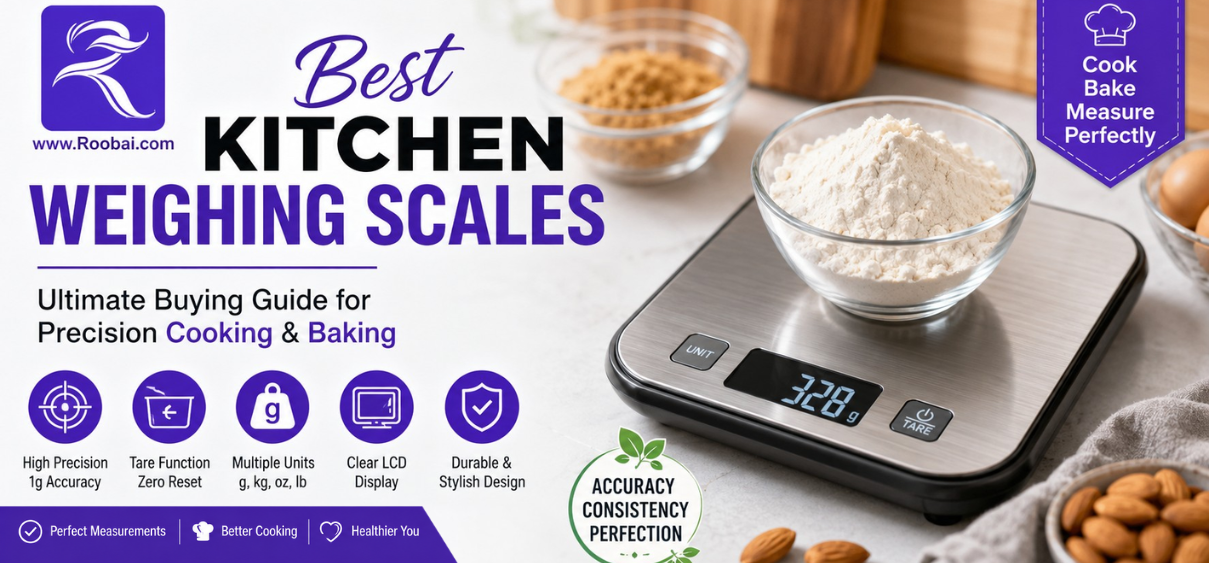
Modern kitchens demand precision, consistency, efficiency, and smart cooking tools that simplify food preparation while improving recipe accuracy. Among the most underrated yet essential kitchen tools, kitchen weighing scales have become indispensable for home cooks, bakers, fitness enthusiasts, nutrition-conscious users, and professional chefs who require precise ingredient measurements for perfect cooking results.
Whether we prepare cakes, bread, desserts, protein meals, baby food, healthy diet plans, coffee recipes, or restaurant-style dishes, a high-quality kitchen weighing scale ensures accurate ingredient proportions that directly affect taste, texture, nutrition, and cooking consistency.
Today’s best kitchen weighing scales offer high-precision sensors, digital displays, tare functionality, multiple unit conversions, compact designs, tempered glass surfaces, rechargeable batteries, smart measurement systems, and durable construction suitable for modern kitchens.
This comprehensive guide explores the best kitchen weighing scales, including top brands, types, features, weighing capacity, precision levels, advantages, disadvantages, maintenance tips, buying considerations, and everything required to choose the perfect kitchen scale for accurate cooking and baking.
Why Kitchen Weighing Scales Are Important
Cooking accuracy has become increasingly important because modern recipes often require exact measurements for:
- Baking consistency
- Nutritional tracking
- Portion control
- Professional cooking
- Diet management
- Meal preparation
- Coffee brewing
- Fitness meal planning
Traditional cup and spoon measurements can create inconsistencies. Kitchen scales eliminate guesswork and provide precise results.
Major Benefits of Kitchen Weighing Scales
- Improved cooking accuracy
- Perfect baking consistency
- Better portion control
- Nutritional tracking
- Reduced ingredient waste
- Faster meal preparation
- Professional cooking precision
- Easy unit conversion
- Consistent recipe outcomes
- Smart kitchen convenience
Best Kitchen Weighing Scales in 2026
1. HealthSense Chef-Mate Kitchen Scale
HealthSense has become one of the most trusted kitchen weighing scale brands because of its accuracy, elegant design, and reliable sensor technology.
Key Features
| Feature | Details |
|---|---|
| Maximum Capacity | 5kg |
| Accuracy | 1g Precision |
| Display | LCD Digital |
| Units Supported | g, kg, oz, lb |
| Surface | Tempered Glass |
| Tare Function | Yes |
Major Advantages
- Excellent accuracy
- Stylish modern design
- Easy unit switching
- Compact body
- Durable build quality
Best For
- Home kitchens
- Baking enthusiasts
- Daily meal preparation
2. Hoffen Digital Kitchen Weighing Scale
Hoffen scales are highly popular because of their budget-friendly pricing and precision measurement capabilities.
Top Features
- High-precision sensors
- Compact lightweight body
- Multiple unit conversion
- Auto shut-off
- Low battery indicator
Benefits
- User-friendly controls
- Affordable pricing
- Reliable performance
- Good battery life
- Accurate ingredient measurement
Ideal Users
- Students
- Beginners
- Everyday home cooking
3. Amazon Basics Kitchen Scale
Amazon Basics products focus on:
- Minimalist design
- Consistent accuracy
- Everyday reliability
Main Features
| Specification | Information |
|---|---|
| Capacity | 5kg |
| Precision | 1g |
| Power Source | Battery |
| Platform | Stainless Steel |
| Auto-Off | Yes |
Why Consumers Prefer Amazon Basics
- Simple operation
- Durable materials
- Stable readings
- Easy cleaning
- Compact storage
4. Dr Trust Electronic Kitchen Scale
Dr Trust is known for:
- High precision
- Advanced digital displays
- Reliable sensor technology
Highlights
- Ultra-sensitive sensors
- Nutritional measurement support
- Durable tempered glass
- Tare functionality
Best Suited For
- Fitness users
- Bakers
- Diet-conscious consumers
5. Eagle Digital Kitchen Scale
Eagle kitchen scales offer:
- Commercial-style accuracy
- Affordable performance
- Strong durability
Top Advantages
- High load support
- Stable measurements
- Reliable sensors
- Simple interface
What Is a Kitchen Weighing Scale?
A kitchen weighing scale is a precision measuring device designed to accurately measure ingredient weight for cooking, baking, meal preparation, and nutritional tracking.
Kitchen scales are commonly used for:
- Flour measurement
- Sugar measurement
- Protein portioning
- Coffee brewing
- Diet meal preparation
- Baking recipes
Modern digital scales provide highly accurate readings within seconds.
How Kitchen Weighing Scales Work
Digital kitchen scales operate using:
- Load sensors
- Strain gauge technology
- Digital processors
- LCD displays
Working Process
- Ingredients are placed on the scale
- Sensors detect weight pressure
- Electronic signals convert force into measurements
- Display shows precise readings
Advanced models also support:
- Tare calculations
- Unit conversion
- Nutritional tracking
Types of Kitchen Weighing Scales
Digital Kitchen Scales
Digital scales dominate the market because they provide:
- High precision
- Fast readings
- Easy unit conversion
- Compact design
Best For
- Baking
- Fitness meals
- Everyday cooking
Mechanical Kitchen Scales
Mechanical scales use spring mechanisms.
Advantages
- No batteries required
- Simple operation
- Durable construction
Best For
- Basic kitchen use
- Traditional kitchens
Smart Kitchen Scales
Smart scales include:
- Bluetooth connectivity
- App support
- Nutritional tracking
Best For
- Fitness enthusiasts
- Advanced meal planning
Important Features to Consider Before Buying
1. Maximum Weight Capacity
Capacity determines how much weight the scale can measure.
| Usage Type | Recommended Capacity |
|---|---|
| Baking | 3kg–5kg |
| Meal Prep | 5kg |
| Commercial Use | 10kg+ |
Most home kitchens perform well with 5kg capacity.
2. Precision Accuracy
Accuracy is one of the most important features.
Recommended Precision
| Usage | Precision Needed |
|---|---|
| Baking | 1g |
| Coffee Brewing | 0.1g–1g |
| Diet Tracking | 1g |
Higher precision improves recipe consistency.
3. Tare Function
The tare function allows users to:
- Reset weight to zero
- Measure ingredients separately
- Use bowls and containers efficiently
This feature greatly improves convenience.
4. Unit Conversion Support
Modern scales support:
- Grams
- Kilograms
- Ounces
- Pounds
- Milliliters
Unit flexibility improves recipe compatibility.
5. Display Quality
Good displays improve:
- Readability
- Precision visibility
- Ease of operation
Look for:
- Backlit LCD displays
- Large digits
- Clear interface
6. Build Quality
Durable materials improve:
- Longevity
- Stability
- Hygiene
Popular materials include:
- Tempered glass
- Stainless steel
- ABS plastic
Advantages of Kitchen Weighing Scales
1. Improves Recipe Accuracy
Precise measurements ensure:
- Better baking
- Consistent flavor
- Proper texture
2. Excellent for Baking
Baking requires exact ingredient ratios.
Kitchen scales improve:
- Cake texture
- Bread quality
- Dough consistency
3. Supports Fitness Goals
Scales help users:
- Track calories
- Control portions
- Manage diet plans
4. Reduces Ingredient Waste
Accurate measurement prevents:
- Overuse
- Underuse
- Recipe failure
5. Faster Cooking Preparation
Quick measurements improve:
- Kitchen efficiency
- Workflow organization
Disadvantages of Kitchen Weighing Scales
1. Battery Dependency
Digital scales require:
- Battery replacement
- Charging in rechargeable models
2. Limited Heavy Weight Support
Most home scales support:
- Up to 5kg
3. Sensor Sensitivity
Improper handling may affect:
- Accuracy
- Calibration
Best Technologies in Modern Kitchen Scales
High-Precision Sensor Technology
Modern sensors improve:
- Stability
- Measurement consistency
- Faster response time
Touch Controls
Touch panels provide:
- Sleek appearance
- Easy cleaning
- Modern usability
Auto Shut-Off
Auto-off systems improve:
- Battery life
- Energy efficiency
Rechargeable Battery Systems
Rechargeable scales reduce:
- Battery replacement costs
- Environmental waste
Kitchen Weighing Scale vs Measuring Cups
| Feature | Kitchen Scale | Measuring Cups |
|---|---|---|
| Accuracy | Excellent | Moderate |
| Baking Precision | High | Lower |
| Portion Control | Accurate | Approximate |
| Unit Flexibility | Multiple | Limited |
| Recipe Consistency | Excellent | Variable |
Best Kitchen Weighing Scale for Baking
Bakers should prioritize:
- High precision
- Stable platform
- Tare functionality
- Fast readings
Top Choices
- HealthSense
- Dr Trust
- Amazon Basics
Best Kitchen Scale for Fitness and Meal Prep
Fitness users require:
- Nutritional accuracy
- Fast measurements
- Compact storage
Recommended Brands
| Brand | Strength |
|---|---|
| Dr Trust | Fitness precision |
| Hoffen | Budget meal prep |
| HealthSense | Everyday accuracy |
Best Compact Kitchen Weighing Scales
Compact scales are ideal for:
- Small kitchens
- Apartments
- Minimalist cooking spaces
Top Compact Options
- Hoffen Mini Scale
- Amazon Basics Compact
- HealthSense Slim Scale
How to Use a Kitchen Weighing Scale Properly
Place on Flat Surface
Uneven surfaces affect:
- Accuracy
- Stability
Use Tare Function Correctly
Resetting weight improves:
- Ingredient separation
- Precision measurement
Avoid Overloading
Exceeding capacity may damage:
- Sensors
- Internal components
Kitchen Weighing Scale Maintenance Tips
Proper maintenance improves:
- Accuracy
- Lifespan
- Hygiene
1. Clean Surface Regularly
Removes:
- Food residue
- Moisture
- Dust
2. Avoid Water Exposure
Electronic scales should remain dry.
3. Store Carefully
Avoid:
- Heavy pressure
- Sensor damage
4. Replace Batteries Timely
Low batteries may affect:
- Reading accuracy
Energy Saving Tips for Digital Kitchen Scales
Use Auto-Off Feature
Extends battery life.
Remove Batteries During Long Storage
Prevents battery leakage.
Avoid Continuous Display Usage
Improves power efficiency.
Common Kitchen Scale Problems and Solutions
| Problem | Possible Cause | Solution |
|---|---|---|
| Incorrect Readings | Uneven surface | Reposition scale |
| Display Not Working | Dead battery | Replace battery |
| Slow Response | Sensor issue | Reset scale |
| Calibration Errors | Overloading | Recalibrate |
| Auto-Off Too Fast | Battery saving mode | Restart scale |
Best Kitchen Weighing Scale Brands
HealthSense
Known for:
- Excellent precision
- Modern design
- Reliable sensors
Dr Trust
Popular for:
- Fitness-oriented scales
- Accurate readings
Amazon Basics
Excellent for:
- Simplicity
- Everyday reliability
Hoffen
Strong in:
- Budget-friendly options
- Compact models
Eagle
Best for:
- Commercial-style durability
Who Should Buy a Kitchen Weighing Scale?
Kitchen scales are ideal for:
- Bakers
- Fitness enthusiasts
- Home cooks
- Diet-conscious users
- Professional chefs
- Coffee enthusiasts
Who May Not Need a Kitchen Scale?
Users with:
- Minimal cooking requirements
- Basic food preparation needs
may rely on traditional measuring methods.
Future of Kitchen Weighing Scale Technology
Future kitchen scales will include:
- AI nutrition tracking
- Smart recipe integration
- Voice assistant support
- Bluetooth meal logging
- Advanced sensor systems
Manufacturers continue improving:
- Precision
- Compact design
- Battery efficiency
- Smart functionality
Final Verdict
The best kitchen weighing scales provide an outstanding combination of precision, convenience, compact design, modern technology, and cooking accuracy. Whether we prioritize baking consistency, fitness meal preparation, coffee brewing precision, or professional cooking, modern kitchen scales deliver exceptional measurement performance for every kitchen.
For premium accuracy, HealthSense remains an outstanding choice. For fitness-focused measurement, Dr Trust performs exceptionally well. For affordable everyday usage, Hoffen and Amazon Basics offer excellent value.
Choosing the right kitchen scale depends on:
- Usage requirements
- Desired precision
- Capacity needs
- Kitchen space
- Budget
A high-quality kitchen weighing scale can dramatically improve cooking precision while simplifying meal preparation, portion control, and recipe consistency for years.
FAQs
1. What is a kitchen weighing scale used for?
Kitchen scales measure ingredient weight accurately for cooking and baking.
2. Which kitchen weighing scale brand is best?
HealthSense, Dr Trust, Hoffen, Amazon Basics, and Eagle are among the best.
3. Are digital kitchen scales accurate?
Yes, modern digital scales provide excellent precision.
4. What capacity is ideal for home kitchens?
5kg capacity is ideal for most households.
5. Is tare function important?
Yes, it improves convenience and measurement accuracy.
6. Can kitchen scales measure liquids?
Many scales support liquid measurement conversions.
7. Are kitchen scales useful for baking?
Yes, baking requires highly accurate ingredient measurements.
8. What precision level is best?
1g precision works well for most kitchen tasks.
9. Can kitchen scales help with diet plans?
Yes, they support portion and calorie control.
10. Are rechargeable kitchen scales better?
Rechargeable models reduce battery replacement costs.
11. Can kitchen scales weigh coffee beans?
Yes, precise scales are excellent for coffee brewing.
12. Are tempered glass scales durable?
Yes, tempered glass improves durability and appearance.
13. What units do digital scales support?
Usually grams, kilograms, ounces, and pounds.
14. Are kitchen scales easy to clean?
Yes, smooth surfaces simplify cleaning.
15. Do kitchen scales need calibration?
Occasional calibration improves accuracy.
16. Can kitchen scales weigh heavy ingredients?
Most home scales support up to 5kg.
17. Are mechanical scales still useful?
Yes, for simple basic measurement needs.
18. Can kitchen scales improve baking results?
Yes, accurate measurements improve consistency significantly.
19. What display type is best?
Backlit LCD displays provide better readability.
20. Are compact kitchen scales practical?
Yes, especially for small kitchens.
21. How long do kitchen scales last?
Typically several years with proper care.
22. Are smart kitchen scales worth buying?
Yes, especially for advanced nutrition tracking.
23. Can overloading damage a scale?
Yes, exceeding weight limits may damage sensors.
24. Do kitchen scales consume much power?
No, they are highly energy efficient.
25. Is a kitchen weighing scale worth buying?
Yes, especially for baking, dieting, and accurate cooking.