
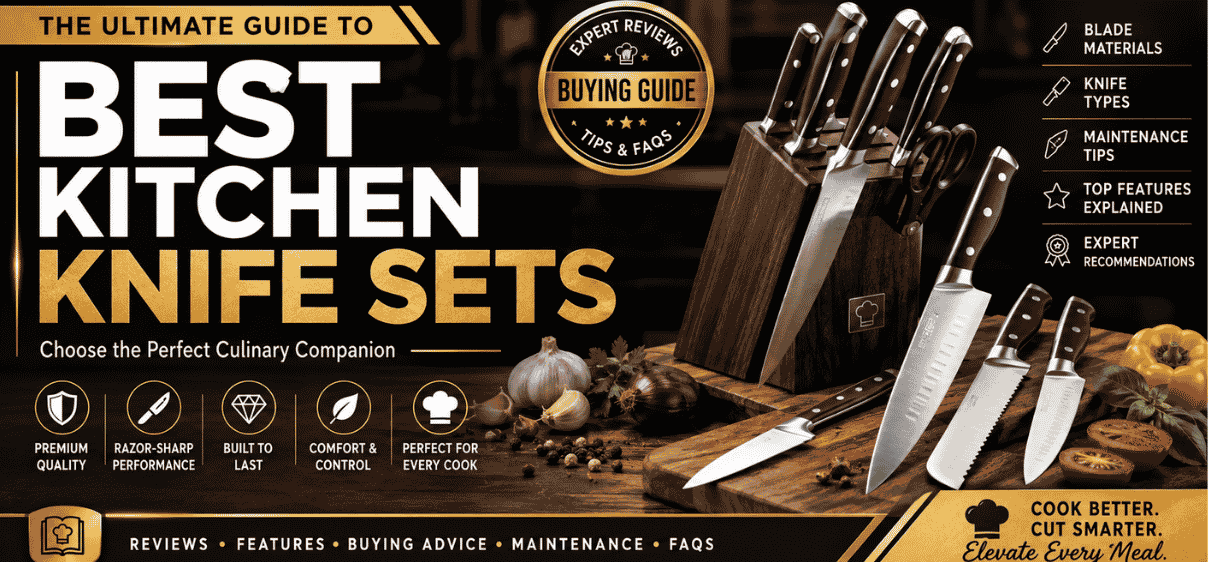
Best Kitchen Knife Sets: The Complete Buying Guide for Every Home Cook and Professional Chef
Meta Title
Best Kitchen Knife Sets 2026: Complete Buying Guide, Reviews, Features & FAQs
Meta Description
Best Kitchen Knife Sets: Ultimate Guide to Choosing the Perfect Culinary Companion
Why Every Kitchen Needs a Quality Knife Set
- Consistent cutting performance
- Better food presentation
- Enhanced safety
- Reduced hand fatigue
- Long-lasting durability
- Greater versatility
- Improved cooking efficiency
What Is Included in a Standard Kitchen Knife Set?
Most knife sets contain several essential tools designed for specific culinary tasks.
Higher-end sets may also include carving knives, steak knives, boning knives, and specialty blades.
Understanding Different Types of Kitchen Knives
Chef's Knife
Most culinary professionals consider the chef's knife the most important knife in any set.
Paring Knife
Small but incredibly useful, the paring knife excels at intricate cutting tasks.
Its compact size allows superior control.
Bread Knife
Featuring a serrated edge, bread knives cut through crusty bread without crushing the soft interior.
A quality bread knife remains effective for many years.
Utility Knife
The utility knife fills the gap between a chef's knife and a paring knife.
Its versatility makes it indispensable.
Santoku Knife
Originating from Japan, the Santoku knife has gained immense popularity worldwide.
Many cooks prefer Santoku knives for everyday slicing.
Blade Materials Explained
The blade material significantly impacts performance, maintenance, and longevity.
High-Carbon Stainless Steel
The most popular choice among professionals.
This material provides an outstanding balance between performance and convenience.
Carbon Steel
Known for exceptional sharpness.
Many culinary enthusiasts appreciate carbon steel despite the extra care required.
Ceramic Blades
Ceramic knives offer unique benefits.
Best suited for specialized tasks rather than complete knife sets.
Forged vs Stamped Knives
Understanding manufacturing methods helps identify quality products.
Forged Knives
Forged knives are crafted from a single piece of steel.
Although more expensive, forged knives often justify their cost through longevity and performance.
Stamped Knives
Stamped knives are cut from large steel sheets.
Modern manufacturing techniques have greatly improved stamped knife quality.
Handle Materials and Comfort
The handle affects comfort, control, and safety.
Wood Handles
Maintenance requirements are generally higher.
Plastic Handles
Composite Handles
Combine durability with comfort.
Many premium knife sets use composite materials.
Stainless Steel Handles
Often found in high-end knife collections.
Key Features to Look for in the Best Kitchen Knife Sets
Before purchasing, evaluate these important characteristics.
Full Tang Construction
A full tang extends throughout the handle, improving balance and strength.
Comfortable Grip
Ergonomic handles reduce fatigue during extended use.
Edge Retention
Quality blades stay sharp longer.
Corrosion Resistance
Balance
Well-balanced knives improve cutting accuracy.
Storage Solution
Knife blocks protect blades and enhance organization.
Best Kitchen Knife Sets for Beginners
A starter set containing five to seven essential pieces is often sufficient.
Best Kitchen Knife Sets for Home Cooks
Home cooks benefit from comprehensive sets offering versatility.
These tools cover nearly every cooking task encountered in a household kitchen.
Best Kitchen Knife Sets for Professional Chefs
Professional kitchens demand exceptional performance.
- Forged construction
- Premium steel
- Excellent edge retention
- Precise balance
- Professional sharpening capability
Professional-grade sets prioritize performance over decorative elements.
How to Properly Maintain Kitchen Knives
Proper maintenance significantly extends knife lifespan.
Hand Washing
Always wash knives by hand when possible.
Immediate Drying
Dry knives immediately after cleaning.
Regular Honing
Honing maintains blade alignment.
Professional Sharpening
Even premium knives require periodic sharpening.
Most home cooks benefit from sharpening every six to twelve months depending on usage.
Common Mistakes When Buying Knife Sets
Avoid these frequent purchasing errors.
Buying Too Many Pieces
Large sets often contain rarely used knives.
Ignoring Handle Comfort
Comfort impacts daily usability.
Choosing Based on Appearance Alone
Performance matters more than aesthetics.
Neglecting Maintenance Requirements
Select materials compatible with your maintenance preferences.
Overlooking Warranty Coverage
Quality manufacturers often provide extensive warranties.
Knife Storage Options
Proper storage protects both knives and users.
Wooden Knife Blocks
Magnetic Knife Strips
Drawer Organizers
Excellent for compact kitchens.
How Long Should a Quality Knife Set Last?
A premium kitchen knife set can last decades when properly maintained.
Factors affecting longevity include:
Many professional-grade knife sets remain functional for twenty years or more.
Kitchen Knife Safety Tips
Safety should always be a priority.
- Keep knives sharp
- Use stable cutting boards
- Cut away from fingers
- Store knives properly
- Avoid distractions while cutting
- Maintain a secure grip
Sharp knives are generally safer than dull knives because they require less force.
Benefits of Investing in Premium Kitchen Knife Sets
- Greater precision
- Enhanced durability
- Better balance
- Improved comfort
- Long-term value
- Professional performance
Final Thoughts
25 Frequently Asked Questions About Kitchen Knife Sets
1. What is the most important knife in a kitchen set?
The chef's knife is generally considered the most essential knife.
2. How often should kitchen knives be sharpened?
Typically every 6 to 12 months depending on usage.
3. Are expensive knife sets worth it?
High-quality sets often provide better durability and performance.
4. What blade material is best?
High-carbon stainless steel offers an excellent balance of durability and sharpness.
5. Can kitchen knives go in the dishwasher?
Hand washing is recommended for longevity.
6. What is a full tang knife?
A knife with steel extending through the entire handle.
7. Are forged knives better than stamped knives?
Forged knives generally offer superior balance and strength.
8. How many knives does a kitchen need?
Most households need 3 to 7 essential knives.
9. What is a Santoku knife used for?
Vegetable slicing, chopping, and precision cutting.
10. What is the lifespan of a quality knife set?
11. What is edge retention?
A blade's ability to remain sharp over time.
12. Are ceramic knives better than steel?
Each has advantages, but steel offers greater versatility.
13. What size chef's knife is best?
Eight inches is ideal for most users.
14. Why do knives rust?
Exposure to moisture and improper maintenance.
15. What is honing?
Realigning the blade edge without removing metal.
16. How should knives be stored?
In blocks, magnetic strips, or drawer organizers.
17. What handle material is best?
Composite handles offer excellent durability and comfort.
18. What knife cuts bread best?
19. Can left-handed users use standard knives?
Most modern knives are suitable for both hands.
20. How often should knives be honed?
Every few uses for optimal performance.
21. Are steak knives necessary?
22. What is a utility knife?
A mid-sized knife for general cutting tasks.
23. Which knife is best for peeling fruit?
24. What should beginners buy first?
A basic set with essential knives.