
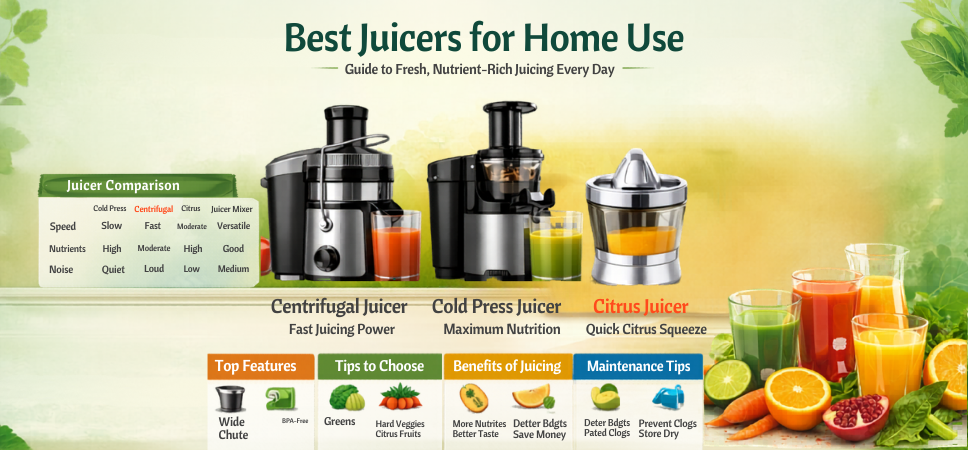
Fresh juice delivers concentrated flavor, vibrant color, and a powerful dose of nutrients straight from fruits and vegetables. A high-quality juicer for home use ensures maximum extraction, smooth consistency, minimal oxidation, and effortless cleaning—turning daily juicing into a fast, enjoyable routine. We rely on the right juicing technology, durable components, and practical design to extract more juice, preserve nutrients, and simplify maintenance.
This comprehensive guide presents the best juicers for home use, compares juicer types, details essential features, and offers precise selection advice for households that value freshness, efficiency, and long-term reliability.
Understanding Juicer Types for Home Kitchens
Choosing the right juicer begins with understanding the three primary technologies used in modern appliances.
Centrifugal Juicers (Fast Extraction)
- High-speed spinning blades
- Quick juicing for hard fruits and vegetables
- Wide feed chute for minimal chopping
- Lightweight and budget-friendly
- Slight heat and foam due to high RPM
Best for: Fast morning juicing with apples, carrots, beets, and oranges.
Cold Press / Masticating Juicers (Slow, Nutrient-Preserving)
- Slow crushing and pressing mechanism
- Minimal heat and oxidation
- Higher juice yield and drier pulp
- Excellent for leafy greens and soft fruits
- Quiet operation
Best for: Nutrient retention, green juices, and daily health routines.
Citrus Juicers (Specialized Extraction)
- Designed for oranges, lemons, mosambi, and grapefruits
- Simple pressing cones
- Compact and easy to clean
Best for: Quick citrus juices without pulp.
Key Features That Define the Best Juicers for Home Use
Motor Power
- 150W–400W for cold press juicers
- 400W–1000W for centrifugal juicers
Juice Yield Efficiency
High-quality augers and strainers extract more liquid, leaving pulp almost dry.
Feed Chute Size
A wider chute reduces preparation time by allowing whole fruits.
Noise Level
Cold press juicers operate quietly, ideal for early mornings.
Ease of Cleaning
Detachable parts, smooth surfaces, and cleaning brushes save time.
Material Quality
- BPA-free plastic
- Stainless steel strainers
- Food-grade components
Best Juicers for Home Use by Category
Cold Press Juicer for Maximum Nutrition
Slow extraction preserves enzymes and vitamins while delivering rich, dense juice.
Ideal for: Spinach, kale, wheatgrass, pomegranate, and soft fruits.
High-Speed Centrifugal Juicer for Quick Results
Powerful motor processes hard produce within seconds.
Ideal for: Apples, carrots, beetroot, pineapple.
Compact Citrus Juicer for Daily Vitamin C
Efficient pressing for oranges and lemons with minimal effort.
Ideal for: Breakfast citrus juices.
Multi-Function Juicer Mixer Grinder
Combines juicing, grinding, and blending in a single appliance.
Ideal for: Versatile kitchens needing multi-purpose performance.
Comparison Table of Juicer Types
| Feature | Cold Press Juicer | Centrifugal Juicer | Citrus Juicer | Juicer Mixer |
|---|---|---|---|---|
| Speed | Slow | Very Fast | Moderate | Fast |
| Nutrient Retention | Excellent | Good | Excellent | Good |
| Noise | Low | Medium-High | Low | Medium |
| Best For | Greens, soft fruits | Hard fruits, veggies | Citrus fruits | Multi-tasking |
| Juice Yield | High | Moderate | High | Moderate |
| Cleaning | Easy | Easy | Very Easy | Moderate |
| Motor Power | 150–400W | 400–1000W | Low | 500–750W |
How to Choose the Right Juicer for Your Needs
For Green Juices and Maximum Nutrition
Select a cold press juicer with a strong auger and fine strainer.
For Speed and Convenience
Choose a centrifugal juicer with a wide feed chute.
For Daily Citrus Intake
A compact citrus juicer is perfect.
For Versatility
A juicer mixer grinder offers multiple functions.
Benefits of Using a High-Quality Juicer at Home
- Higher juice extraction from the same produce
- Richer taste with smoother texture
- Preserved nutrients due to minimal heat
- Time-saving preparation
- Cost savings over store-bought juices
- No preservatives or additives
Important Design Elements to Consider
- Anti-drip spout to prevent mess
- Reverse function to prevent clogging
- Pulp control for texture preference
- Stable anti-skid base
- Overheat protection for motor safety
Juicing Performance Tests You Can Try
- Extract juice from leafy greens
- Juice pomegranate with minimal seeds in output
- Process carrots and beetroot smoothly
- Check pulp dryness after juicing
- Observe foam levels in juice
Maintenance Tips for Long-Lasting Juicers
- Rinse parts immediately after use
- Use provided brush for mesh cleaning
- Avoid overloading feed chute
- Allow motor to rest between long sessions
- Store components dry
Common Mistakes to Avoid
- Juicing very hard items without chopping
- Ignoring clogging in strainers
- Letting pulp dry inside the mesh
- Running juicer continuously for too long
- Using abrasive cleaners on parts
Why Cold Press Juicers Are Popular for Home Use
Cold press technology ensures minimal oxidation, richer color, better taste, and superior nutrient preservation compared to high-speed juicing.
Noise Levels and Kitchen Comfort
Cold press juicers operate quietly, while centrifugal models produce noticeable sound due to high RPM.
Durability and Warranty Expectations
Choose juicers with 2–5 years warranty and strong motor construction for reliability.
Energy Efficiency in Daily Juicing
Efficient motors extract juice quickly, minimizing electricity consumption despite frequent use.
Expert Recommendation
For most households, a cold press juicer with BPA-free parts, reverse function, and easy-clean design offers the best balance of nutrition, performance, and convenience.
FAQs
- Which juicer is best for greens?
Cold press juicer. - Are centrifugal juicers noisy?
Yes, moderately. - What is the ideal wattage?
150–400W for cold press, 800W for centrifugal. - Can juicers handle pomegranate?
Yes, especially cold press models. - Is cleaning difficult?
No, if cleaned immediately. - Which juicer gives more juice?
Cold press juicers. - Can I juice leafy vegetables?
Yes, with masticating juicer. - What is pulp control?
Adjusts thickness of juice. - Are parts dishwasher safe?
Many models offer this. - Can I juice citrus fruits?
Yes, with citrus or other juicers. - Do juicers destroy nutrients?
Cold press preserves them best. - How to prevent clogging?
Use reverse function. - What is oxidation in juice?
Exposure to air reducing freshness. - Can I juice daily?
Yes, designed for daily use. - Is juicer better than blender?
For pure juice, yes. - How long does juice stay fresh?
Up to 24 hours refrigerated. - What fruits should not be juiced?
Bananas and avocados. - Why is my juice foamy?
High-speed extraction. - Can kids use juicers?
With supervision. - How to clean mesh filter?
Brush under running water. - Do juicers consume much power?
No, efficient motors. - Can I make nut milk?
Yes, with cold press. - What indicates good build quality?
BPA-free, sturdy parts. - How long do juicers last?
5–8 years with care. - Is warranty important?
Yes for motor reliability.