
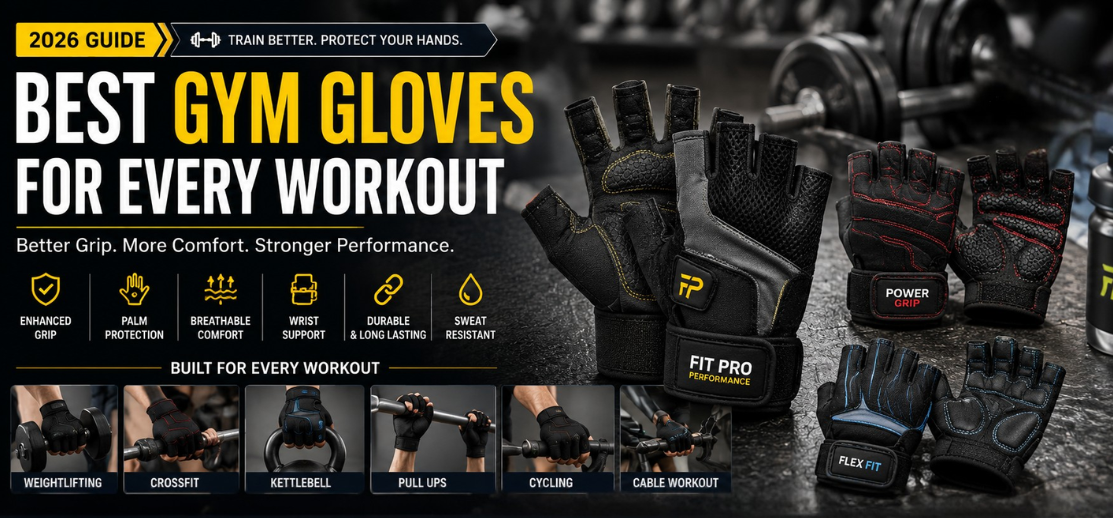
Choosing the best gym gloves can make our workouts more comfortable, controlled, and consistent. Whether we are lifting weights, training on machines, performing pull-ups, using resistance equipment, cycling indoors, or following a high-intensity workout routine, the right pair of gloves can provide additional grip, cushioning, and protection for our hands.
Our hands are exposed to repeated friction and pressure during strength training. Barbells, dumbbells, cable attachments, pull-up bars, kettlebells, and exercise machines can place considerable stress on the palms and fingers. Over time, frequent training can lead to discomfort, calluses, sweaty palms, or reduced grip confidence.
A suitable pair of workout gloves can help create a more comfortable barrier between the hands and training equipment. However, not every glove is designed for every type of exercise. Some models focus on maximum grip, while others prioritize palm cushioning, breathability, wrist support, flexibility, or protection during high-volume workouts.
The ideal gym gloves should match our training style. A beginner performing general fitness exercises may prefer lightweight gloves with breathable fabric and moderate cushioning. A serious weightlifter may prioritize a secure grip, reinforced palm construction, and wrist support. Cross-training enthusiasts may prefer flexible half-finger gloves that allow natural hand movement.
This comprehensive guide covers the best gym gloves, different glove types, materials, sizing, grip technology, wrist support, workout-specific recommendations, advantages and disadvantages, cleaning tips, buying advice, and frequently asked questions.
What Are Gym Gloves?
Gym gloves are specially designed workout accessories that cover some or all of the hand to improve comfort and handling during exercise.
Unlike ordinary gloves, gym gloves are designed around the movement patterns and demands of fitness equipment. Many models expose the fingers while covering the palm, allowing us to maintain finger mobility while receiving additional protection where the hands experience the most friction.
Gym gloves can be used for:
- Weightlifting
- Strength training
- Bodybuilding
- Cross-training
- Pull-ups
- Resistance training
- Kettlebell workouts
- Dumbbell exercises
- Cable-machine exercises
- Indoor cycling
- Functional fitness
- General gym workouts
Some specialized designs also include wrist wraps or integrated wrist straps to provide additional support during certain lifting movements.
Why Should We Wear Gym Gloves?
Gym gloves are not mandatory for every workout, but they can provide several practical benefits for people who prefer additional hand protection and grip assistance.
1. Improved Palm Comfort
Weightlifting equipment can place pressure on the palms, particularly during exercises involving heavier loads or high repetitions.
A padded glove can create a protective layer between our hands and the equipment.
2. Reduced Friction
Repeated contact with knurled bars and handles can create friction on the skin.
Gym gloves can reduce direct contact and make long training sessions more comfortable.
3. Better Grip in Sweaty Conditions
Sweat can make handles slippery.
Many workout gloves use textured palm materials to provide additional traction and improve handling when our hands become sweaty.
4. Protection Against Calluses
Calluses are common among people who regularly perform resistance training. Gloves can reduce direct friction and may help minimize the amount of irritation caused by repeated gripping.
They cannot guarantee that calluses will never develop, but they can provide an additional protective layer.
5. Wrist Support
Some gym gloves feature extended wrist sections or integrated straps.
These designs can provide additional support and a more secure feeling during selected exercises.
6. Better Training Comfort
When our hands feel comfortable, we may find it easier to concentrate on exercise technique and movement rather than constantly adjusting our grip.
Best Types of Gym Gloves
Different training styles require different glove designs.
1. Half-Finger Gym Gloves
Half-finger gloves cover the palm while leaving the fingertips exposed.
They are among the most common choices for general gym workouts because they balance protection, grip, ventilation, and finger mobility.
Best for:
- General weightlifting
- Dumbbell training
- Machine workouts
- Beginner workouts
- Bodybuilding
- Cross-training
The exposed fingertips make it easier to maintain natural hand movement and interact with equipment.
2. Full-Finger Workout Gloves
Full-finger gloves cover the entire hand.
They provide greater coverage than traditional half-finger gym gloves and can be useful in situations where additional protection is desired.
Best for:
- Outdoor workouts
- Cycling
- Functional training
- Cold-weather training
- Activities involving additional hand exposure
The trade-off is that full-finger gloves can feel warmer and may provide less direct contact with equipment.
3. Weightlifting Gloves
Weightlifting gloves are specifically designed for resistance training.
They often feature:
- Reinforced palms
- Textured grip
- Moderate padding
- Adjustable wrist closures
- Half-finger construction
The goal is to provide a comfortable and secure interface between our hands and the barbell or dumbbell.
4. Gym Gloves With Wrist Support
Some gloves extend farther around the wrist and include an adjustable strap.
These designs can provide a more secure fit and additional wrist support.
They can be particularly appealing for people who perform exercises involving substantial gripping.
However, gloves with wrist support should not be considered a substitute for proper lifting technique, appropriate load selection, or professional guidance when an injury is present.
5. Cross-Training Gloves
Cross-training gloves are generally designed to provide a balance between grip, flexibility, ventilation, and durability.
They can work well for people who perform several types of workouts rather than focusing exclusively on traditional weightlifting.
6. Grip Pads
Grip pads are different from traditional gloves because they focus primarily on the palm and gripping surface.
They can provide a more direct connection between our hands and equipment while reducing palm friction.
Best for:
- Pull-ups
- Deadlifts
- Barbell training
- Functional fitness
- High-volume grip exercises
7. Liquid Grip and Grip Accessories
Grip-enhancing products can be used independently from gloves, depending on gym rules and personal preferences.
They are designed to improve traction rather than provide physical protection.
Best Gym Gloves for Weightlifting
Weightlifting gloves should provide a secure grip without unnecessarily restricting hand movement.
Important features include:
- Durable palm material
- Strong stitching
- Textured grip
- Moderate cushioning
- Secure wrist closure
- Flexible finger openings
- Breathable construction
For heavier lifting, excessive padding is not always desirable. Too much material between the hand and bar can alter the feel of the grip.
A well-designed lifting glove should provide protection without making the handle feel excessively bulky.
Best Gym Gloves for Bodybuilding
Bodybuilding workouts often involve higher training volume and numerous exercises using dumbbells, barbells, machines, and cables.
For this type of training, we should prioritize:
- Comfortable palm padding
- Breathability
- Reliable grip
- Flexible construction
- Durable stitching
- Easy adjustment
Because bodybuilding sessions can last a long time, ventilation becomes particularly important.
Best Gym Gloves for CrossFit and Functional Training
Functional workouts often combine lifting, pulling, carrying, and bodyweight movements.
A glove that is too bulky may interfere with movements that require quick transitions.
For cross-training, we can prioritize:
- Lightweight construction
- Flexible fingers
- Secure palm grip
- Breathable material
- Minimal bulk
- Strong wrist closure
Grip pads can also be useful for exercises involving repeated bar contact.
Best Gym Gloves for Pull-Ups
Pull-ups create considerable friction between the palm and bar.
For pull-up training, grip-focused gloves or palm protection can be particularly useful.
We should look for:
- Strong palm material
- Textured grip
- Secure fit
- Minimal slipping
- Comfortable finger openings
The glove should remain firmly positioned throughout repeated pulling movements.
Best Gym Gloves for Dumbbell Workouts
Dumbbell exercises involve frequent gripping and repositioning.
A good dumbbell glove should therefore provide a balance between cushioning and tactile feedback.
Useful features include:
- Moderate palm padding
- Flexible fingers
- Breathable fabric
- Secure wrist closure
- Non-slip palm surface
Very thick padding may reduce our ability to feel the dumbbell handle accurately.
Best Gym Gloves for Kettlebell Training
Kettlebell movements can involve dynamic changes in hand position.
A glove for kettlebell training should be flexible enough to accommodate these movements while protecting the palm from repeated friction.
We should prioritize:
- Flexible material
- Durable palm construction
- Secure fit
- Breathability
- Minimal excess material
Best Gym Gloves for Indoor Cycling
Indoor cycling places different demands on the hands compared with weightlifting.
Cycling gloves often emphasize:
- Palm cushioning
- Sweat absorption
- Breathability
- Grip
- Wrist flexibility
Full-finger or half-finger designs can both work depending on personal preference and environment.
How to Choose the Best Gym Gloves
Choosing gym gloves requires more than selecting the right size.
We should consider material, padding, grip, fit, ventilation, wrist support, durability, and the exercises we perform.
1. Check the Material
Common materials include:
- Leather
- Synthetic leather
- Nylon
- Polyester
- Spandex
- Neoprene
- Mesh
- Silicone or rubberized grip materials
Each material provides different characteristics.
Leather
Leather can provide durability and a traditional feel.
Synthetic Leather
Synthetic materials can provide a balance of durability, flexibility, and affordability.
Mesh
Mesh improves airflow and can help reduce heat buildup.
Neoprene
Neoprene is often used around wrist sections because it provides flexibility and cushioning.
2. Choose the Right Padding
Padding should protect our palms without becoming unnecessarily bulky.
Too little padding may provide insufficient protection, while excessive padding can reduce tactile feedback.
For general training, moderate padding is usually a practical compromise.
3. Check Grip Performance
Grip is one of the most important characteristics.
Textured surfaces, silicone patterns, rubberized sections, or reinforced materials can increase traction.
The best grip pattern depends on the equipment we use.
4. Look for Breathability
Hands can become sweaty during intense workouts.
Breathable fabric and mesh panels can improve airflow and help reduce moisture accumulation.
Useful ventilation areas include:
- Back of the hand
- Between fingers
- Wrist area
- Palm sections where appropriate
5. Check Wrist Closure
A secure wrist closure prevents the glove from moving during exercise.
Common closure systems include:
- Hook-and-loop straps
- Elastic cuffs
- Adjustable bands
- Extended wrist wraps
The closure should feel secure without being excessively tight.
6. Consider Finger Length
Half-finger gloves expose the fingertips, providing greater tactile feedback.
Full-finger gloves offer more coverage.
The correct choice depends on the activity and personal preference.
7. Evaluate Stitching
Stitching receives considerable stress during repeated gripping.
Reinforced seams are especially important around:
- Thumb areas
- Finger openings
- Palm edges
- Wrist closures
- High-friction zones
Gym Glove Size Guide
The correct fit is essential.
A glove that is too loose can shift during lifting, while one that is too tight can become uncomfortable and restrict movement.
Most manufacturers provide their own size charts, so we should always compare our hand measurements with the brand's specific guide.
| Size | Typical Hand Size | Fit Consideration |
|---|---|---|
| Small | Smaller hands | Compact fit |
| Medium | Average hands | Balanced fit |
| Large | Larger hands | More palm room |
| XL | Extra-large hands | Maximum hand coverage |
These categories are only general. Actual measurements vary by manufacturer.
How to Measure Our Hands for Gym Gloves
To select the right size:
- Place the hand flat.
- Measure around the widest part of the palm.
- Avoid including the thumb unless the manufacturer's instructions specify it.
- Compare the measurement with the brand's size chart.
- Consider finger length if the manufacturer provides that measurement.
If our measurement falls between sizes, we should review the manufacturer's fit guidance and consider whether we prefer a snug or slightly relaxed fit.
Gym Gloves With Wrist Wraps vs Standard Gloves
| Feature | Standard Gym Gloves | Gloves With Wrist Wraps |
| Hand protection | Good | Good |
| Wrist support | Limited | Greater |
| Flexibility | Excellent | Moderate |
| Bulk | Low | Higher |
| Best for | General training | Heavier resistance training |
| Adjustment | Simple | More extensive |
Wrist-supported gloves can be useful for people who prefer additional wrist stability, but they are not required for every exercise.
Leather vs Synthetic Gym Gloves
| Feature | Leather | Synthetic |
| Durability | Excellent | Good to excellent |
| Flexibility | Moderate | Usually higher |
| Break-in period | Possible | Usually minimal |
| Breathability | Depends on design | Depends on design |
| Maintenance | More demanding | Generally easier |
| Cost | Often higher | Wide range |
Neither material is automatically superior. The construction quality and intended use matter considerably.
How Much Padding Should Gym Gloves Have?
The appropriate amount of padding depends on the workout.
Light padding
Suitable for:
- Machine training
- General fitness
- Light resistance training
Medium padding
Suitable for:
- General weightlifting
- Bodybuilding
- Dumbbell training
- High-volume workouts
Heavy padding
Useful when:
- Palm comfort is a major priority
- Equipment creates significant pressure
- We prefer maximum cushioning
However, excessive padding can reduce the direct feel of the bar.
How to Break In New Gym Gloves
Some gloves feel slightly stiff when new.
We can gradually use them during shorter sessions before wearing them during longer workouts.
During the first few workouts, we should check:
- Finger movement
- Palm pressure
- Wrist comfort
- Grip stability
- Stitching
- Hot spots
If a glove causes persistent discomfort or restricts movement, the problem may be the fit or design rather than a normal break-in period.
How to Clean Gym Gloves
Gym gloves absorb sweat and come into frequent contact with gym equipment.
Cleaning them regularly can help maintain freshness and extend their useful life.
Basic cleaning routine
- Check the manufacturer's care instructions.
- Remove loose dirt.
- Hand wash when recommended.
- Use mild soap.
- Rinse thoroughly.
- Press out excess water without aggressively twisting the gloves.
- Air dry completely.
- Keep them away from excessive heat unless the manufacturer specifically permits it.
Some gloves are machine washable, but we should never assume that every material is suitable for machine washing.
How to Prevent Gym Gloves From Smelling
Odor often develops when sweat remains trapped inside gloves.
To reduce odor:
- Allow gloves to dry completely after every workout.
- Do not leave them inside a closed gym bag while wet.
- Turn them inside out where practical.
- Clean them regularly.
- Avoid sharing gloves.
- Follow the manufacturer's cleaning instructions.
Ventilated storage can make a noticeable difference.
How Long Do Gym Gloves Last?
The lifespan depends on:
- Workout frequency
- Weight lifted
- Material quality
- Sweat exposure
- Cleaning routine
- Stitching quality
- Frequency of washing
- Training style
Someone training several times per week may wear through gloves faster than someone who exercises occasionally.
We should inspect gloves regularly for:
- Torn stitching
- Thinning palms
- Damaged grip surfaces
- Loose wrist straps
- Cracked materials
- Excessive stretching
If the glove no longer provides a secure fit or its protective material is significantly damaged, replacement is appropriate.
Advantages of Wearing Gym Gloves
The main advantages include:
- Additional palm protection
- Reduced friction
- Improved comfort
- Better grip in some conditions
- Reduced direct contact with equipment
- Wrist support on selected designs
- Improved confidence during repetitive gripping
- Protection against some forms of irritation
- Better handling comfort during long workouts
Potential Disadvantages of Gym Gloves
Gym gloves are not perfect for everyone.
Reduced Tactile Feedback
Some gloves create an additional layer between our hands and the equipment.
Additional Heat
Poorly ventilated gloves can make hands feel hot.
Extra Maintenance
They require cleaning and drying after repeated use.
Possible Fit Problems
A poorly fitted glove can move during exercise or create pressure points.
Additional Bulk
Heavy padding or wrist wraps can make the glove feel less natural.
For these reasons, we should choose gloves based on our actual training needs rather than assuming more protection is always better.
Gym Gloves vs Bare Hands
Some lifters prefer training without gloves because they want direct contact with the bar.
Others prefer gloves because they value comfort, grip assistance, and palm protection.
| Factor | Gym Gloves | Bare Hands |
| Palm protection | Higher | Lower |
| Direct bar feel | Lower | Higher |
| Grip | Depends on glove | Direct |
| Callus protection | Some | Limited |
| Heat buildup | Possible | Minimal |
| Maintenance | Required | Minimal |
Neither approach is universally correct. Personal preference, training style, and comfort all influence the choice.
Are Gym Gloves Good for Beginners?
Gym gloves can be useful for beginners who want additional comfort while becoming familiar with resistance training.
Beginners should prioritize:
- Correct fit
- Comfortable padding
- Good grip
- Breathability
- Easy adjustment
The gloves should complement proper technique rather than compensate for poor grip mechanics or inappropriate weights.
Are Gym Gloves Good for Heavy Weightlifting?
They can be useful, but the ideal design depends on the lift.
For heavy lifting, some athletes prefer direct contact with the bar, while others use gloves or specialized grip equipment.
If we choose gloves for heavy resistance training, we should prioritize secure construction and a stable fit. We should also avoid using gloves as a substitute for proper lifting technique or appropriate progression.
Best Gym Gloves for Sweaty Hands
People with sweaty hands may benefit from gloves with:
- Breathable mesh
- Moisture-managing fabric
- Textured palms
- Ventilation channels
- Secure wrist closures
The palm material should maintain traction even when moisture accumulates.
Best Gym Gloves for Small Hands
People with smaller hands should pay particular attention to finger length and palm width.
A glove that is too large may bunch around the fingers and reduce grip control.
We should use actual hand measurements rather than selecting a size based solely on body size.
Best Gym Gloves for Large Hands
For larger hands, adequate palm width and finger length are important.
A glove that is too tight can create pressure around the fingers and wrist.
Extended wrist sections can also be useful when we need additional coverage.
Best Gym Gloves for Men
Men often have larger average hand dimensions, but sizing should always be based on actual measurements rather than gender alone.
A suitable men's gym glove should provide:
- Correct palm width
- Appropriate finger length
- Strong grip
- Secure closure
- Comfortable padding
Best Gym Gloves for Women
Women's gym gloves are often available in smaller dimensions, but the most important consideration remains fit.
A well-fitting glove should sit securely around the palm without excessive loose material.
Features such as lightweight construction, breathable fabric, and flexible fingers can be especially useful for general fitness workouts.
Best Gym Gloves for Beginners
For beginners, a versatile half-finger glove is often a practical starting point.
We can prioritize:
- Comfortable fit
- Moderate padding
- Good grip
- Breathability
- Adjustable wrist closure
- Durable construction
There is no need to purchase the most specialized glove before we understand our preferred training style.
Gym Gloves for Home Workouts
Home workouts can also benefit from hand protection.
Dumbbells, resistance bands, pull-up bars, kettlebells, and adjustable weights can all create friction.
Lightweight gloves are generally sufficient for many home workouts, particularly when the training load is moderate.
Gym Gloves for Outdoor Workouts
Outdoor workouts can expose our hands to changing temperatures and surfaces.
Full-finger gloves may be useful when additional coverage is desirable, while breathable half-finger designs can work well in warmer conditions.
How to Choose Gym Gloves Based on Workout Type
| Workout | Recommended Glove Type | Key Feature |
| General gym | Half-finger | Comfort |
| Weightlifting | Weightlifting gloves | Grip |
| Bodybuilding | Padded half-finger | Palm protection |
| Pull-ups | Grip-focused | Palm traction |
| Cross-training | Flexible gloves | Mobility |
| Kettlebell | Flexible padded | Comfort |
| Cycling | Cycling gloves | Palm cushioning |
| Home workout | Lightweight gloves | Versatility |
| Outdoor fitness | Full/half-finger | Coverage |
| Heavy training | Durable grip gloves | Secure construction |
Common Mistakes When Buying Gym Gloves
1. Choosing the Wrong Size
Even a high-quality glove performs poorly if it does not fit correctly.
2. Buying Excessively Thick Padding
More padding does not automatically mean better performance.
3. Ignoring Ventilation
Sweaty hands can make training uncomfortable.
4. Choosing Style Over Function
Color and appearance matter, but construction and fit should come first.
5. Ignoring Wrist Closure
A glove that moves around the hand can become distracting.
6. Not Checking Cleaning Instructions
Different materials require different care.
7. Buying One Glove for Every Activity
Weightlifting, cycling, climbing, and general fitness can place different demands on the hands.
Gym Glove Buying Checklist
Before purchasing, we can use this checklist:
-
Measure our hand.
-
Check the manufacturer's size chart.
-
Identify our primary workout.
-
Choose half-finger or full-finger construction.
-
Check palm material.
-
Evaluate padding thickness.
-
Check grip texture.
-
Look for breathable panels.
-
Examine wrist closure.
-
Check stitching quality.
-
Review cleaning instructions.
-
Consider wrist support if needed.
-
Check return or exchange options.
-
Choose durability appropriate for training frequency.
-
Avoid unnecessary bulk.
What Makes the Best Gym Gloves?
The best gym gloves combine protection, grip, comfort, durability, and freedom of movement.
We should look for:
- Secure fit
- Durable palm
- Reliable grip
- Comfortable padding
- Breathable construction
- Strong stitching
- Adjustable wrist closure
- Flexible fingers
- Appropriate weight
- Easy maintenance
The right balance depends on the type of exercise we perform.
A power-focused lifter may value grip and durability above everything else. A general fitness user may prioritize comfort and breathability. Someone performing long workouts may want lightweight construction and moisture management.
Final Guide to Choosing the Best Gym Gloves
The best gym gloves can become a useful part of our training equipment when they are selected according to our workout style and hand requirements.
For general gym sessions, half-finger gloves offer a practical balance between palm protection, grip, ventilation, and finger mobility. Weightlifters may prefer reinforced palms and secure wrist closures, while cross-training enthusiasts can benefit from lightweight and flexible designs. Pull-up and grip-intensive workouts may be better suited to specialized grip-focused gloves or palm protection.
Fit should always be a priority. A glove that is too loose can shift during exercise, while one that is too tight can create discomfort. We should measure our hands and compare the results with the manufacturer's sizing chart before purchasing.
Material and construction also matter. Durable palms, reinforced stitching, breathable fabrics, and reliable closures can significantly improve the useful life of a pair of gloves. If our workouts generate considerable sweat, ventilation and moisture management become even more important.
Padding should be chosen carefully. Moderate cushioning can protect the palms while preserving enough tactile feedback to maintain a natural grip. Excessively thick padding can make some exercises feel less controlled.
Wrist-supported gloves can be useful for selected training styles, but they should not replace proper exercise technique, sensible load selection, or appropriate training progression.
Regular maintenance is equally important. Allowing gloves to dry fully after workouts, cleaning them according to manufacturer instructions, and inspecting them for wear can help maintain hygiene and performance.
Ultimately, the best gym gloves are the ones that provide the right combination of grip, comfort, protection, flexibility, ventilation, and durability for our specific training routine. Instead of choosing based solely on appearance or price, we should evaluate how the gloves will perform during the exercises we actually do.
FAQs
1. Are gym gloves worth buying?
Yes. Gym gloves can provide additional palm protection, reduce friction, improve comfort, and provide grip assistance during certain workouts.
2. What are the best gym gloves for weightlifting?
Weightlifting gloves with durable palm construction, reliable grip, moderate padding, and secure wrist closures are suitable for many weightlifting routines.
3. Are half-finger gym gloves better than full-finger gloves?
Neither is universally better. Half-finger gloves provide greater finger mobility and ventilation, while full-finger gloves provide more hand coverage.
4. Do gym gloves improve grip?
Some gym gloves can improve traction, particularly when the palm uses textured or rubberized grip materials. Grip performance varies by glove design and equipment.
5. Can gym gloves prevent calluses?
Gym gloves can reduce direct friction and may help minimize irritation, but they cannot guarantee that calluses will not develop.
6. Are gym gloves good for beginners?
Yes. Beginners may appreciate the additional comfort and palm protection while becoming familiar with resistance-training equipment.
7. What material is best for gym gloves?
Leather, synthetic leather, mesh, nylon, polyester, and other materials can all be effective. The best choice depends on durability, flexibility, ventilation, and intended use.
8. How tight should gym gloves be?
Gym gloves should fit securely without causing excessive pressure. They should not slide around during exercise or restrict normal hand movement.
9. How do we measure our hand for gym gloves?
Measure around the widest part of the palm and compare the measurement with the manufacturer's specific size chart.
10. Are padded gym gloves better?
Padding can improve palm comfort, but excessive padding may reduce tactile feedback. Moderate padding is a practical choice for many general workouts.
11. Are gym gloves good for pull-ups?
They can be useful for reducing palm friction during pull-ups. Grip-focused designs can be particularly helpful.
12. Can we use gym gloves for dumbbells?
Yes. Dumbbell workouts are one of the common uses for gym gloves.
13. Are gym gloves good for deadlifts?
Some people use gloves for deadlifts, while others prefer direct bar contact or specialized lifting accessories. The best choice depends on personal preference and training goals.
14. Do gym gloves help with sweaty hands?
Breathable and moisture-managing gloves can improve comfort, while textured palms can provide additional traction in sweaty conditions.
15. How often should gym gloves be washed?
Cleaning frequency depends on workout frequency and sweat levels. Regular users should clean gloves frequently according to the manufacturer's care instructions.
16. How do we stop gym gloves from smelling?
Allow them to dry completely after each workout, clean them regularly, and avoid leaving damp gloves inside a closed gym bag.
17. How long do gym gloves last?
Their lifespan depends on training frequency, materials, construction, cleaning, and workload. Regular inspection helps determine when replacement is necessary.
18. Are leather gym gloves durable?
Quality leather gloves can be highly durable when properly maintained.
19. Are synthetic gym gloves good?
Yes. Synthetic materials can provide a strong combination of flexibility, durability, affordability, and easy maintenance.
20. Do gym gloves provide wrist support?
Some models include extended wrist sections or integrated wrist straps that provide additional support. Standard gym gloves generally provide less wrist support.
21. Can gym gloves be machine washed?
Some are machine washable, but not all. We should always follow the manufacturer's care instructions.
22. Are gym gloves good for bodybuilding?
Yes. Bodybuilders can use padded, breathable gloves to improve comfort during high-volume training sessions.
23. What are the best gym gloves for women?
The best option depends on hand size and workout style. We should prioritize accurate sizing, comfortable construction, grip, breathability, and suitable padding.
24. What are the best gym gloves for men?
A suitable men's gym glove should fit the hand correctly and provide the required balance of grip, palm protection, ventilation, flexibility, and durability.
25. What are the best gym gloves overall?
The best gym gloves are those that fit securely, provide reliable grip and palm protection, remain comfortable during long workouts, and match our specific training style. For general gym use, breathable half-finger gloves with moderate padding and a secure wrist closure are a versatile choice.