
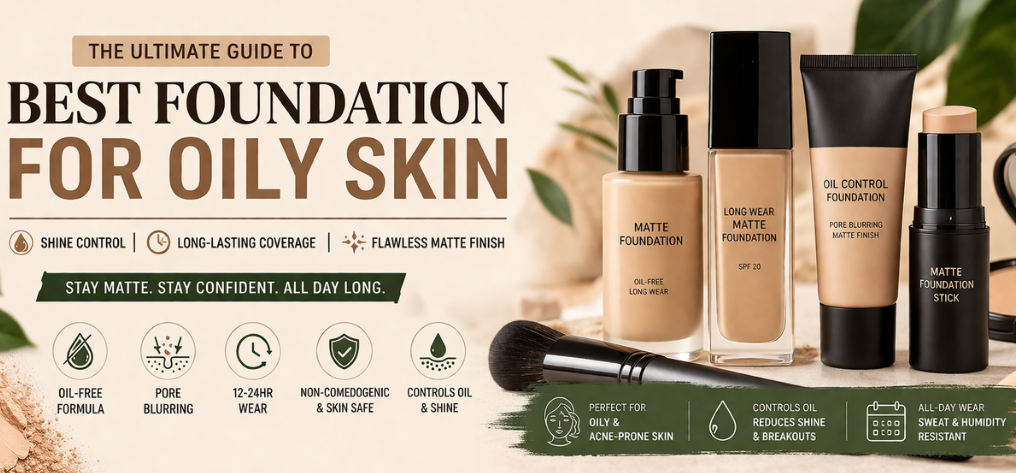
Achieving a smooth, shine-free complexion when dealing with oily skin requires more than just any foundation—it demands precision-formulated products engineered to control excess sebum, blur pores, and maintain long-lasting coverage under challenging conditions. In this comprehensive guide, we explore the best foundations for oily skin, diving deep into formulations, finishes, ingredients, application strategies, and expert-level techniques to ensure a consistently matte, breathable, and flawless result.
Understanding Oily Skin and Foundation Performance
Oily skin produces excess sebum, which often leads to:
- Unwanted shine throughout the day
- Makeup breakdown and patchiness
- Clogged pores and acne
- Oxidation that darkens foundation
To counter these challenges, we rely on oil-free, non-comedogenic, mattifying foundations designed to maintain structure and resist breakdown.
Key Features of the Best Foundations for Oily Skin
1. Oil-Free Formulation
Foundations designed without heavy oils ensure lightweight wear and reduced pore congestion.
2. Matte or Soft-Matte Finish
A matte finish minimizes shine, while a soft-matte finish maintains natural skin-like texture without dryness.
3. Long-Wear Technology
Advanced formulations offer 12–24 hour wear, resisting sweat, humidity, and oil.
4. Buildable Coverage
Allows us to layer product without cakiness, adapting from medium to full coverage.
5. Pore-Blurring Effect
Micro-fine pigments smooth texture, creating a refined, airbrushed appearance.
Types of Foundations Suitable for Oily Skin
Liquid Foundations
- Lightweight and versatile
- Best for daily wear and buildable coverage
Powder Foundations
- Excellent for oil absorption and touch-ups
- Provides a matte finish instantly
Stick Foundations
- Compact and convenient
- Offers full coverage with controlled application
Serum Foundations
- Ultra-light formulas
- Suitable for combination oily skin with hydration needs
Top Ingredients That Control Oil and Enhance Wear
To ensure optimal performance, we prioritize formulas with:
- Salicylic Acid – Helps control acne and unclog pores
- Niacinamide – Regulates oil production and refines skin texture
- Silica – Absorbs excess oil for a matte finish
- Clay (Kaolin/Bentonite) – Provides deep oil control
- Dimethicone – Creates a smooth, long-lasting barrier
Best Foundation Finishes for Oily Skin
Matte Finish
- Ideal for high oil production
- Delivers long-lasting shine control
Natural Matte
- Balances oil control with a skin-like glow
Velvet Finish
- Smooth and soft, reduces texture visibility
How to Choose the Perfect Foundation for Oily Skin
1. Identify Skin Type Precisely
Oily vs combination oily requires different levels of mattification.
2. Match Undertone Accurately
- Warm
- Cool
- Neutral
3. Consider Climate
Humidity requires stronger oil-control formulas.
4. Test Oxidation
Choose shades that do not darken after application.
Step-by-Step Application for Oily Skin Perfection
Step 1: Cleanse Thoroughly
Start with a gentle oil-control cleanser.
Step 2: Apply Oil-Free Moisturizer
Hydration prevents overproduction of oil.
Step 3: Use Mattifying Primer
Creates a smooth base and controls shine.
Step 4: Apply Foundation Strategically
Use a brush or sponge for even blending.
Step 5: Set with Powder
Lock foundation using translucent powder.
Step 6: Use Setting Spray
Ensures long-lasting wear without breakdown.
Professional Techniques for Long-Lasting Matte Finish
- Layer thin coats instead of heavy application
- Press powder into skin instead of sweeping
- Blot excess oil before touch-ups
- Use a damp sponge for seamless blending
Common Mistakes to Avoid with Oily Skin
- Using heavy, oil-based foundations
- Skipping primer
- Over-powdering, leading to cakiness
- Ignoring skin prep
- Choosing the wrong shade or undertone
Best Foundation Formats for Different Needs
For Daily Wear
- Lightweight liquid foundation with natural matte finish
For Full Coverage
- Long-wear matte liquid or stick foundation
For Travel
- Compact powder foundation
For Acne-Prone Skin
- Non-comedogenic formulas with salicylic acid
How to Prevent Foundation Oxidation
- Use oil-control primer
- Choose shade slightly lighter if oxidation occurs
- Set with oil-absorbing powder
- Avoid layering too many products
Makeup Routine for Oily Skin
- Cleanser
- Toner
- Oil-free moisturizer
- Mattifying primer
- Foundation
- Concealer
- Powder
- Setting spray
Tools That Improve Foundation Application
- Dense buffing brush – For even coverage
- Beauty sponge – For seamless blending
- Powder puff – For long-lasting matte finish
Seasonal Considerations for Oily Skin
Summer
- Use lightweight matte formulas
- Reapply powder as needed
Winter
- Opt for hydrating matte foundations
Monsoon/Humidity
- Choose waterproof and sweat-resistant formulas
Best Practices for Maintaining Flawless Skin Throughout the Day
- Carry blotting papers
- Avoid touching the face
- Reapply powder only where needed
- Use setting spray for refresh
Complete Comparison Table: Foundation Types for Oily Skin
| Foundation Type | Coverage | Finish | Best Use Case |
|---|---|---|---|
| Liquid | Medium–Full | Matte | Daily wear |
| Powder | Light–Medium | Matte | Touch-ups |
| Stick | Full | Matte | High coverage |
| Serum | Light | Natural matte | Combination oily skin |
Conclusion
Selecting the best foundation for oily skin requires a focus on oil control, longevity, breathable texture, and flawless finish. By choosing the right formula, applying it with precision, and maintaining proper skincare, we achieve a shine-free, smooth, and professional-quality complexion that lasts throughout the day.
FAQs
1. What type of foundation is best for oily skin?
Matte, oil-free liquid foundations.
2. Can oily skin use dewy foundation?
Not recommended.
3. How to stop foundation from melting?
Use primer and setting powder.
4. Is powder foundation good?
Yes, for oil control.
5. What causes foundation oxidation?
Excess oil and air exposure.
6. Should we moisturize oily skin?
Yes, always.
7. Can primer reduce oil?
Yes, significantly.
8. What is non-comedogenic?
Does not clog pores.
9. How to choose the right shade?
Match undertone and test in daylight.
10. Can oily skin skip powder?
Not ideal.
11. Is full coverage suitable?
Yes, if lightweight.
12. How often to touch up?
Every 3–4 hours.
13. What brush is best?
Dense buffing brush.
14. Can setting spray help?
Yes, for longevity.
15. Should we avoid cream products?
Mostly yes.
16. What is matte finish?
Shine-free appearance.
17. Can oily skin use BB cream?
Yes, if oil-free.
18. How to prevent cakiness?
Apply thin layers.
19. Is SPF necessary?
Yes.
20. What is the best coverage level?
Medium to full.
21. Can we mix foundations?
Yes.
22. Is primer necessary?
Highly recommended.
23. How to remove foundation?
Use oil cleanser + face wash.
24. Can oily skin use cushion foundation?
Yes, if matte formula.
25. What is the best finish?
Soft matte.