
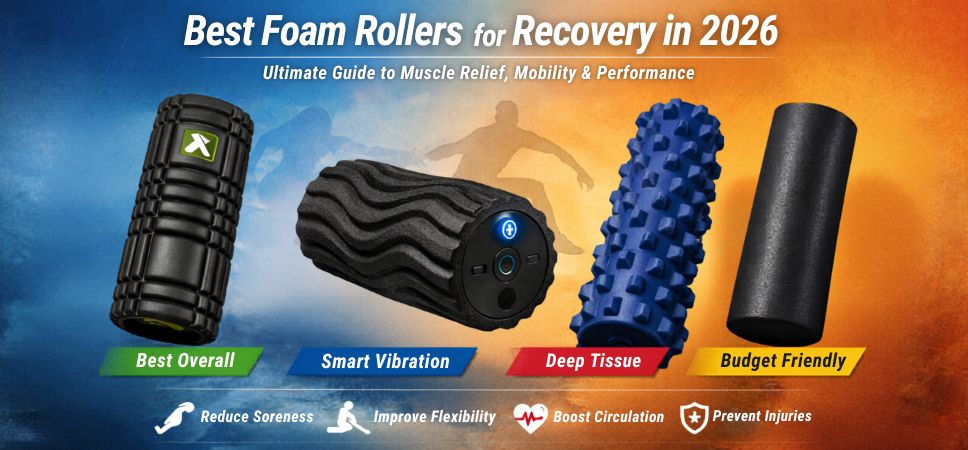
In 2026, recovery is no longer optional—it is a critical pillar of peak physical performance. As training intensity increases across fitness disciplines, the demand for effective muscle recovery tools has grown significantly. Among these, foam rollers have emerged as one of the most powerful and accessible solutions for relieving muscle tension, enhancing mobility, and accelerating recovery.
This comprehensive guide delivers deep, performance-focused insights into the best foam rollers for recovery, covering density levels, surface textures, durability, ergonomics, and targeted muscle release techniques, ensuring we select the perfect roller for athletic recovery, injury prevention, and daily mobility routines.
Why Foam Rolling Is Essential for Recovery
Foam rolling, also known as self-myofascial release (SMR), is a scientifically recognized method for improving muscle health and flexibility.
Core Benefits of Foam Rolling
- Reduces Muscle Soreness – Accelerates post-workout recovery
- Improves Blood Circulation – Enhances nutrient delivery to muscles
- Increases Flexibility and Range of Motion
- Breaks Down Muscle Knots and Adhesions
- Enhances Athletic Performance
We achieve faster recovery, improved mobility, and reduced injury risk through consistent foam rolling.
Top Foam Rollers for Recovery in 2026
1. TriggerPoint GRID Foam Roller – Best Overall Performance
The TriggerPoint GRID Foam Roller remains a benchmark for versatility and durability, combining multi-density foam with a structured surface design.
Key Features
- Patented GRID surface pattern
- Multi-density foam construction
- Hollow core for durability
- Lightweight and portable
Performance Advantage
We experience targeted muscle relief with varying pressure zones, simulating a professional massage.
2. Therabody Wave Roller – Best Smart Foam Roller
The Therabody Wave Roller integrates vibration technology for advanced recovery.
Key Features
- Adjustable vibration intensity levels
- Bluetooth app connectivity
- High-density foam exterior
- Rechargeable battery
Performance Advantage
We unlock deep tissue stimulation, enhancing muscle relaxation and recovery efficiency.
3. Amazon Basics High-Density Foam Roller – Best Budget Option
The Amazon Basics Foam Roller offers simple, effective performance at an affordable price.
Key Features
- High-density EVA foam
- Smooth surface design
- Lightweight construction
- Budget-friendly
Performance Advantage
We gain consistent pressure for general muscle recovery, ideal for beginners.
4. RumbleRoller Original – Best for Deep Tissue Massage
The RumbleRoller Original is designed for intense muscle release, featuring aggressive surface textures.
Key Features
- Deep, firm bumps for targeted pressure
- High-density construction
- Durable and long-lasting
- Available in multiple sizes
Performance Advantage
We achieve deep tissue penetration, effectively relieving stubborn muscle knots.
5. OPTP PRO-Roller Soft – Best for Beginners and Rehab
The OPTP PRO-Roller Soft provides gentle support for recovery and rehabilitation.
Key Features
- Soft foam construction
- Smooth surface
- Lightweight design
- Ideal for sensitive muscles
Performance Advantage
We experience controlled, low-intensity pressure, perfect for recovery and therapy.
Types of Foam Rollers and Their Applications
High-Density Foam Rollers
- Provide intense pressure
- Suitable for advanced users
Medium-Density Foam Rollers
- Balanced support and comfort
- Ideal for regular use
Soft Foam Rollers
- Gentle pressure
- Perfect for beginners and rehab
Textured Foam Rollers
- Target specific muscle groups
- Mimic deep tissue massage
Vibrating Foam Rollers
- Advanced recovery technology
- Enhance blood flow and relaxation
Key Features to Consider When Choosing Foam Rollers
Density and Firmness
Higher density delivers deeper muscle penetration, while softer rollers offer comfort and accessibility.
Surface Texture
- Smooth for general use
- Textured for targeted relief
Size and Length
- Long rollers for full-body use
- Compact rollers for portability
Durability
High-quality materials ensure long-term performance.
Portability
Lightweight designs allow easy transport and storage.
Best Foam Rolling Techniques for Maximum Recovery
Quadriceps Release
Roll slowly from hip to knee, maintaining controlled pressure.
Hamstring Recovery
Target the back of the thighs with steady movements.
Back Mobility
Use a long roller for spinal alignment and muscle release.
Calf Muscle Relief
Apply consistent pressure to reduce tightness.
IT Band Release
Focus on outer thigh for improved flexibility.
We achieve full-body recovery through targeted rolling techniques.
Comparison Table: Best Foam Rollers 2026
| Model | Type | Best For | Key Feature | Price Range |
|---|---|---|---|---|
| TriggerPoint GRID | Textured | All users | Multi-density | Mid |
| Therabody Wave | Vibrating | Advanced | Smart tech | Premium |
| Amazon Basics | Smooth | Beginners | Affordable | Low |
| RumbleRoller | Textured | Deep tissue | Intense pressure | Mid |
| OPTP PRO-Roller | Soft | Rehab | Gentle support | Mid |
Common Mistakes to Avoid in Foam Rolling
- Rolling too quickly
- Applying excessive pressure
- Ignoring breathing techniques
- Skipping warm-up
We ensure effective recovery by maintaining proper technique and consistency.
Maintenance Tips for Long-Term Use
- Clean regularly with mild disinfectant
- Store in dry conditions
- Avoid excessive heat exposure
- Inspect for wear and tear
Proper care ensures durability and hygiene.
Who Should Use Foam Rollers
- Athletes and gym enthusiasts
- Runners and cyclists
- Office workers with muscle stiffness
- Rehabilitation patients
They provide universal recovery benefits across all lifestyles.
Future Trends in Foam Roller Technology
- AI-guided recovery programs
- Enhanced vibration systems
- Eco-friendly materials
- Compact modular designs
The future emphasizes precision recovery and smart performance optimization.
FAQs
1. What is a foam roller used for?
It is used for muscle recovery and tension relief.
2. How often should I use it?
Daily or post-workout.
3. Is foam rolling painful?
Mild discomfort is normal.
4. Are vibrating rollers better?
Yes, for deeper recovery.
5. Can beginners use foam rollers?
Yes, start with soft rollers.
6. How long should I roll?
10–20 minutes.
7. Does it improve flexibility?
Yes.
8. Can it reduce soreness?
Significantly.
9. Is it safe daily?
Yes.
10. What density is best?
Depends on experience level.
11. Can it replace massage therapy?
Partially.
12. Are textured rollers better?
For deep tissue work.
13. Can I use it on my back?
Yes, with proper form.
14. Does it help posture?
Yes.
15. Can it prevent injuries?
Yes.
16. Are they expensive?
Range from budget to premium.
17. Can I travel with one?
Yes, compact models exist.
18. Do they wear out?
Over time.
19. Are they eco-friendly?
Some models are.
20. Can I use it before workouts?
Yes.
21. Does it improve circulation?
Yes.
22. Can seniors use it?
Yes, softer rollers recommended.
23. Is it good for back pain?
Yes, when used properly.
24. Can I use it for rehab?
Yes.
25. What is the best brand?
TriggerPoint and Therabody lead.