
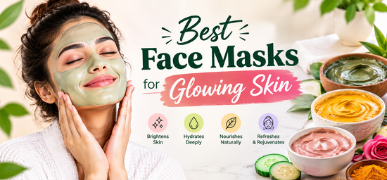
Healthy, glowing skin begins with the right combination of hydration, gentle cleansing, consistent skincare and sun protection. A well-chosen face mask for glowing skin can complement a regular skincare routine by helping the complexion look fresher, softer, smoother and more radiant. Whether we have dry skin, oily skin, combination skin, sensitive skin or a dull-looking complexion, the key is to select a face mask that addresses our specific skin concern instead of choosing a product simply because it promises instant brightness.
In India, face masks and face packs are available in several forms, including hydrating sheet masks, clay masks, gel masks, overnight masks, exfoliating masks and traditional ubtan face packs. Each type serves a different purpose. Hydrating masks can temporarily improve the appearance of dryness, clay masks can help absorb excess oil, and carefully formulated brightening masks may improve the appearance of uneven tone over time. The best choice depends on our skin type, the ingredients, the frequency of use and how comfortably the product fits into our skincare routine.
We can also explore simple homemade face packs made with ingredients such as oats, honey and aloe vera. However, natural ingredients are not automatically safe for every skin type, and harsh DIY remedies can cause irritation. A gentle, consistent approach is more useful than trying several masks in search of overnight results.
This guide explores the best face masks for glowing skin in India, how to choose a suitable formula, which ingredients to look for, useful store-bought options, easy DIY face packs and practical tips for maintaining a healthy-looking glow.
Which Face Mask Is Best for Glowing Skin?
The best face mask depends on the result we want to achieve. Before choosing a product, we should identify whether our primary concern is dryness, excess oil, dullness, rough texture, uneven skin tone or sensitivity.
| Skin concern | Face mask type to consider | Ingredients to look for |
|---|---|---|
| Dry, dehydrated skin | Hydrating or overnight mask | Glycerin, hyaluronic acid, ceramides |
| Oily skin | Clay or lightweight gel mask | Kaolin, bentonite, niacinamide |
| Combination skin | Gentle clay or multi-zone masking | Kaolin, glycerin, soothing ingredients |
| Sensitive skin | Fragrance-free hydrating or soothing mask | Colloidal oatmeal, panthenol, glycerin |
| Dull-looking skin | Hydrating or gentle brightening mask | Niacinamide, vitamin C derivatives |
| Rough texture | Mild exfoliating mask | Lactic acid or other appropriately formulated exfoliants |
| Skin that feels tight after cleansing | Barrier-supporting mask | Ceramides, glycerin, panthenol |
| Occasional blemishes | Suitable acne-focused mask | Salicylic acid or gentle clay formulations |
These ingredients can serve different purposes depending on their concentration and formulation. No single ingredient or face mask works equally well for everyone.
1. Best Hydrating Face Masks for Glowing Skin
A lack of moisture can make skin appear tired, rough and less radiant. When the skin becomes dehydrated, fine lines may look more noticeable and makeup may settle into dry patches. A hydrating face mask can temporarily improve skin comfort and make the complexion appear plumper and smoother.
Hydrating masks are particularly useful for people who experience dryness after cleansing, spend time in air-conditioned rooms or frequently encounter changing weather conditions. They can also complement a routine that includes appropriate moisturiser and sunscreen.
Ingredients to look for
-
Hyaluronic acid: Helps attract and retain water in the outer layers of the skin.
-
Glycerin: A humectant that draws moisture into the skin.
-
Ceramides: Support the skin barrier and help reduce moisture loss.
-
Panthenol: Helps condition the skin and support comfort.
-
Aloe vera: Can provide a soothing, lightweight feel in suitable formulations.
-
Squalane: Helps soften the skin and reduce the feeling of dryness.
Who should choose a hydrating mask?
A hydrating mask is a useful option for dry, dehydrated, or normal skin. Oily skin can also become dehydrated, so people with an oily T-zone and dry cheeks may benefit from a lightweight, non-comedogenic formula.
For a simple routine, we can apply a hydrating mask after cleansing, follow the product's recommended application time and finish with a suitable moisturiser. If the mask is designed to be rinsed off, we should not leave it on overnight unless the instructions specifically permit it.
2. Best Sheet Masks for an Instant Dewy Look
Sheet masks are convenient skincare products made from a fabric-like or bio-cellulose sheet soaked in a serum or essence. They are popular because they are easy to use, require little preparation and fit well into a short self-care routine.
A well-formulated sheet mask for glowing skin can temporarily improve hydration and give the face a fresh, dewy appearance. This makes sheet masks a practical option before a family function, festive gathering, photoshoot or special occasion. The effect is generally cosmetic and temporary; a sheet mask does not permanently change skin tone or erase pigmentation in one application.
What makes a good sheet mask?
We should check the ingredient list rather than selecting a sheet mask based only on attractive packaging or claims such as “instant fairness.”
Useful ingredients may include:
-
Glycerin and hyaluronic acid for hydration.
-
Panthenol and allantoin for skin comfort.
-
Niacinamide for supporting a more even-looking complexion when used consistently.
-
Centella asiatica in suitable formulas for a soothing skincare step.
-
Ceramides for barrier support in products designed to deliver them.
How to use a sheet mask correctly
-
Cleanse the face with a gentle cleanser.
-
Apply the sheet mask according to the package instructions.
-
Leave it on for the stated duration rather than waiting for it to dry completely.
-
Remove the mask and gently pat in any remaining serum if the directions recommend doing so.
-
Apply moisturiser to help maintain hydration.
We should avoid reusing disposable sheet masks or leaving them on for much longer than instructed. A mask that dries out on the face may become uncomfortable, and prolonged use does not necessarily provide better results.
3. Best Clay Face Masks for Oily Skin
Excess sebum can leave the face looking shiny, especially around the forehead, nose and chin. Clay masks are designed to absorb some surface oil and help the skin feel cleaner. They can be useful as an occasional addition to a routine for oily or combination skin.
Common ingredients include kaolin clay and bentonite. These ingredients can help absorb oil, but they may also leave the skin feeling dry if the mask is too strong or used too frequently.
What to consider before buying a clay mask
Choose a formula that suits the level of oiliness without making the skin feel tight or uncomfortable. A mask that contains clay alongside hydrating ingredients may be more comfortable than a highly drying formula.
People with oily skin should not assume that all oil needs to be removed. Sebum helps protect the skin, and over-cleansing or repeatedly drying out the face may worsen irritation.
Recommended use
-
Start with once a week and adjust according to the product instructions and skin response.
-
Apply a thin, even layer to clean skin.
-
Avoid the eye area and any irritated or broken skin.
-
Rinse before the mask becomes uncomfortably tight.
-
Apply a lightweight moisturiser afterwards.
Clay masks are not a replacement for acne treatment. Persistent blackheads, inflamed pimples or painful breakouts may require a targeted skincare routine or advice from a dermatologist.
4. Best Gel Face Masks for Fresh, Comfortable Skin
Gel masks typically have a lightweight texture and can be a good option when thick creams feel heavy. Many are designed to hydrate or soothe the skin, making them useful for normal, combination and some oily skin types.
A gel mask may be especially appealing during hot or humid Indian weather, when we may prefer skincare that feels light on the face. However, the texture alone does not determine whether a product is suitable. We should still check the ingredients and avoid formulas that trigger sensitivity.
Ingredients worth considering
Glycerin, panthenol, aloe vera and other well-tolerated humectants or soothing ingredients can help improve skin comfort. If our skin is acne-prone, a lightweight product labelled non-comedogenic may be worth considering, although individual reactions can vary.
A gel mask can be used after cleansing and before moisturiser if the product instructions recommend that sequence. If it is a rinse-off product, we should rinse it off as directed.
5. Best Overnight Face Masks for Morning Glow
Overnight masks are designed to remain on the skin while we sleep. They often have a moisturising gel-cream or cream texture and may help reduce moisture loss overnight. They are best understood as a convenient skincare step rather than a substitute for sleep, daily moisturiser or a complete skincare routine.
An overnight mask may be useful when the skin feels dry, rough or dehydrated. It can also be helpful when we want a more comfortable morning complexion without adding several separate products to our routine.
Ingredients that may help
-
Glycerin: Helps attract moisture.
-
Hyaluronic acid: Supports hydration.
-
Ceramides: Help maintain the skin barrier.
-
Squalane: Helps soften dry skin.
-
Niacinamide: May support a more even-looking complexion and barrier function in suitable formulations.
How to choose one
For dry skin, a richer moisturising overnight mask may be comfortable. For oily or acne-prone skin, a lighter gel-cream may be preferable. If a product contains exfoliating acids or other active ingredients, we should check whether it is intended for overnight use rather than assuming that every mask can be left on until morning.
Use an overnight mask according to its directions, and stop if it causes persistent burning, redness, itching or new irritation.
6. Best Brightening Face Masks for Dull Skin
Dullness can have several causes, including dehydration, surface dryness, accumulated dead skin cells, sun exposure and uneven pigmentation. A brightening face mask may help the skin look fresher, but the outcome depends on its ingredients and the reason for the dullness.
A product that temporarily increases hydration may create a visible glow without changing pigmentation. Products designed to improve uneven tone generally need consistent use, and some concerns respond better to leave-on skincare than to a rinse-off mask.
Brightening ingredients to consider
Niacinamide: Can support the skin barrier and improve the appearance of uneven tone with consistent use.
Vitamin C and its derivatives: Certain formulations may help improve the appearance of dullness and uneven pigmentation. Stability, concentration and product formulation matter.
Gentle exfoliating acids: Ingredients such as lactic acid can help loosen dead skin cells when used in suitable formulations. Excessive exfoliation can irritate the skin, so we should introduce these products carefully.
Licorice-root extract: Appears in some brightening formulations, although results depend on the product and its formulation.
What to avoid
We should be cautious of products promising permanent fairness, dramatic colour changes or complete removal of dark spots after one use. A face mask cannot reliably deliver those results. Uneven pigmentation may require a broader routine, consistent sunscreen use and, when persistent, a dermatologist's assessment.
7. Best Face Masks for Sensitive Skin
Sensitive skin can react to fragrances, strong exfoliants, essential oils, harsh cleansers and other ingredients. The most suitable face mask is usually one that prioritises comfort and hydration rather than aggressive cleansing or rapid brightening.
If our skin frequently becomes red, itchy, tight or irritated, we should avoid experimenting with several new products at once.
Ingredients that may suit sensitive skin
-
Colloidal oatmeal: Can help soothe and condition the skin in suitable products.
-
Glycerin: Supports hydration.
-
Panthenol: Helps improve skin comfort.
-
Ceramides: Support the skin barrier.
-
Allantoin: Is used in some formulations to condition and soothe the skin.
A fragrance-free product may be a sensible starting point, although fragrance-free does not guarantee that a formula will suit everyone.
Sensitive-skin precautions
Before applying a new mask to the entire face, test it on a small area according to the manufacturer's instructions. Do not apply a mask to skin that is cracked, sunburned or actively irritated. If a product causes burning or swelling, rinse it off and discontinue use.
People with eczema, rosacea or recurring facial irritation should seek personalised advice from a qualified dermatologist before trying strong exfoliating or brightening masks.
8. Best Face Masks for Combination Skin
Combination skin often has an oily forehead, nose and chin with normal or dry cheeks. Applying the same highly drying mask to every part of the face may leave some areas uncomfortable while others remain oily.
A lightweight hydrating mask is a useful general option. Another approach is multi-masking, which means using different suitable masks on different areas of the face during the same session.
For example, a person might apply a gentle clay mask to the oily T-zone and a hydrating mask to dry cheeks, provided both products are compatible with the skin and their instructions permit the intended use.
Combination-skin routine
-
Cleanse with a gentle cleanser.
-
Apply a suitable mask to the relevant areas.
-
Follow the recommended application time for each product.
-
Rinse where necessary.
-
Apply moisturiser to the entire face, using a lighter texture on oilier areas if preferred.
We should avoid combining several strong treatments in one session. Multi-masking is about addressing different needs, not layering as many active ingredients as possible.
9. Best Face Masks for Acne-Prone Skin
Acne-prone skin may benefit from carefully formulated products that help manage excess oil or support a targeted acne routine. However, a face mask alone is unlikely to control persistent acne, particularly when breakouts are deep, painful or widespread.
Clay masks can temporarily reduce surface oil. Some acne-focused masks contain salicylic acid, which helps exfoliate inside the pore. The right product depends on the person's skin tolerance and other treatments they already use.
How to choose an acne-focused mask
-
Prefer a formula that does not leave the skin painfully tight or excessively dry.
-
Introduce exfoliating ingredients gradually.
-
Avoid abrasive scrubs and harsh DIY mixtures.
-
Do not use several exfoliating products at the same time without a clear reason.
-
Apply a suitable moisturiser even if the skin is oily.
-
Use sunscreen during the day.
If we already use a retinoid, benzoyl peroxide or a prescription acne treatment, adding a strong exfoliating mask may increase irritation. A dermatologist can help determine whether a mask is appropriate alongside existing treatment.
10. Best Store-Bought Face Masks for Glowing Skin in India
India's skincare market includes traditional face packs, clay masks, hydrating sheet masks, overnight masks and brightening formulations. The products below are examples to consider by category, not a universal ranking. Availability, ingredient lists, prices and formulations may change, so we should verify the current label and seller information before purchasing.
| Product or range to explore | Type | Best suited for | What to check |
|---|---|---|---|
| Nykaa Clay It Cool Clay Mask | Clay mask | People looking for an oil-absorbing mask | Current ingredients, fragrance and application directions |
| Dot & Key Anti-Acne Salicylic Green Clay Face Mask | Acne-focused clay mask | Oily or blemish-prone skin that tolerates the formula | Salicylic acid content and compatibility with other acne products |
| Dot & Key Pink Clay Face Mask | Clay mask | Those looking for an occasional cleansing mask | Whether the formula is comfortable for their skin type |
| Mamaearth Ubtan Detan Face Pack | Ubtan-style face pack | People interested in a traditional-style cosmetic face pack | Full ingredient list and any fragrance or exfoliating components |
| O3+ D-TAN Face Pack | Brightening-style face pack | People looking for a product marketed for a dull or tanned appearance | Claims, ingredients, directions and suitability for sensitive skin |
| Beauty of Joseon Ground Rice and Honey Glow Mask | Wash-off glow mask | People interested in a rice-and-honey-style mask | Current ingredient list and possible sensitivity to ingredients |
| Nykaa Skin Vita-C Glow Collagen Brightening Mask | Brightening sheet or overnight-style mask, depending on the product variant | Those seeking a convenient hydration and glow step | Exact variant, directions and active ingredients |
| A suitable fragrance-free hydrating mask from a pharmacy skincare range | Hydrating mask | Dry or sensitive skin | Humectants, barrier-supporting ingredients and fragrance status |
These options represent different product categories and should not be treated as interchangeable. A clay mask may suit an oily T-zone but feel too drying on dehydrated cheeks, while a rich overnight mask may be more comfortable for dry skin.
How to choose the right product from the list
Before purchasing, we should check five things:
-
Skin type: Does the formula suit dry, oily, combination or sensitive skin?
-
Main concern: Is the goal hydration, oil control, smoother texture or a more even-looking complexion?
-
Ingredients: Does the product contain ingredients we tolerate?
-
Directions: Is it a rinse-off mask, sheet mask or overnight treatment?
-
Seller and label: Is the product authentic, in date and supplied with clear ingredient and usage information?
Product reviews can help us understand texture and user experience, but individual reviews cannot guarantee the same results for everyone.
11. Best Homemade Face Masks for Glowing Skin
Homemade face packs remain popular in India because the ingredients may already be available in the kitchen. They can be inexpensive and convenient, but they are not automatically safer or more effective than tested skincare products.
A homemade mixture may have an unpredictable concentration, texture or pH. Fresh ingredients can also become contaminated, and certain foods or plant extracts may trigger irritation or allergies. We should avoid treating DIY masks as medical treatments for acne, pigmentation or other skin conditions.
The following options focus on simple, gentle approaches. They should be avoided if we know that an ingredient causes a reaction.
DIY Face Mask 1: Oats and Water for a Gentle Skin-Comforting Pack
Suitable for: People who tolerate oats and want a simple, gentle wash-off pack.
Ingredients
-
1 tablespoon of finely ground plain oats
-
A small amount of clean water to make a soft paste
Method
-
Mix the finely ground oats with enough water to create a smooth paste.
-
Apply a thin layer to clean, damp skin without rubbing.
-
Leave it on briefly, around 5–10 minutes, if comfortable.
-
Rinse gently with lukewarm water.
-
Apply moisturiser.
Oats can help condition the skin, particularly when used in appropriately formulated colloidal-oatmeal products. A kitchen mixture is not the same as a tested skincare formulation, so we should discontinue it if itching or irritation develops.
DIY Face Mask 2: Honey and Oats for a Soft, Comfortable Feel
Suitable for: People who tolerate both ingredients and want a simple wash-off pack.
Ingredients
-
1 teaspoon of plain oats, finely ground
-
A small amount of honey
-
A little water if needed
Method
-
Mix the ingredients into a smooth paste.
-
Apply a thin layer without scrubbing.
-
Leave it on for about 5 minutes initially.
-
Rinse thoroughly and apply moisturiser.
Honey can act as a humectant in some cosmetic formulations, but household honey has not been specifically formulated or tested for facial skincare. People with honey allergies, reactive skin or a history of irritation should skip this recipe.
DIY Face Mask 3: Aloe Vera Gel for a Lightweight Feel
Suitable for: People who already know that a particular aloe vera gel suits their skin.
Ingredients
-
A small amount of commercially prepared aloe vera gel formulated for skin use
Method
-
Cleanse the face.
-
Apply a thin layer of the product according to its directions.
-
Rinse it off if it is a rinse-off product, or leave it on only if the label permits leave-on use.
-
Apply moisturiser if needed.
Choose a product with a clear ingredient list. Aloe vera products can contain fragrance, colouring agents or other ingredients that may irritate some people. Do not apply raw plant material if its suitability is uncertain.
DIY Face Mask 4: Plain Oat Paste for Dry-Looking Skin
Suitable for: People looking for a minimal, water-based wash-off option.
Ingredients
-
1 tablespoon of finely ground oats
-
Clean water
Method
-
Combine the oats and water.
-
Wait briefly for the mixture to soften.
-
Spread it gently over the skin without rubbing.
-
Rinse after a few minutes.
-
Finish with a moisturiser suited to the skin type.
This simple option is intended to condition the skin rather than bleach it, remove a tan permanently or treat pigmentation. If the mixture feels gritty, do not massage it into the face.
DIY ingredients we should avoid
Not every popular home remedy belongs in a facial skincare routine. We should avoid applying lemon juice, undiluted vinegar, baking soda, toothpaste, coarse sugar scrubs or harsh essential oils to the face. These can irritate the skin, disrupt its barrier or increase discomfort. We should also avoid mixing multiple active skincare ingredients into homemade recipes without understanding their compatibility.
Turmeric and other traditional ingredients can cause staining or sensitivity in some people. If we choose a traditional face pack, we should keep the formula simple and stop using it if a reaction develops.
12. Face Masks for Glowing Skin According to Skin Type
The best face mask for glowing skin is the one that supports the skin's needs without creating new problems. The same product may feel comfortable on one person and irritating on another.
| Skin type | Mask to consider | Ingredients or features | What to avoid |
|---|---|---|---|
| Dry skin | Hydrating or overnight mask | Glycerin, ceramides, squalane | Repeatedly drying clay masks |
| Oily skin | Gentle clay mask | Kaolin, suitable oil-absorbing ingredients | Excessively frequent masking |
| Combination skin | Lightweight hydration or multi-masking | Hydration for dry zones, gentle clay for oily zones | Applying a strong clay mask to every area |
| Sensitive skin | Simple soothing mask | Fragrance-free, panthenol, colloidal oatmeal | Fragrance or strong exfoliation if irritating |
| Acne-prone skin | Targeted acne-friendly formula | Appropriate salicylic acid or gentle clay | Abrasive scrubs and overuse of actives |
| Normal skin | Hydrating or gentle brightening mask | Glycerin, niacinamide | Using multiple strong treatments unnecessarily |
Skin type can change with weather, age, medication and other factors. If a product consistently causes stinging, tightness or redness, we should stop using it rather than forcing our skin to adapt.
13. How to Use a Face Mask for the Best Results
Using a mask correctly matters as much as choosing the formula. Applying too much product, leaving it on for too long or combining several active ingredients can create irritation rather than a healthy-looking glow.
Step 1: Cleanse gently
Remove sunscreen, makeup, sweat and surface impurities with a cleanser suited to the skin. Avoid harsh scrubbing immediately before applying a mask.
Step 2: Read the directions
Different products have different instructions. Sheet masks, clay masks, exfoliating masks and overnight masks should not all be used in the same way. Follow the product label rather than a general online routine.
Step 3: Apply an even layer
For a wash-off mask, use the amount recommended by the manufacturer. Avoid the eyes, lips and areas of broken or irritated skin unless the product is specifically designed for those areas.
Step 4: Respect the application time
Longer application does not automatically mean better results. Rinse off wash-off masks at the recommended time and remove a product immediately if it causes burning or significant discomfort.
Step 5: Moisturise afterwards
A suitable moisturiser can help maintain skin hydration after rinsing. This is particularly important if the mask contains clay or exfoliating ingredients.
Step 6: Use sunscreen during the day
Broad-spectrum sunscreen with SPF 30 or higher is an important part of daytime skincare. Sun exposure can worsen the appearance of uneven pigmentation and undermine efforts to maintain a more even-looking complexion. Follow the label directions and reapply as appropriate, especially during extended outdoor exposure.
14. How Often Should We Use a Face Mask for Glowing Skin?
The ideal frequency depends on the product, ingredients and skin's tolerance. There is no requirement to use a face mask every day to maintain healthy-looking skin.
| Mask type | Practical starting point | Important consideration |
|---|---|---|
| Hydrating mask | Once or twice a week, or as directed | Some gentle products may be suitable more often |
| Sheet mask | Occasionally or as directed | Stop if the serum causes irritation |
| Clay mask | About once a week initially | Reduce frequency if skin feels tight or dry |
| Exfoliating mask | Follow the product label; start cautiously | Avoid combining it with other strong exfoliants |
| Overnight mask | As directed, often occasionally or several times weekly | Check whether it is suitable for regular use |
| Homemade face pack | Infrequently, if used at all | Fresh mixtures are not standardised or preserved |
If we already use exfoliating acids, retinoids or acne treatments, we should be especially cautious about adding exfoliating masks. More products do not necessarily mean faster results.
15. Face Mask Before a Party, Wedding or Special Occasion
A face mask can be a useful addition to a pre-event skincare routine when we choose a familiar product that suits our skin. The aim should be to improve hydration and comfort, not to attempt an aggressive treatment immediately before an important occasion.
A simple pre-event routine
One or two days before the event
-
Maintain the usual gentle cleansing routine.
-
Use a familiar hydrating mask if the skin tolerates it.
-
Moisturise regularly.
-
Avoid introducing strong new products or trying an unfamiliar DIY recipe.
On the day
-
Cleanse gently.
-
Apply a familiar hydrating mask according to its instructions, if desired.
-
Moisturise and allow the product to settle.
-
Apply sunscreen if it is daytime.
-
Use makeup only after the skincare layers have settled comfortably.
Avoid new exfoliating peels, strong clay masks or unfamiliar brightening products immediately before a wedding or party. Irritation, dryness or a breakout can take longer to settle than the temporary glow such products promise.
16. Common Face Mask Mistakes to Avoid
Even a suitable face mask may cause problems if it is used incorrectly. We should avoid the following habits:
-
Using a mask every day without checking the instructions: Frequent use can cause dryness or irritation.
-
Leaving clay masks on until they crack: Excessive drying can leave the skin uncomfortable.
-
Combining too many active ingredients: Multiple exfoliating products may weaken the skin barrier.
-
Scrubbing the mask off aggressively: Friction can worsen redness and sensitivity.
-
Using lemon juice or baking soda: These household ingredients can irritate facial skin.
-
Expecting permanent brightening after one use: A temporary glow is not the same as treating pigmentation.
-
Ignoring sunscreen: Sun protection is essential for maintaining skin health and managing the appearance of uneven tone.
-
Using expired or poorly stored products: Check the expiry date, packaging and storage instructions.
-
Applying a mask to broken skin: Irritated or damaged skin may react more strongly.
-
Ignoring persistent discomfort: Burning, swelling, itching or worsening redness are reasons to stop using the product.
A gentle routine that we can maintain consistently is generally more useful than frequently switching products to chase immediate results.
17. How to Build a Simple Skincare Routine for Glowing Skin
A face mask works best as an occasional extra step within a consistent routine. We do not need a large collection of products to support a healthy-looking complexion.
Morning routine
-
Gentle cleanser: Remove overnight sweat and surface oil as needed.
-
Moisturiser: Choose a texture that suits the skin type.
-
Sunscreen: Apply broad-spectrum SPF 30 or higher according to the label.
Evening routine
-
Cleanser: Remove makeup, sunscreen and daily impurities.
-
Targeted skincare, if needed: Use one suitable product for a specific concern, introducing active ingredients carefully.
-
Moisturiser: Help maintain hydration and skin comfort.
-
Face mask, occasionally: Use a suitable mask according to its instructions rather than adding it automatically every night.
For dry skin, a richer moisturiser may be comfortable. For oily skin, a lightweight lotion or gel-cream may be preferable. For sensitive skin, a short routine with fewer potentially irritating ingredients can make it easier to identify what the skin tolerates.
What else supports a healthy-looking glow?
-
Get sufficient sleep and maintain a regular sleep schedule.
-
Eat a varied diet with adequate protein, fruits, vegetables and other nutrient-rich foods.
-
Drink water regularly according to thirst and individual needs.
-
Avoid smoking and protect the skin from excessive sun exposure.
-
Keep skincare products clean and use them as directed.
-
Seek professional advice for persistent acne, pigmentation or irritation.
No face mask can replace these everyday habits or guarantee a particular complexion.
18. How to Buy the Best Face Mask for Glowing Skin in India
When shopping online or in stores, we should compare the formula and its suitability rather than choosing solely by discount, influencer promotion or claims of instant fairness.
Check the ingredient list
Look for ingredients that address the actual concern. For hydration, humectants and barrier-supporting ingredients may be useful. For oily skin, a suitable clay mask may help absorb surface oil. For uneven tone, a well-formulated brightening product may complement a broader routine.
Choose a suitable texture
-
Gel: Often feels lightweight.
-
Cream: May be more comfortable for dry skin.
-
Clay: Often used for oil absorption.
-
Sheet mask: Convenient for a short hydration-focused routine.
-
Overnight mask: Designed to remain on the skin according to its directions.
-
Powder face pack: Requires mixing and may have less predictable results than a ready-formulated product.
Check the seller and packaging
Buy from a reputable retailer or an authorised seller when possible. Check the expiry date, seal, batch details and instructions. Avoid products with unclear ingredient lists or unrealistic claims.
Compare price with frequency of use
A more expensive mask is not automatically more effective. A reasonably priced, suitable product that we use correctly may be a better choice than a premium product that irritates the skin or remains unused.
Do not rely on “natural” or “chemical-free” claims
All ingredients are made of chemicals, including water and plant extracts. Instead of judging a product by marketing labels, we should assess its ingredients, formulation, directions and how our skin responds.
19. What Results Can We Expect from a Face Mask?
The result depends on the type of mask and the concern being addressed.
| Expected result | What a mask may do | What it generally cannot do alone |
|---|---|---|
| Temporary glow | Improve hydration and surface smoothness | Guarantee a lasting change in complexion |
| Softer skin | Condition the outer skin layer | Permanently change skin structure |
| Less surface oil | Absorb some excess oil | Stop sebum production permanently |
| More comfortable dry skin | Deliver moisture and reduce tightness | Treat every cause of persistent dryness |
| Smoother-looking texture | Provide hydration or gentle exfoliation | Erase deep scars or all wrinkles |
| More even-looking tone | Support a consistent brightening routine | Reliably remove pigmentation in one session |
| Better makeup application | Reduce the appearance of some dry patches | Replace proper skincare or primer in every case |
A face mask may make the skin look fresher after one use, particularly when dehydration contributes to dullness. Longer-term concerns usually require a consistent routine and realistic expectations. If dark spots, acne or redness persist, professional guidance may be more effective than repeatedly changing masks.
20. When Should We Consult a Dermatologist?
A face mask is a cosmetic skincare product, not a treatment for every skin condition. We should consider professional advice if we experience:
-
Persistent or painful acne.
-
Dark patches that continue to spread or change.
-
Repeated redness, burning, itching or swelling.
-
Severe dryness, cracking or peeling.
-
A rash after using a cosmetic product.
-
Pigmentation that does not improve despite consistent sun protection and suitable skincare.
Stop using a product that causes a reaction. If there is significant swelling, blistering, severe pain or difficulty breathing after exposure to a product, seek urgent medical care.
For recurring concerns, a dermatologist can help identify the cause and recommend suitable treatments based on skin type, medical history and existing products.
Final Verdict: Which Is the Best Face Mask for Glowing Skin?
The best face mask for glowing skin is not necessarily the most expensive, most popular or most heavily advertised product. It is the mask that addresses our main concern while keeping the skin comfortable.
For dry or dehydrated skin, a hydrating mask with ingredients such as glycerin, hyaluronic acid or ceramides may be a sensible option. For oily skin, a gentle clay mask may help absorb excess surface oil. For sensitive skin, a simple fragrance-free formula with soothing ingredients may be more appropriate. Sheet masks can provide a convenient hydration boost, while overnight masks can support moisture retention when used according to their instructions.
In India, we can choose from store-bought masks, traditional face packs and simple homemade options. Whatever we choose, we should avoid harsh DIY ingredients, follow product directions, moisturise regularly and use sunscreen during the day.
A healthy-looking glow is best supported by consistent skincare, appropriate hydration, sun protection and products that suit our individual skin needs. A face mask can complement that routine, but it should never come at the cost of irritation or a damaged skin barrier.
25 Frequently Asked Questions About Face Masks for Glowing Skin
1. Which face mask is best for glowing skin?
The best face mask depends on our skin type and concern. Hydrating masks can help dry or dehydrated skin look plumper, while clay masks may suit oily skin. Sensitive skin generally benefits from simple, gentle formulas.
2. Which face mask is best for glowing skin in India?
There is no single best product for everyone. We can compare hydrating masks, clay masks, sheet masks and ubtan-style face packs from reputable brands available in India. The right choice depends on ingredients, skin type, budget and product directions.
3. Can a face mask give an instant glow?
A hydrating mask may make the skin look fresher and smoother after one use. This effect is often temporary and does not mean that pigmentation, acne scars or other persistent concerns have been permanently treated.
4. Which face mask is best for dry skin?
A hydrating or overnight mask containing ingredients such as glycerin, ceramides, hyaluronic acid or squalane may help dry skin feel more comfortable. Apply moisturiser afterwards when appropriate.
5. Which face mask is best for oily skin?
A gentle clay mask containing ingredients such as kaolin may help absorb surface oil. Use it according to the directions and reduce frequency if the skin becomes tight, flaky or irritated.
6. Which face mask is suitable for sensitive skin?
A simple, fragrance-free hydrating mask with ingredients such as glycerin, panthenol or colloidal oatmeal may be a suitable starting point. Patch-test new products and avoid ingredients that have previously caused reactions.
7. Are sheet masks good for glowing skin?
Sheet masks can deliver hydrating ingredients and temporarily improve the appearance of dryness. They are convenient for occasional use, but they do not permanently brighten the skin or replace a regular skincare routine.
8. Can we use a face mask every day?
Not every mask is suitable for daily use. Follow the product directions, especially for clay masks and exfoliating formulas. Gentle hydrating products may have different usage recommendations.
9. How long should we leave a face mask on?
Follow the manufacturer's instructions. Sheet masks, clay masks, exfoliating masks and overnight masks have different recommended application times. Remove a mask if it causes burning or significant discomfort.
10. Is a homemade face mask better than a store-bought mask?
Not necessarily. Store-bought masks are formulated for a specific purpose, while homemade mixtures can vary in concentration, pH and cleanliness. Both may cause reactions, so we should choose carefully and avoid harsh ingredients.
11. Is honey good for a glowing-skin face mask?
Honey is used in some cosmetic formulations because it can help attract moisture. Household honey is not a tested facial skincare formula, however, and it may not suit people with allergies or sensitive skin.
12. Is aloe vera good for glowing skin?
A suitable aloe vera skincare product may help provide a soothing, lightweight feel. Check the ingredient list because some products contain fragrance or other ingredients that may irritate the skin.
13. Can a turmeric face pack remove tan?
A turmeric face pack cannot reliably remove a tan or reverse sun damage. Preventing further tanning requires sun protection. Persistent uneven pigmentation may need a targeted skincare routine or dermatological advice.
14. Can face masks remove dark spots?
A face mask alone is unlikely to remove persistent dark spots. Some brightening ingredients may gradually improve the appearance of uneven tone, but sunscreen and consistent skincare are important. A dermatologist can advise on stubborn pigmentation.
15. Which face mask is best before a party?
A familiar hydrating sheet mask or gentle hydrating mask may help the skin look fresh before an event. Avoid testing strong or unfamiliar products immediately before a party, wedding or photoshoot.
16. Can we apply moisturiser after a face mask?
Yes. Applying a suitable moisturiser after a rinse-off mask can help maintain hydration. Follow the directions for leave-on and overnight products, and avoid adding unnecessary layers if the skin feels uncomfortable.
17. Should we wash our face after using a sheet mask?
Follow the package instructions. Some sheet masks are designed for the remaining serum to be gently patted into the skin, while other products may have different directions. Do not leave a mask on longer than recommended.
18. Are clay masks good for acne?
Clay masks may help absorb excess surface oil, but they do not treat every type of acne. Persistent or painful breakouts may require evidence-based acne treatment and advice from a dermatologist.
19. Can a face mask reduce open pores?
A mask may temporarily make pores look less noticeable by reducing surface oil or improving hydration. It cannot permanently close pores, which are a normal part of skin structure.
20. Can face masks improve uneven skin tone?
Some masks contain ingredients that may support a more even-looking complexion with consistent use. Results depend on the formula and the cause of uneven tone. Sun protection remains important.
21. Which ingredients should we avoid in DIY face masks?
Avoid harsh facial remedies such as lemon juice, undiluted vinegar, baking soda, toothpaste and coarse scrubs. These can irritate the skin. We should also avoid known allergens and any ingredient that has caused a previous reaction.
22. Can we use a face mask after exfoliating?
We should be cautious, particularly if exfoliation involved acids, scrubs or retinoids. Adding another active mask may increase irritation. A simple moisturiser may be a better choice when the skin feels sensitive.
23. Are expensive face masks more effective?
Not automatically. Effectiveness depends on formulation, ingredients, suitability and how the product is used. An affordable mask that suits our skin may be a better choice than a premium product that causes irritation.
24. How can we maintain glowing skin naturally?
We can support a healthy-looking complexion with gentle cleansing, suitable moisturiser, daily sunscreen, sufficient sleep and a balanced diet. A face mask can be an optional extra, but it cannot replace these habits.
25. How often should we use a face mask for glowing skin?
The frequency depends on the mask and our skin's tolerance. Many people can start with once a week for clay masks, while hydrating products may have different directions. Reduce use if irritation, tightness or dryness develops.