
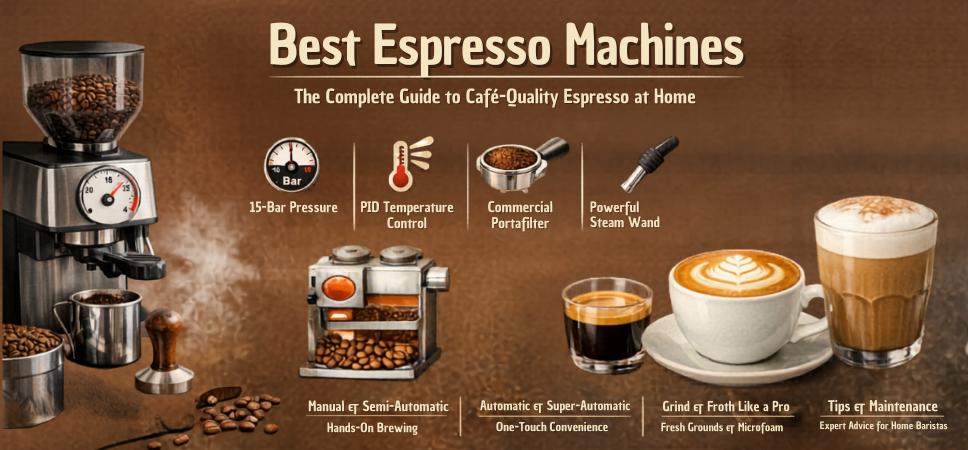
A remarkable espresso begins with precision: stable temperature, consistent pressure, uniform grind, and timed extraction. The best espresso machines combine engineered boilers, reliable pumps, accurate controls, and durable components to produce a rich, aromatic shot crowned with dense crema. We depend on thermal stability, pressure integrity, and steam performance to craft espresso, cappuccino, latte, flat white, and americano that rival professional cafés.
This comprehensive guide presents the best espresso machines, explains machine categories, details essential features, compares configurations, and provides expert selection guidance for every level of home barista.
What Defines a Great Espresso Machine
A high-performance espresso machine delivers:
- 9–15 bars of brewing pressure
- Water temperature between 90–96°C
- Stable boiler or thermoblock heating
- Commercial-grade portafilter and basket
- Powerful steam wand for microfoam
- Durable metal construction
- Precise shot timing and control
These fundamentals ensure balanced extraction, sweetness, body, and crema in every cup.
Types of Espresso Machines for Home Use
Manual Lever Espresso Machines
- Complete control over pressure and timing
- Traditional brewing experience
- Exceptional flavor for skilled users
Best for: Purists and experienced enthusiasts.
Semi-Automatic Espresso Machines
- Electric pump with manual control
- User manages grind, tamp, and shot time
- Ideal balance of control and convenience
Best for: Home baristas seeking café authenticity.
Automatic Espresso Machines
- Pre-programmed shot volumes
- Consistent results with minimal effort
Best for: Convenience with quality.
Super-Automatic (Bean-to-Cup) Machines
- Built-in grinder and milk frother
- One-touch espresso drinks
Best for: Effortless espresso and milk beverages.
Core Features of the Best Espresso Machines
Pressure Pump System
A reliable 15-bar pump ensures optimal extraction pressure at the coffee puck.
Boiler vs Thermoblock Heating
- Single Boiler: Affordable and stable
- Dual Boiler: Brew and steam simultaneously
- Thermoblock: Fast heating, compact design
PID Temperature Control
Maintains precise water temperature for consistent shots.
Portafilter Quality
Heavy brass or stainless steel portafilters retain heat for stable brewing.
Steam Wand Performance
Creates fine microfoam essential for cappuccino and latte art.
Pre-Infusion Function
Gently wets coffee grounds before full pressure for even extraction.
Best Espresso Machines by Category
Semi-Automatic Espresso Machine for True Barista Control
Manual tamping, shot timing, and milk steaming.
Ideal for: Espresso lovers who enjoy hands-on brewing.
Dual Boiler Espresso Machine for Advanced Performance
Simultaneous brewing and steaming with thermal stability.
Ideal for: Frequent milk drinks and advanced users.
Compact Thermoblock Espresso Machine for Small Kitchens
Quick heat-up with minimal counter space.
Ideal for: Apartments and limited space.
Super-Automatic Espresso Machine for Convenience
Grinds, brews, and froths automatically.
Ideal for: Busy households.
Comparison Table of Espresso Machine Types
| Feature | Manual Lever | Semi-Automatic | Automatic | Super-Automatic |
|---|---|---|---|---|
| Control Level | Maximum | High | Moderate | Minimal |
| Built-in Grinder | No | No | No | Yes |
| Milk Frothing | Manual | Manual | Manual/Auto | Automatic |
| Learning Curve | High | Moderate | Low | Very Low |
| Espresso Quality | Exceptional | Excellent | Very Good | Very Good |
| Cleaning Effort | Moderate | Moderate | Easy | Easy |
How to Choose the Right Espresso Machine
For Authentic Café Experience
Choose a semi-automatic machine with PID and steam wand.
For Frequent Milk Drinks
Opt for a dual boiler machine.
For Convenience
Select a super-automatic espresso machine.
For Compact Spaces
Pick a thermoblock model.
Grinder Importance in Espresso Quality
Espresso requires fine, uniform grind. Pair machines with a burr grinder for best results.
Performance Indicators of a High-Quality Espresso Machine
- Thick, golden crema
- Stable extraction time (25–30 seconds)
- Rich aroma and balanced taste
- Consistent steam pressure
- Quiet, smooth pump operation
Milk Frothing for Cappuccino and Latte
A professional steam wand creates velvety microfoam essential for texture and latte art.
Design and Build Quality Essentials
- Stainless steel body
- Heated cup tray
- Removable water tank
- Pressure gauge
- Non-slip base
Maintenance Practices for Longevity
- Backflush weekly
- Descale every 1–2 months
- Clean steam wand after each use
- Use filtered water
- Replace group head gasket periodically
Common Mistakes to Avoid
- Using stale beans
- Incorrect grind size
- Uneven tamping
- Ignoring descaling
- Over-extracting shots
Why PID and Pre-Infusion Matter
These features ensure temperature stability and even extraction, enhancing sweetness and balance.
Durability and Warranty Expectations
Choose machines with 2–5 years warranty and metal internals for long service life.
Energy Efficiency and Smart Controls
Auto shut-off, programmable shots, and standby modes reduce energy usage.
Expert Recommendation
A semi-automatic espresso machine with PID control, 15-bar pump, commercial portafilter, and powerful steam wand offers the best combination of control, performance, and durability for home espresso excellence.
FAQs
- What pressure is needed for espresso?
9–15 bars. - What grind size is best?
Fine grind. - Is PID necessary?
For temperature stability, yes. - Can I make cappuccino?
Yes with steam wand. - What is pre-infusion?
Gentle wetting before full pressure. - How long should extraction take?
25–30 seconds. - Is built-in grinder important?
Helpful but optional. - How often to descale?
Every 1–2 months. - Why is crema important?
Indicates good extraction. - Can I use tap water?
Filtered preferred. - What beans to use?
Fresh roasted beans. - Is stainless steel better?
More durable. - How to clean steam wand?
Wipe and purge after use. - Can beginners use semi-automatic?
Yes with practice. - What is dual boiler?
Separate brew and steam boilers. - Does it consume much power?
No, efficient heating. - Can I brew two shots?
Yes with double basket. - Why is espresso bitter?
Over-extraction. - Why is it sour?
Under-extraction. - Is noise normal?
Yes during pumping. - Can I make americano?
Yes by adding hot water. - What is a portafilter?
Handle holding coffee basket. - How long do machines last?
5–10 years. - Is warranty important?
Yes. - Can I froth plant milk?
Yes with proper technique.