
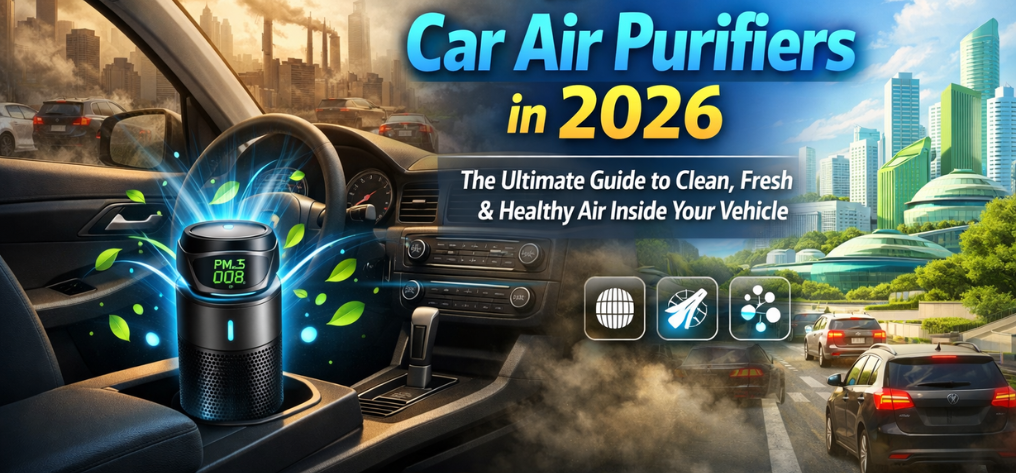
Modern driving environments expose passengers to pollution, allergens, smoke particles, and harmful airborne contaminants far more than most realize. Traffic congestion, industrial emissions, and enclosed cabin circulation make vehicle interiors a concentrated space for poor air quality. We present a comprehensive, high-performance guide to the best car air purifiers in 2026, engineered to deliver superior filtration, intelligent purification, and unmatched air freshness.
Our expertly curated insights focus on powerful purification technologies, real-world performance, and long-term usability, ensuring you choose a device that transforms your driving experience into a healthier, cleaner, and more comfortable environment.
Why Car Air Purifiers Are Essential in 2026
Rising Urban Pollution Levels
Urban air pollution continues to increase due to vehicle emissions, construction dust, and industrial pollutants. Car cabins trap these particles, making exposure levels significantly higher than outside air.
Allergen and Health Protection
Car air purifiers effectively remove:
- Pollen
- Dust mites
- Pet dander
- Mold spores
This is critical for individuals suffering from allergies, asthma, or respiratory sensitivities.
Odor Elimination and Freshness
Persistent odors from:
- Food
- Smoke
- Sweat
- Fuel fumes
are neutralized through activated carbon filtration and ionization technologies, ensuring a consistently fresh cabin environment.
Core Technologies Behind the Best Car Air Purifiers
HEPA Filtration Systems
High-Efficiency Particulate Air (HEPA) filters capture up to 99.97% of particles as small as 0.3 microns, including harmful pollutants and microscopic allergens.
Activated Carbon Filters
These filters absorb:
- Toxic gases
- Volatile Organic Compounds (VOCs)
- Unpleasant odors
ensuring odor-free air circulation.
Ionization Technology
Negative ion generators bind with airborne particles, causing them to settle and be removed from the air, enhancing overall purification efficiency.
UV-C Sterilization
Advanced purifiers use ultraviolet light to destroy bacteria and viruses, adding a layer of microbial protection.
Smart Air Quality Sensors
Real-time monitoring allows devices to:
- Adjust purification speed automatically
- Display air quality levels
- Optimize performance for efficiency
Top Features to Look for in the Best Car Air Purifiers
Compact and Space-Saving Design
Car purifiers should fit seamlessly into:
- Cup holders
- Dashboards
- Seat pockets
without obstructing movement or visibility.
Low Noise Operation
Premium devices operate at ultra-quiet levels, ensuring a peaceful driving experience.
High CADR (Clean Air Delivery Rate)
A higher CADR indicates faster and more efficient air cleaning performance.
Energy Efficiency
Modern purifiers consume minimal power, often powered via:
- USB ports
- Car chargers
ensuring continuous operation without draining the battery.
Easy Maintenance
Replaceable filters and intuitive designs ensure:
- Quick cleaning
- Long-term usability
- Cost-effective operation
Best Car Air Purifiers in 2026 (Expert Picks)
1. High-Efficiency HEPA Smart Purifier
A premium option featuring:
- True HEPA filtration
- Smart air sensors
- Auto-adjust purification levels
Ideal for users seeking fully automated air purification with maximum efficiency.
2. Compact Ionizer Air Purifier
Designed for portability and simplicity:
- Plug-and-play operation
- Silent ionization technology
- No filter replacement required
Perfect for minimalists who want maintenance-free air cleaning.
3. Activated Carbon Odor Eliminator
Best suited for:
- Smokers
- Pet owners
- Ride-sharing drivers
Delivers powerful odor removal and chemical absorption.
4. UV-C Sterilization Purifier
Advanced purification system with:
- UV sterilization
- Multi-layer filtration
- Bacteria and virus elimination
Recommended for those prioritizing hygiene and microbial safety.
5. Premium Smart App-Controlled Purifier
Features include:
- Mobile app connectivity
- Real-time air quality tracking
- Custom purification modes
Offers a fully personalized and intelligent air purification experience.
Performance Comparison Table
| Feature | HEPA Smart | Ionizer | Carbon Filter | UV-C Purifier | Smart App Model |
|---|---|---|---|---|---|
| Filtration Efficiency | Very High | Medium | High | Very High | Very High |
| Odor Removal | High | Low | Excellent | High | High |
| Maintenance Required | Medium | Low | Medium | Medium | Medium |
| Noise Level | Low | Silent | Low | Low | Low |
| Smart Features | Yes | No | No | Limited | Advanced |
How to Choose the Right Car Air Purifier
For Allergy Relief
Choose a purifier with:
- True HEPA filter
- High CADR rating
For Odor Control
Opt for:
- Activated carbon filtration
- Multi-layer purification systems
For Tech Enthusiasts
Look for:
- Smart sensors
- App control
- Auto mode
For Budget Buyers
Consider:
- Ionizers
- Compact USB-powered models
Installation and Usage Tips
Optimal Placement
- Place near airflow vents
- Avoid obstruction
- Ensure even air circulation
Regular Filter Replacement
- Replace filters every 3–6 months
- Clean pre-filters regularly
Continuous Operation
Run the purifier during:
- Driving
- Idling
- Traffic congestion
for consistent air quality.
Benefits of Using Car Air Purifiers Daily
- Improved respiratory health
- Reduced exposure to pollutants
- Enhanced driving comfort
- Elimination of harmful odors
- Cleaner and fresher cabin environment
Common Mistakes to Avoid
- Ignoring filter replacement schedules
- Choosing low-quality purifiers
- Blocking airflow vents
- Using oversized units unsuitable for cars
Future Trends in Car Air Purification
AI-Based Air Quality Optimization
Future devices will use artificial intelligence to predict and adjust purification needs automatically.
Integration with Vehicle Systems
Smart cars will integrate purification systems directly into:
- Climate control
- Infotainment systems
Eco-Friendly Filter Technologies
Sustainable materials and reusable filters will dominate the market.
Conclusion
The best car air purifiers in 2026 are no longer optional accessories—they are essential tools for maintaining health, comfort, and air quality in modern driving environments. With advanced technologies such as HEPA filtration, UV sterilization, and smart sensors, these devices provide a powerful defense against pollution and airborne contaminants. Selecting the right purifier ensures a clean, fresh, and safe driving experience every day.
FAQs
General Questions
- What is a car air purifier?
A device that removes pollutants and improves air quality inside a vehicle. - Do car air purifiers really work?
Yes, especially those with HEPA and carbon filters. - Can they remove smoke smell?
Yes, particularly models with activated carbon filters. - Are ionizers safe?
Yes, when used in regulated levels. - Do they eliminate bacteria?
UV-C models can eliminate bacteria and viruses.
Usage Questions
- Where should I place it?
Near airflow vents or cup holders. - How often should filters be replaced?
Every 3–6 months. - Can I use it while driving?
Yes, continuous use is recommended. - Do they consume a lot of power?
No, they are energy-efficient. - Are they noisy?
Most are ultra-quiet.
Buying Questions
- What is CADR?
Clean Air Delivery Rate indicating purification speed. - Which type is best?
HEPA-based purifiers for maximum efficiency. - Are smart purifiers worth it?
Yes, for automation and monitoring. - Do small purifiers work well?
Yes, if designed specifically for cars. - What is the price range?
Varies from budget to premium models.
Maintenance Questions
- How do I clean it?
Wipe exterior and replace filters regularly. - Do ionizers need maintenance?
Minimal maintenance required. - Can filters be reused?
Some are washable, others need replacement. - How long do they last?
Typically several years with proper care. - What happens if I don’t replace filters?
Reduced performance and air quality.
Advanced Questions
- Do they remove viruses?
UV-C models help reduce viruses. - Can they handle heavy pollution?
High CADR models can. - Do they affect AC performance?
No, they complement airflow. - Are they safe for kids?
Yes, completely safe. - Can they remove harmful gases?
Activated carbon filters help absorb gases.