
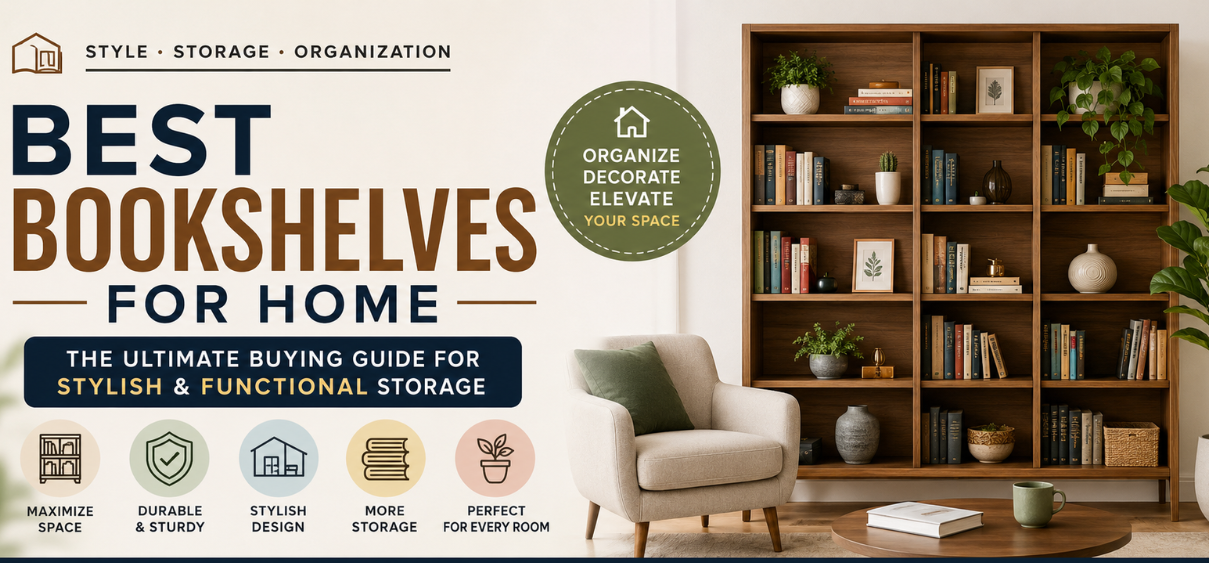
A bookshelf is more than a place to store books. It serves as a statement piece, enhances organization, complements interior décor, and maximizes available space. Whether you're designing a modern apartment, a traditional family home, or a compact studio, choosing the best bookshelf for home requires balancing aesthetics, durability, functionality, and storage capacity.
In this comprehensive guide, we explore everything you need to know before purchasing a bookshelf. From materials and styles to room-specific recommendations and organization ideas, this guide will help you make an informed decision while creating a beautiful and organized living space.
Why Every Home Needs a Quality Bookshelf
A thoughtfully selected bookshelf provides much more than storage. It helps create an organized environment while adding warmth and personality to every room.
Benefits of Home Bookshelves
- Organizes books neatly
- Displays decorative items beautifully
- Maximizes vertical storage space
- Reduces clutter
- Improves room aesthetics
- Creates a focal point
- Protects books from damage
- Adds value to home interiors
Whether you're a passionate reader or simply looking for additional storage, a bookshelf remains one of the most practical furniture investments.
Different Types of Bookshelves for Home
Choosing the right bookshelf starts with understanding the available designs.
1. Standard Vertical Bookshelf
The classic vertical bookshelf features multiple evenly spaced shelves.
Best for:
- Living rooms
- Home libraries
- Bedrooms
- Offices
Advantages:
- Large storage capacity
- Easy organization
- Available in multiple heights
- Timeless appearance
2. Ladder Bookshelf
Ladder bookshelves lean slightly against the wall, creating a contemporary appearance.
Ideal for:
- Modern homes
- Apartments
- Minimalist interiors
Benefits:
- Space-saving
- Decorative
- Lightweight
- Stylish
3. Corner Bookshelf
Corner bookshelves utilize unused corners efficiently.
Perfect for:
- Small homes
- Apartments
- Reading corners
- Compact bedrooms
Advantages:
- Maximizes unused space
- Attractive design
- Excellent for smaller collections
4. Cube Storage Bookshelf
Cube bookshelves consist of square storage compartments.
Suitable for:
- Families
- Children's rooms
- Living rooms
Benefits:
- Easy organization
- Works with storage baskets
- Multi-purpose storage
5. Floating Wall Bookshelves
Floating shelves mount directly onto walls.
Best suited for:
- Minimalist homes
- Hallways
- Home offices
Advantages:
- Saves floor space
- Modern appearance
- Customizable layouts
6. Industrial Bookshelf
Industrial bookshelves combine metal frames with wooden shelves.
Ideal for:
- Loft apartments
- Modern homes
- Rustic interiors
Benefits:
- Heavy-duty construction
- Premium appearance
- Long-lasting durability
7. Built-In Bookshelves
Built-in shelving becomes a permanent part of the room.
Perfect for:
- Home libraries
- Luxury interiors
- Large living rooms
Advantages:
- Custom appearance
- Maximum storage
- Increases property value
Best Bookshelf Materials
The material determines durability, maintenance, and appearance.
| Material | Durability | Appearance | Maintenance | Best For |
|---|---|---|---|---|
| Solid Wood | Excellent | Premium | Moderate | Luxury homes |
| Engineered Wood | Good | Modern | Easy | Everyday use |
| MDF | Good | Smooth finish | Easy | Budget furniture |
| Metal | Excellent | Industrial | Low | Offices |
| Glass | Moderate | Elegant | High | Decorative displays |
| Bamboo | Good | Natural | Low | Eco-friendly homes |
Solid Wood Bookshelves
Solid wood remains the gold standard.
Popular wood options include:
- Oak
- Walnut
- Pine
- Teak
- Maple
- Sheesham
Advantages
- Extremely durable
- Natural beauty
- Long lifespan
- High weight capacity
- Easy to refinish
Disadvantages
- Expensive
- Heavy
- Requires occasional maintenance
Engineered Wood Bookshelves
Engineered wood offers excellent value for modern homes.
Benefits include:
- Affordable pricing
- Attractive finishes
- Lightweight construction
- Easy installation
- Moisture-resistant options
Ideal for:
- Apartments
- Home offices
- Student rooms
Metal Bookshelves
Metal shelving combines strength with minimalist aesthetics.
Best for:
- Heavy books
- Professional offices
- Industrial interiors
- Garage storage
Advantages:
- Rust-resistant finishes
- High load capacity
- Modern appearance
Best Bookshelves for Different Rooms
Living Room Bookshelves
The living room bookshelf often serves as both storage and decoration.
Recommended features:
- Open shelving
- Decorative lighting
- Mixed storage
- Display sections
Ideal items to display:
- Books
- Plants
- Picture frames
- Sculptures
- Candles
- Collectibles
Bedroom Bookshelves
Bedroom shelving should emphasize relaxation and convenience.
Best options include:
- Small vertical shelves
- Floating shelves
- Corner units
- Bedside bookshelves
Perfect for:
- Novels
- Alarm clocks
- Indoor plants
- Decorative accessories
Home Office Bookshelves
A productive workspace requires organized storage.
Choose bookshelves featuring:
- Adjustable shelves
- File storage
- Cabinets
- Heavy-duty construction
Store:
- Documents
- Reference books
- Office supplies
- Awards
Children's Room Bookshelves
Safety comes first.
Important features:
- Rounded corners
- Low height
- Stable base
- Bright colors
Ideal storage includes:
- Storybooks
- Educational toys
- Craft supplies
Study Room Bookshelves
Students benefit from organized shelving.
Look for:
- Large capacity
- Adjustable shelves
- Durable construction
- Easy accessibility
Choosing the Right Bookshelf Size
Before buying, measure:
- Wall width
- Ceiling height
- Available floor area
- Door clearance
Small Bookshelves
Height:
- 3–4 feet
Suitable for:
- Apartments
- Bedrooms
- Dorm rooms
Medium Bookshelves
Height:
- 5–6 feet
Best for:
- Living rooms
- Offices
- Family rooms
Large Bookshelves
Height:
- 7 feet and above
Perfect for:
- Home libraries
- Large homes
- Study rooms
Open vs Closed Bookshelves
| Feature | Open Shelves | Closed Shelves |
|---|---|---|
| Display | Excellent | Limited |
| Dust Protection | Low | High |
| Modern Look | Excellent | Good |
| Storage Capacity | High | High |
| Maintenance | Frequent | Less Frequent |
Popular Bookshelf Styles
Modern
Characteristics:
- Clean lines
- Neutral colors
- Minimal hardware
Scandinavian
Features:
- Light wood
- White finish
- Minimal design
- Functional storage
Rustic
Highlights:
- Distressed wood
- Natural textures
- Warm tones
Industrial
Combines:
- Steel frames
- Wood shelves
- Dark finishes
Traditional
Known for:
- Decorative molding
- Rich wood colors
- Elegant craftsmanship
Essential Features to Look For
A quality bookshelf should include:
- Adjustable shelves
- Strong weight capacity
- Anti-tip hardware
- Scratch-resistant finish
- Easy assembly
- Stable construction
- Quality hardware
- Smooth edges
- Moisture resistance
Smart Bookshelf Organization Ideas
Organizing bookshelves improves both functionality and appearance.
Popular methods include:
By Genre
- Fiction
- Non-fiction
- History
- Science
- Biography
By Color
Creates an artistic display.
Ideal for:
- Modern interiors
- Decorative shelving
By Height
Provides a clean and balanced appearance.
Mix Decorative Objects
Alternate books with:
- Plants
- Vases
- Artwork
- Candles
- Sculptures
Maintenance Tips
Proper maintenance extends bookshelf life.
Cleaning Checklist
- Dust weekly
- Avoid excessive moisture
- Tighten screws annually
- Protect from direct sunlight
- Use furniture polish when appropriate
- Avoid overloading shelves
Common Mistakes to Avoid
Many buyers overlook important factors.
Avoid these mistakes:
- Buying without measuring space
- Ignoring shelf weight limits
- Choosing style over functionality
- Overloading shelves
- Forgetting wall anchoring
- Ignoring room décor
- Purchasing low-quality materials
- Poor shelf organization
Conclusion
The best bookshelf for home combines durability, style, practical storage, and long-term value. Whether you prefer the timeless elegance of solid wood, the affordability of engineered wood, or the contemporary appeal of industrial metal shelving, selecting the right bookshelf transforms your space into a more organized, functional, and visually appealing environment.
By considering room size, storage requirements, material quality, design style, and future needs, you can invest in a bookshelf that enhances your home's décor while providing reliable storage for years to come.
FAQs
1. What is the best material for a bookshelf?
Solid wood offers the best durability and longevity, while engineered wood provides excellent value for everyday use.
2. Which bookshelf is best for small spaces?
Corner bookshelves and floating shelves are ideal for maximizing limited space.
3. How much weight can a bookshelf hold?
Weight capacity varies by material and design, typically ranging from 20 to 100 pounds per shelf.
4. Are floating bookshelves strong enough?
Yes, when installed correctly into wall studs or with appropriate anchors.
5. Should bookshelves be attached to the wall?
Yes, especially tall bookshelves, to prevent tipping and improve safety.
6. What bookshelf style suits modern homes?
Modern, Scandinavian, and industrial designs are popular choices.
7. Are metal bookshelves better than wooden ones?
Metal shelves generally support heavier loads, while wood offers a warmer and more traditional appearance.
8. How do I organize books attractively?
Arrange books by size, color, or genre and incorporate decorative accents like plants and framed photos.
9. What is the ideal bookshelf depth?
Most bookshelves have a depth of 10–12 inches, suitable for standard books.
10. Which bookshelf is best for heavy books?
Solid wood or heavy-duty metal bookshelves are recommended.
11. Can bookshelves be used for décor?
Yes, they are perfect for displaying artwork, plants, collectibles, and decorative accessories.
12. Are adjustable shelves worth it?
Yes, they offer flexibility for storing books and items of varying heights.
13. How often should I clean my bookshelf?
Dust shelves weekly and perform a deeper clean every few months.
14. What is the average height of a bookshelf?
Bookshelves typically range from 3 to 7 feet in height.
15. Can I use a bookshelf in the kitchen?
Yes, for cookbooks, jars, baskets, and decorative items, provided the material resists moisture.
16. What is a cube bookshelf?
A cube bookshelf features square compartments that are ideal for books, baskets, and décor.
17. Which bookshelf is easiest to assemble?
Engineered wood and modular bookshelves often come with user-friendly assembly instructions.
18. Are built-in bookshelves a good investment?
Yes, they maximize storage and can increase the visual appeal and value of a home.
19. What color bookshelf matches most interiors?
White, black, natural oak, walnut, and gray finishes complement a wide range of décor styles.
20. How do I prevent bookshelf sagging?
Avoid exceeding weight limits and choose shelves made from strong materials with adequate support.
21. Can bookshelves divide a room?
Yes, open-back bookshelves make excellent room dividers while maintaining an open feel.
22. What is the best bookshelf for a home office?
A sturdy bookshelf with adjustable shelves and closed storage compartments works best.
23. How do I child-proof a bookshelf?
Anchor it securely to the wall and keep heavy objects on lower shelves.
24. Are open bookshelves harder to maintain?
They require more frequent dusting but offer easier access and display opportunities.
25. How do I choose the right bookshelf?
Consider available space, storage needs, material, style, weight capacity, budget, and the overall design of your home before making a purchase.